Imperial Hotel Kyoto Keeps Japan's History Alive in Gion
Imperial Hotel Kyoto opened in March 2026 inside the restored Yasaka Kaikan theater in Gion, with 55 rooms, a French counter restaurant, and a rooftop bar.
 RUKAIYA KADIWAL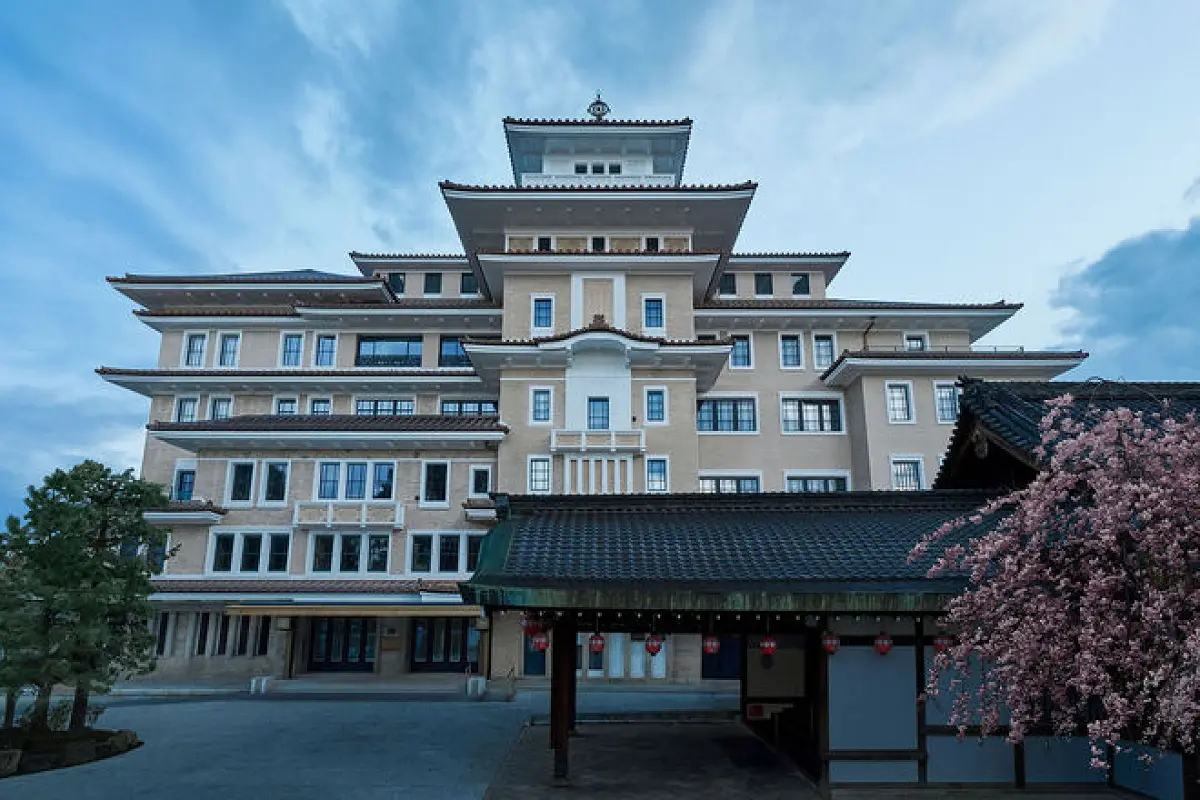
Suitcases wheel quietly along Hanamikoji Street past historic teahouses and wooden machiya townhouses before arriving at a courtyard where a theater once stood. At the center of that courtyard sits Imperial Hotel Kyoto, fifty five rooms contained within a building that geiko helped fund nearly a century ago, and which the hotel has now restored for a new generation of guests.
The hotel opened in March 2026 as the fourth property in the Imperial Hotel portfolio and its first new opening in roughly thirty years. Its arrival in Kyoto's Gion district, steps from Hanamikoji Street and a short walk from Yasaka Shrine and Kenninji Temple, marks a meaningful expansion for a brand whose Tokyo flagship has more than 900 rooms and whose original 1923 building was designed by Frank Lloyd Wright.
Imperial Hotel Kyoto and the Theater It Replaced
The hotel began as the Yasaka Kaikan theater in 1936, a nationally registered Tangible Cultural Property and a central cultural venue in Kyoto. The building's construction was partly funded by geiko, the professional female performing artists known elsewhere in Japan as geishas, whose community later sought to revitalize the structure after years of decay forced it to close. Imperial Hotel committed to reusing and restoring as much of the original structure as possible throughout a multi year renovation process.
That commitment shaped the physical character of the finished hotel in ways that are visible from the street before a guest even crosses the threshold. Crews removed and cleaned tens of thousands of decorative tiles from the original exterior, handpicking roughly 16,000 for use on the restored facade. Terracotta reliefs were preserved or replicated, and the roof was rebuilt using copper sheet tiles that echo the original material without pretending to be untouched.
What Remained and What Was Added
Inside, the southern and western exterior walls were retained from the original theater, along with the etched glass ceiling in the entryway foyer. Walls of Oya stone pay deliberate homage to Frank Lloyd Wright, who used the same Japanese material in the Tokyo property, creating a quiet material continuity across two very different buildings separated by a century of history. Domestic zelkova hardwood, Japanese marble, and Tamina-ishi stone complete a minimalist design that feels considered rather than assembled.
The 55 guestrooms are organized across three wings, extension, preservation, and renovation, each carrying a distinct relationship to the original structure. In the preservation wing, original beams, pillars, and window frames from 1936 are visible within the rooms themselves, with some balconies overlooking the theater courtyard below. Rooms in the extension wing feature tatami flooring and earth tones that echo the machiya townhouses along the neighboring streets, and guests in these rooms may see geiko and maiko passing outside their windows.
Japanese Breakfast and French Dining at Ten Seats
Mornings at Imperial Hotel Kyoto Japan begin with a Japanese breakfast that arrives in a three tiered wooden basket containing multiple small dishes. Grilled silver cod, salmon roe in soy sauce, black sesame tofu, and taro sit alongside squid sashimi in a meal that makes complete sense against Kyoto's culinary heritage even for guests who might hesitate elsewhere. Western breakfast options are also available at Yasaka, one of the hotel's two restaurants, though the Japanese offering carries more of the destination's character.
In the evenings, guests can reserve a seat at Ren, an intimate French restaurant with just ten counter seats serving dinner built around regional ingredients. The scale of the space keeps the dining experience close and specific rather than expansive, in keeping with the hotel's broader philosophy of depth over volume. Those seeking Japanese cuisine can walk less than five minutes to Michelin starred Gion Fukushi for a multicourse kaiseki dinner.
The Rooftop Bar and an Unobstructed View
The Old Imperial Bar inside the hotel offers Kyoto inspired cocktails, while the outdoor Rooftop Bar is reserved for hotel guests and looks out over Kiyomizu-dera Buddhist temple, the Heian Jingu Shrine, and Mount Hiei. A restriction within the historic district limits new construction to buildings under 40 feet in height, which means the view from the rooftop will remain unobstructed. The Imperial Hotel itself received an exception to maintain the theater's original height rather than being required to reduce the building's profile to meet current regulations.
That exception is not incidental. It reflects how the city of Kyoto weighed the building's cultural significance against its standard planning rules, deciding that preserving the theater's existing height contributed more to the surrounding streetscape than enforcing uniformity would have.
Wellness, Service, and the Quiet Details
The hotel's indoor pool sits beneath the property, enclosed by Kitagi stone, the same material that once defined the Yasaka Kaikan's exterior. The spa offers treatments incorporating Kyoto incense and sound meditation. Turndown service extends to folding clothes left on the bed, refreshing flowers, and neatly coiling phone charger cords, the kind of attentive detail that distinguishes a property interested in the full experience of a stay from one focused primarily on the room itself.
Cultural experiences available through the concierge include Kyo-Yuzen silk dye painting, Gosho doll painting workshops, private rickshaw tours of historic Kyoto, and access to private teahouses where geiko entertain, each connecting guests more directly to the district surrounding the hotel rather than keeping the experience entirely contained within its walls.
What Imperial Hotel Kyoto Represents Beyond Hospitality
Large scale hotel projects elsewhere, including developments like the planned Omni New Orleans headquarters hotel currently navigating political and financing delays, illustrate how difficult it can be to bring major hospitality construction to completion even with strong institutional support. Imperial Hotel Kyoto arrived after a multi year renovation of an existing historic structure, a process with its own complexities, but one that ultimately delivered a functioning hotel in a location that carries meaning for the city in ways that purpose built developments rarely can claim.
Roof tiles on the eaves of the building still carry the character for the word to sing, a remnant of the theater the building once housed. Guests who notice it are briefly reminded of what stood here before, and of what the geiko community worked to preserve. That continuity, held quietly in a roof tile, may be the most telling detail in the entire hotel.
Learn more at Imperial Hotel's official website.