ISKCON Rasa Museum Delhi Opens 13,500 sq ft Cultural Space
ISKCON Rasa Museum Delhi inaugurates 13,500 sq ft space with immersive tech-driven exhibits, marking its 60th anniversary celebrations.
 nishathapa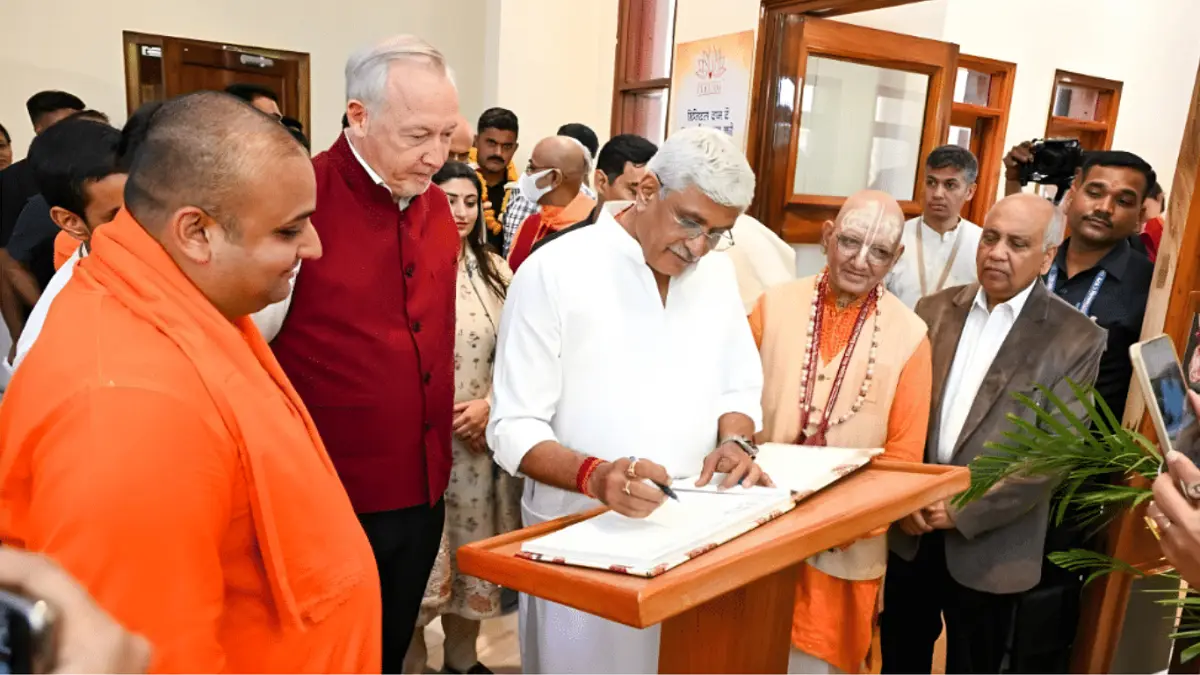
New Delhi, April 29, 2026: The International Society for Krishna Consciousness (ISKCON) has inaugurated the redeveloped 13,500 sq. ft. Rasa Museum at its East of Kailash temple complex in New Delhi, marking a key initiative aligned with its 60th anniversary celebrations and expanding the city’s cultural tourism infrastructure.
The newly introduced experience, titled “Rasa: An Ocean of Nectar,” integrates immersive technologies including virtual reality, light and sound installations, and interactive storytelling to present key narratives from Indian epics and spiritual philosophy. The project has been developed with support from the Ministry of Culture, Government of India.
13,500 sq ft immersive museum integrates technology and heritage
The Rasa Museum spans 13,500 square feet and is designed as a technology-led cultural experience. It presents narratives from the Ramayana and the Mahabharata alongside depictions of the Dasha Avatar, Lord Krishna’s vibhutis, and philosophical themes such as Dharma and Bhakti.
The exhibition uses a combination of digital formats and physical installations to engage visitors through multi-sensory storytelling. The initiative reflects a broader trend in cultural tourism where institutions are leveraging technology to reinterpret traditional narratives for contemporary audiences.
Located within high-footfall spiritual complex in Delhi
The museum is situated within ISKCON’s three-acre temple complex in East of Kailash, one of the capital’s prominent spiritual destinations. The temple records daily footfall exceeding 10,000 visitors, which rises to over 100,000 during major festivals and reaches approximately 300,000 during Sri Krishna Janmashtami.
The museum currently attracts more than 30,000 visitors per month, with expectations of higher engagement following the redevelopment and introduction of immersive experiences.
Inauguration attended by government and diplomatic representatives
The inauguration ceremony included traditional rituals such as darshan, puja, and parikrama, followed by a guided walkthrough of the museum. The event was attended by Union Minister for Tourism and Culture Gajendra Singh Shekhawat, along with diplomatic representatives including Belgium’s Ambassador to India Didier Vanderhasselt, and senior ISKCON members.
According to ISKCON representatives, the project aims to present India’s spiritual heritage in formats that resonate with modern audiences, while also expanding its outreach through experiential engagement.
Features include world’s largest Bhagavad Gita display
A key highlight within the museum is the display of what is described as the world’s largest sacred book, the Srimad Bhagavad Gita. The installation weighs approximately 800 kg and is mounted on a 1,200 kg platform. Printed in Italy on waterproof, non-tearable material, the artwork spans nearly one acre and incorporates detailing with semi-precious metals.
The installation was dedicated to the nation in 2019 and continues to serve as a central attraction within the museum.
Strengthening cultural tourism and experiential infrastructure
The redevelopment of the Rasa Museum aligns with broader efforts to enhance cultural tourism infrastructure in India through experience-led formats. Government representatives highlighted the role of such projects in connecting heritage with modern presentation techniques, while improving visitor engagement.
The initiative also reflects a growing intersection between spirituality and tourism, where religious institutions are expanding their offerings beyond traditional worship spaces to include curated experiences that attract a wider demographic of visitors, including international tourists.
With the introduction of immersive programming and upgraded infrastructure, the Rasa Museum is positioned to contribute to Delhi’s evolving tourism landscape, where cultural, spiritual, and experiential travel segments continue to converge.