Nepal Tourism Faces Uncertainty as Gulf Crisis Impacts Travel Demand in 2026
Nepal’s tourism sector faces challenges in 2026 as the Gulf crisis disrupts travel demand, affecting visitor inflows, hospitality businesses, and economic recovery.
 Pratyaksha Singh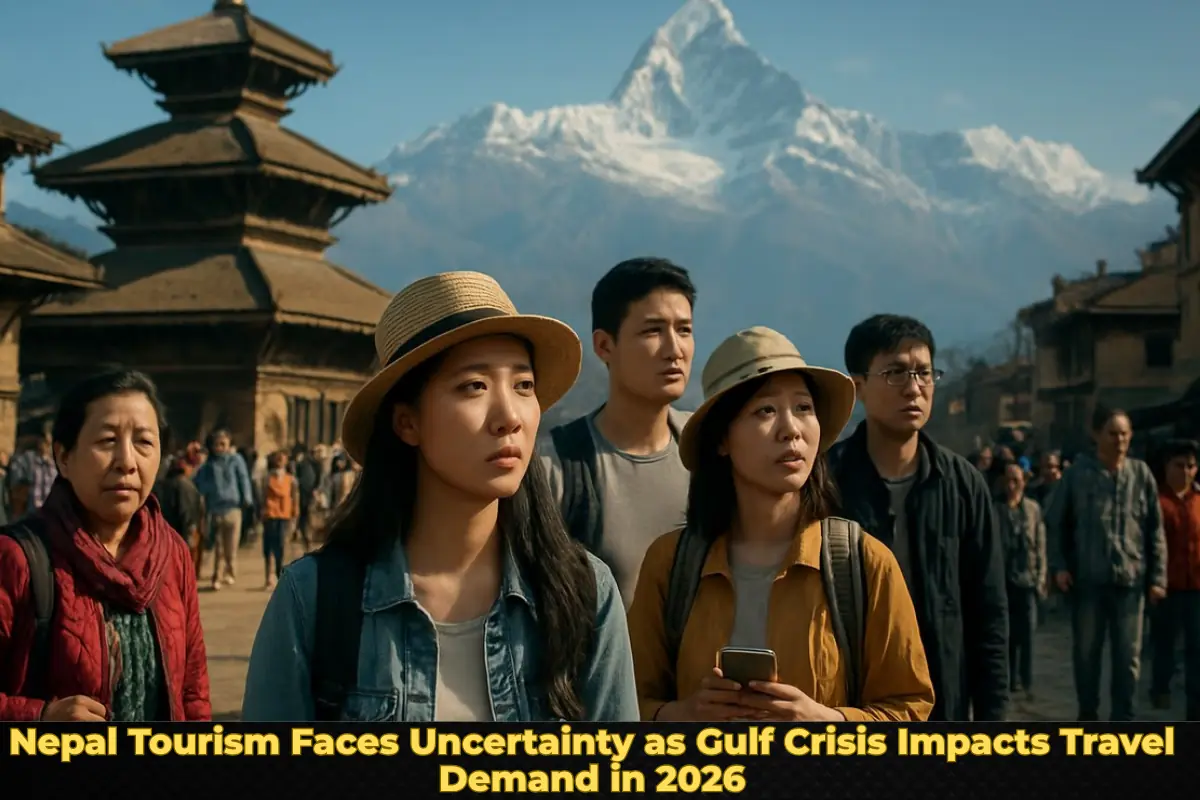
Nepal Tourism Faces Uncertainty as Gulf Crisis Impacts Travel Demand in 2026
Nepal’s tourism sector is facing renewed uncertainty in 2026 as geopolitical tensions in the Gulf region disrupt international travel demand, affecting visitor arrivals, hotel occupancy, and overall industry recovery. The situation has raised concerns among hospitality operators, tour providers, and policymakers who rely heavily on stable inbound travel flows to sustain economic growth.
The Gulf region represents a significant source market for Nepal, both in terms of outbound tourists and expatriate workers returning for leisure travel. Ongoing instability has led to reduced travel confidence, flight disruptions, and economic uncertainty, directly impacting booking trends and tourism-related business activity across Nepal.
Decline in Visitor Arrivals
Tourism stakeholders have reported a slowdown in visitor arrivals in recent months, with cancellations and delayed bookings becoming more common. The uncertainty surrounding the Gulf crisis has caused travelers to reconsider or postpone their plans, particularly those originating from affected regions.
Hotels and tour operators in key destinations such as Kathmandu, Pokhara, and trekking regions have observed a noticeable dip in occupancy levels. This decline is particularly concerning during peak travel periods when the industry typically experiences strong demand.
The drop in arrivals is expected to have a cascading effect on the broader tourism ecosystem.
Impact on Hospitality Businesses
The slowdown in tourism demand is placing pressure on hospitality businesses, including hotels, restaurants, and travel agencies. Many operators had been anticipating a strong recovery in 2026 following previous global disruptions, but the current situation has introduced fresh challenges.
Hotel operators are adjusting pricing strategies and offering promotions to attract domestic and alternative international travelers. However, these measures may not fully offset the loss of high-spending visitors from affected regions.
Smaller businesses and independent operators are particularly vulnerable, as they often lack the financial resilience to withstand prolonged downturns.
Economic Implications
Tourism is a vital contributor to Nepal’s economy, supporting employment and generating foreign exchange earnings. A sustained decline in visitor numbers could have broader economic implications, affecting livelihoods across multiple sectors linked to tourism.
The reduction in travel demand may also impact government revenue and slow down investment in tourism infrastructure. Stakeholders are closely monitoring the situation to assess potential long-term effects.
The economic ripple effects highlight the sector’s dependence on global stability.
Air Connectivity and Travel Disruptions
Air connectivity has been another area affected by the Gulf crisis, with potential disruptions to flight routes and schedules. Airlines operating between Nepal and Gulf countries play a crucial role in facilitating travel, and any reduction in services can significantly impact accessibility.
Travel agents have reported increased uncertainty among passengers, with some opting to delay bookings until conditions stabilize. This has contributed to volatility in demand and planning challenges for tourism businesses.
Reliable connectivity remains essential for maintaining consistent travel flows.
Diversification of Source Markets
In response to the challenges, Nepal’s tourism industry is exploring opportunities to diversify its source markets. Efforts are being made to attract visitors from Europe, Southeast Asia, and other regions less affected by the Gulf situation.
Marketing campaigns and promotional initiatives are being intensified to position Nepal as a safe and attractive destination. Industry stakeholders are also focusing on niche segments such as adventure tourism, wellness travel, and cultural experiences.
Diversification is seen as a key strategy to reduce dependency on specific markets.
Domestic Tourism as a Buffer
Domestic tourism is expected to play a crucial role in mitigating the impact of reduced international arrivals. Local travelers have increasingly contributed to sustaining demand, particularly during periods of global uncertainty.
Hotels and tourism businesses are tailoring offerings to appeal to domestic audiences, including special packages and seasonal promotions. While domestic travel cannot fully replace international demand, it provides an important buffer for the industry.
Strengthening domestic tourism is becoming a strategic priority.
Government and Industry Response
The Nepalese government and industry associations are working together to address the challenges posed by the crisis. Discussions are underway بشأن potential support measures, including financial assistance, policy adjustments, and promotional efforts to boost tourism.
Stakeholders are emphasizing the importance of maintaining Nepal’s image as a safe and welcoming destination. Clear communication and proactive engagement with international markets are considered critical in managing perceptions and restoring confidence.
Collaborative efforts are essential to navigate the current situation.
Long-Term Outlook
Despite the immediate challenges, industry experts remain cautiously optimistic about the long-term outlook for Nepal’s tourism sector. The country’s natural beauty, cultural heritage, and adventure tourism offerings continue to attract global interest.
Once geopolitical tensions ease, travel demand is expected to rebound, supported by pent-up demand and ongoing promotional efforts. However, the timeline for recovery will depend on the resolution of the crisis and broader global conditions.
Resilience and adaptability will be key to sustaining growth.
Conclusion
Nepal’s tourism industry is navigating a period of uncertainty in 2026 as the Gulf crisis disrupts travel demand, with stakeholders focusing on diversification, domestic tourism, and strategic responses to sustain the sector until stability returns.