Sun Group and Marriott Plan 10 New Hotels in Vietnam’s Phu Quoc and Vung Tau
Sun Group and Marriott International plan to develop 10 new hotels in Phu Quoc and Vung Tau, expanding Vietnam’s luxury hospitality and tourism infrastructure.
 Pratyaksha Singh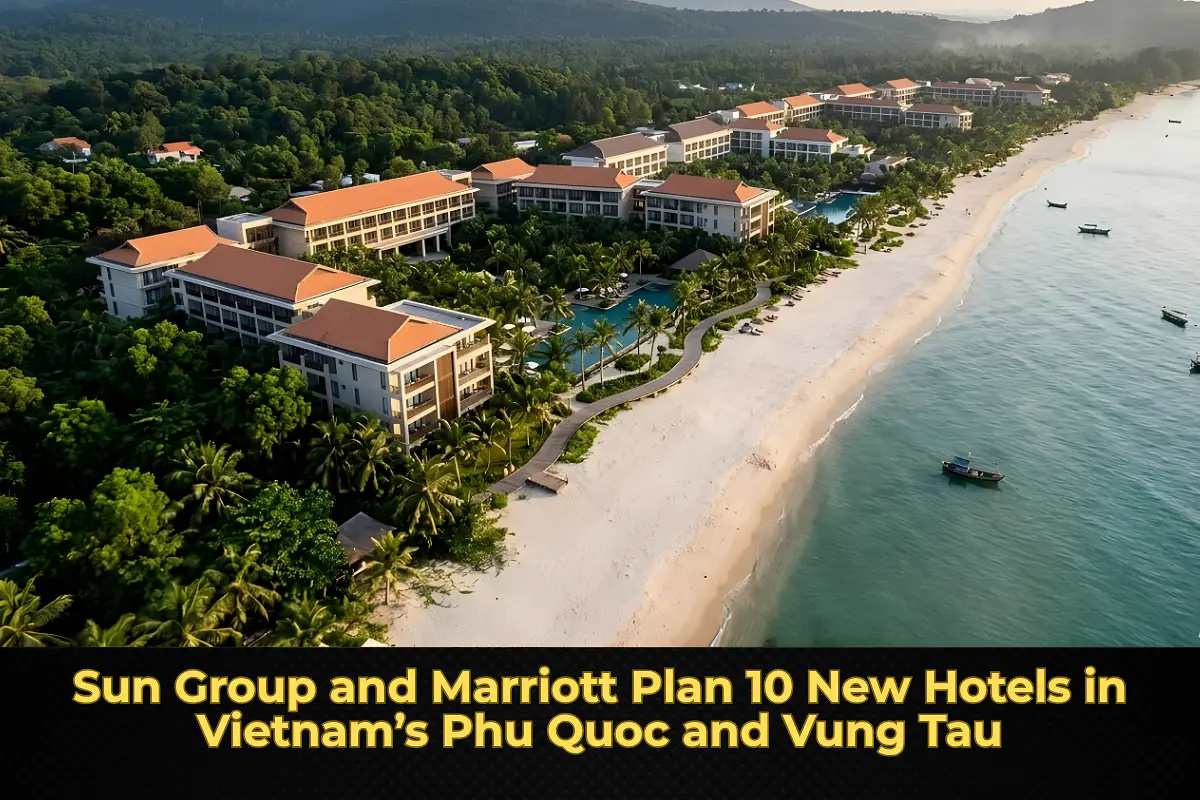
Sun Group and Marriott Plan 10 New Hotels in Vietnam’s Phu Quoc and Vung Tau
Sun Group and Marriott International have announced plans in 2026 to develop 10 new hotels across Vietnam’s key coastal destinations of Phu Quoc and Vung Tau, aiming to strengthen the country’s position as a leading tourism hub in Southeast Asia while expanding luxury and upscale hospitality offerings.
The collaboration focuses on leveraging Vietnam’s growing appeal among international and domestic travelers, with both companies seeking to capitalize on rising demand for premium accommodations and integrated resort experiences. The new developments are expected to enhance tourism infrastructure, attract high-value visitors, and support long-term economic growth in the region.
Strategic Expansion in Key Coastal Destinations
The planned hotels will be located in Phu Quoc, a rapidly emerging island destination, and Vung Tau, a well-established coastal city near Ho Chi Minh City. Both locations have witnessed increasing tourist inflows due to improved connectivity, infrastructure development, and government initiatives promoting tourism.
Phu Quoc, in particular, has become a focal point for luxury resort development, attracting global hotel brands and investors. Meanwhile, Vung Tau continues to draw domestic travelers and weekend visitors, creating opportunities for diversified hospitality offerings.
The expansion aims to strengthen the tourism appeal of both destinations by introducing world-class accommodations.
Partnership Between Developer and Global Operator
Sun Group, one of Vietnam’s leading real estate and infrastructure developers, will oversee the development of the properties, while Marriott International will manage and operate the hotels under its portfolio of global brands. The partnership combines local market expertise with international hospitality standards.
Marriott’s involvement is expected to bring brand recognition, operational excellence, and access to a global customer base, enhancing the competitiveness of the new properties. The collaboration reflects a growing trend of partnerships between local developers and international hotel operators in emerging markets.
This model supports efficient project execution and strong market positioning.
Boosting Vietnam’s Tourism Infrastructure
The addition of 10 new hotels is set to significantly boost Vietnam’s hospitality capacity, particularly in high-demand coastal regions. As tourism continues to recover and expand, the need for quality accommodations has become increasingly important.
The developments are expected to include a mix of luxury resorts, upscale hotels, and lifestyle properties designed to cater to diverse traveler segments. This diversified approach allows the projects to attract both leisure tourists and business travelers.
Enhanced infrastructure will support sustained growth in visitor numbers.
Rising Demand for Luxury and Experiential Travel
The expansion aligns with a broader shift toward luxury and experiential travel, where guests seek high-end accommodations combined with unique experiences. Vietnam has emerged as a preferred destination for such travelers due to its natural beauty, cultural heritage, and competitive pricing.
Phu Quoc’s beaches and resort offerings make it particularly attractive for international tourists, while Vung Tau’s proximity to major urban centers supports steady demand. The new hotels are expected to incorporate wellness, recreation, and cultural elements to enhance guest experience.
This focus on experience-driven hospitality is shaping investment decisions.
Economic Impact and Job Creation
The development of these properties is expected to generate significant economic benefits, including job creation during both construction and operational phases. Hospitality projects typically support a wide range of industries, from construction and logistics to tourism services and retail.
Local communities are likely to benefit from increased employment opportunities and higher tourist spending, contributing to regional economic development. The projects also align with government efforts to promote tourism as a key economic driver.
The initiative underscores the role of hospitality in supporting economic growth.
Strengthening Vietnam’s Global Position
Vietnam has been gaining prominence as a global travel destination, supported by strong economic growth, improved connectivity, and favorable government policies. Investments by international hotel brands are reinforcing the country’s position in the global tourism market.
The collaboration between Sun Group and Marriott is expected to further enhance Vietnam’s reputation for high-quality hospitality, attracting more international visitors and investors. The presence of globally recognized brands contributes to building trust among travelers.
This strengthens the country’s competitiveness in the region.
Competitive Landscape in Southeast Asia
The Southeast Asian hospitality market is becoming increasingly competitive, with countries such as Thailand, Indonesia, and Malaysia also investing heavily in tourism infrastructure. Vietnam’s ability to attract major hotel developments positions it as a strong contender in this landscape.
By expanding its portfolio of premium properties, Vietnam aims to capture a larger share of international tourist arrivals. The new hotels are expected to play a key role in achieving this objective.
Competition is driving innovation and investment across the region.
Focus on Sustainable Development
Sustainability is expected to be a key consideration in the development of the new hotels, with a focus on environmentally responsible practices and efficient resource management. Coastal destinations like Phu Quoc require careful planning to balance tourism growth with environmental preservation.
Developers and operators are increasingly adopting green building standards, waste reduction measures, and energy-efficient technologies to minimize environmental impact. Such initiatives are becoming essential in modern hospitality projects.
Sustainable development supports long-term viability.
Future Growth Prospects
The planned developments are part of a broader pipeline of hospitality investments in Vietnam, reflecting strong confidence in the country’s tourism sector. Continued infrastructure improvements, including airports and transport networks, are expected to support further growth.
As demand for travel continues to rise, additional projects and partnerships are likely to emerge, further expanding the hospitality landscape. The focus will remain on delivering high-quality experiences that meet evolving traveler expectations.
The outlook for Vietnam’s hospitality sector remains positive.
Conclusion
The partnership between Sun Group and Marriott to develop 10 new hotels in Phu Quoc and Vung Tau highlights Vietnam’s growing appeal as a tourism destination, with the projects set to enhance hospitality capacity and support long-term industry growth.