Supreme Court Food Safety Notice Targets Failures
Supreme Court food safety notice seeks responses from the Centre and FSSAI over alleged systemic failures in food regulation. Read more.
 nishathapa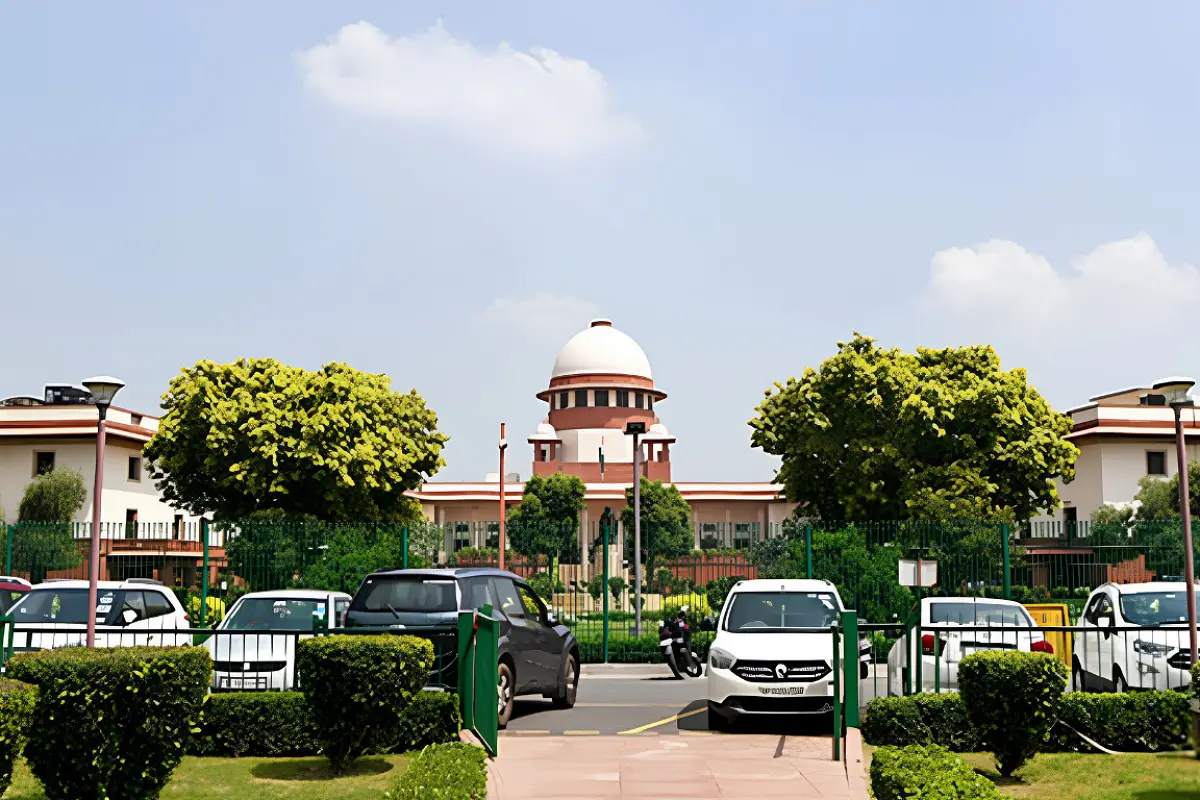
NEW DELHI, May 29, 2026: A bench of Justices Vikram Nath and Sandeep Mehta of the Supreme Court of India has issued notices to the Union Government and the Food Safety and Standards Authority of India, asking both to respond to a Public Interest Litigation that exposes systemic failures in India's food safety enforcement architecture, and demands a nationwide performance audit of the entire regulatory system. The PIL, filed by petitioner represented by advocate Ashwarya Sinha, argues that the current legal and operational framework has comprehensively failed to protect Indian citizens from unsafe and adulterated food.
The timing of the petition is not arbitrary. India's food safety concerns have been building across multiple fronts simultaneously — contaminated mid-day meals making headlines, high-profile product adulteration cases drawing public outrage and a Comptroller and Auditor General performance audit that laid bare the institutional inadequacies of the very regulatory body that is supposed to prevent these failures. The Supreme Court's decision to issue notices rather than dismiss the petition at first hearing signals it takes the substance of those concerns seriously.
Supreme Court Issues Notice to Centre and FSSAI Demanding Explanation on Food Safety Audit
The central demand of the petition is a nationwide performance audit of food safety regulations, an independent, comprehensive review of how the system is actually functioning across states, laboratories and enforcement units, rather than how it is designed to function on paper. The petitioner's argument is that without such an audit, the regulatory failures currently evident in enforcement data, laboratory infrastructure and penalty structures will continue indefinitely, with Indian citizens bearing the health consequences.
The bench has asked both the Union Government and FSSAI to explain why such a nationwide audit has not already been conducted, and what the government proposes to do about the enforcement and infrastructure gaps that the existing data has already made visible. Both parties will need to file formal responses before the matter proceeds to substantive hearing.
Only 2,997 Food Safety Officers Against a Sanctioned Strength of 4,208
The manpower data at the heart of the petition is drawn from official figures placed before the Rajya Sabha on March 13, 2026, government's own numbers, not the petitioner's estimates. Across India, only 2,997 Food Safety Officers are currently deployed against a sanctioned strength of 4,208 posts. That is a vacancy rate of approximately 29 per cent, more than one in four authorised enforcement positions sitting empty across the country.
Food Safety Officers are the ground-level enforcement personnel who conduct inspections, collect samples and take action against food businesses that violate standards. A system that cannot fill its own authorised complement of these officers is not operating at reduced capacity. It is operating with a structural enforcement gap that food business operators, from large corporations to street vendors, can exploit with relative impunity in the areas where officers are absent. That gap is distributed unevenly across states, which means some regions of the country are significantly more exposed to food safety failures than the national average suggests.
CAG Audit Found Most State Labs Unable to Test for Pesticides, Heavy Metals and Microbiological Contamination
The laboratory infrastructure finding in the petition is the most technically alarming element of the filing. Drawing from the Comptroller and Auditor General's structural performance audits, the petitioner raised alarm over state food testing laboratories that lack the essential equipment or technical capacity to screen food samples for heavy metals, pesticide residues and dangerous microbiological contamination, the three categories of unsafe food that carry the most serious long-term health consequences for consumers.
A food safety testing system that cannot reliably screen for pesticides, heavy metals or microbiological contamination is not a functioning food safety testing system. It is an administrative process that produces paperwork without producing safety. Mandatory tests, the CAG found, were not conducted in a substantial number of food samples, which means the data on food safety compliance that regulators and policymakers rely on to assess the system's performance is itself unreliable.
Fixed Penalties That Large Corporations Treat as a Business Expense
The penalty structure argument in the petition targets the most commercially significant flaw in the current enforcement framework. The Food Safety and Standards Act prescribes fixed and capped penalties that, for large food manufacturers and retailers, amount to trivial sums relative to their annual revenues. The petitioner argues, with a straightforward economic logic that is difficult to dispute, that a corporation treating a food safety fine as an ordinary business expense has no structural incentive to invest in genuine compliance.
The petition seeks the introduction of proportionate, turnover-linked penalties, a model already standard in competition law, data protection law and financial services regulation in India and globally, where penalties are calibrated as a percentage of corporate revenue rather than as a fixed rupee amount. A penalty that represents one per cent of annual turnover is a qualitatively different deterrent for a Rs 10,000 crore food company than a fixed penalty capped at a few lakh rupees. Getting that change through requires either legislative amendment to the Food Safety and Standards Act or a Supreme Court direction to the government to initiate such an amendment, which is one of the specific reliefs the petition seeks.
A Digital Violation Reporting Platform and Enhanced Public Disclosure Also Demanded
Beyond enforcement personnel, laboratory infrastructure and penalty reform, the petition demands the creation of a dedicated digital platform enabling citizens to report food safety violations in real time. The rationale is straightforward: a regulatory system with only 2,997 officers covering the entire country cannot physically monitor the millions of food businesses operating across India. Citizen-generated violation reports, channelled through a structured digital platform with appropriate follow-up protocols, extend the effective reach of enforcement without requiring proportional increases in officer headcount.
Greater public disclosure of food safety violations is the complementary demand, the argument being that transparency about which food businesses have been found non-compliant, and what actions were taken, serves both as a deterrent for operators and as a consumer protection measure that allows purchasing decisions to be informed by actual regulatory history rather than marketing claims.
Article 21 and the Constitutional Dimension of Food Safety
The petition frames its core argument in constitutional rather than purely regulatory terms. Article 21 of the Indian Constitution guarantees the Right to Life, a right that the Supreme Court has consistently interpreted to include the right to a dignified life, which necessarily encompasses access to food that is safe, non-hazardous and wholesome. The petitioner's argument is that systematic enforcement failures, inadequate laboratory infrastructure and ineffective penalties collectively constitute a violation of that constitutional guarantee, not merely a regulatory shortcoming.
That constitutional framing gives the Supreme Court a basis to engage with the matter more substantively than a straightforward regulatory petition would justify, and it is likely the reason the bench issued notices rather than declining to entertain the PIL at the threshold stage.
What the Notices Mean for India's Food and Hospitality Industry
For India's food service, restaurant, hotel and packaged food sectors, the Supreme Court's engagement with this petition carries implications that go beyond the immediate regulatory question. A court-mandated nationwide food safety audit, if it proceeds, would examine compliance across every tier of the food industry: manufacturers, processors, distributors, restaurants, hotels, caterers and street food operators. Properties and businesses that have been relying on thin enforcement to avoid investing in proper food safety infrastructure would face a different risk calculation in a post-audit regulatory environment.
The push for turnover-linked penalties in particular would, if enacted, fundamentally change the economics of non-compliance for large food businesses. A hospitality group or food manufacturer currently weighing the cost of compliance against the cost of a fixed penalty would face a very different calculation once the penalty is a percentage of annual revenue. The FSSAI and the Supreme Court will now determine together how quickly and how substantially that calculation changes.