Taj Hampi Resort Design Draws From Vijayanagara History
Taj Hampi resort takes shape with a landscape design inspired by the history, culture and architecture of the Vijayanagara Empire.
 nishathapa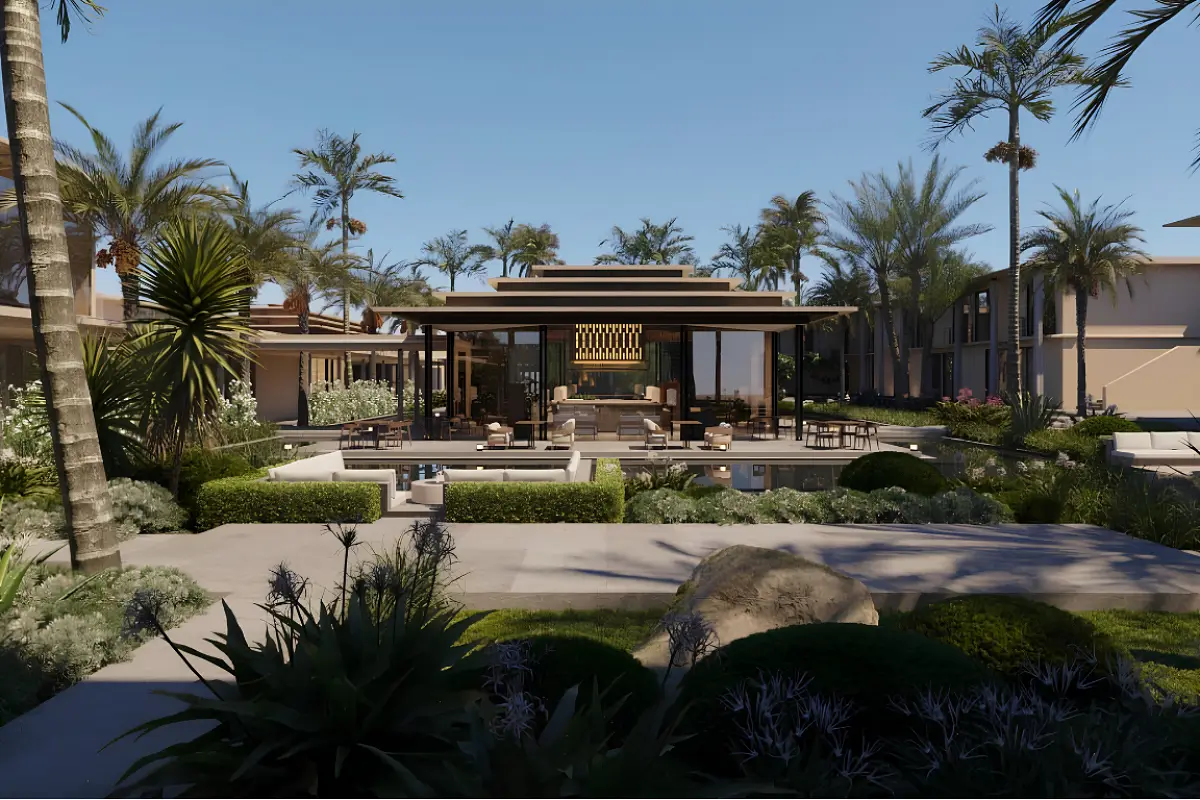
HAMPI, May 22, 2026: Ecoscapes Landscaping has confirmed its association with the upcoming Taj Hampi project, a luxury hospitality development by the Indian Hotels Company Limited spread across nearly 11 acres in Hampi, Karnataka. The project will dedicate close to 2.5 acres entirely to landscape design, with every element drawn from the ecology, terrain and cultural memory of the Vijayanagara Kingdom that once made Hampi the capital of one of the Indian subcontinent's most powerful empires.
This is not a hotel that happens to be near a UNESCO World Heritage Site. It is a hotel that has built its entire design identity around that site, from the stone underfoot to the water features overhead. Getting that right matters in Hampi more than almost anywhere else in India. The ruins do not forgive a property that ignores them, and the travellers who come to Hampi are not looking for a generic luxury product they could find in any other city. They are looking for something that earns its location.
Taj Hampi Resort Landscape Design Draws Directly From Vijayanagara Ecology and Water Heritage
At the centre of the landscape concept is a Kalyani and Kund-inspired water feature, a reference to the stepped tanks and sacred reservoirs that were central to Vijayanagara's sophisticated hydraulic infrastructure. Floating stepping stones, natural granite finishes, and site boulders reused within the landscape design carry the visual language of Hampi's actual terrain rather than importing materials from outside.
The planting palette has been built around climate-responsive and native species, Neem, Kadamba, Agaves, cactus varieties and fountain grasses. The choice is practical as much as it is philosophical. Native species demand less water, need less maintenance, and survive the region's dry heat without artificial intervention. Water-efficient irrigation systems and local craftsmanship complete a landscape approach that is ecologically coherent rather than just visually evocative.
Suraj Nayak and John Pettigrew on What Landscape Design Means at a Site Like This
Suraj Nayak, Founder and Managing Director of Ecoscapes Landscaping, was direct about what he sees the landscape's role as at a project of this nature.
"Landscaping today goes far beyond aesthetics, it is about creating environments that are contextual, sustainable, and emotionally connected to the land. At Taj Hampi, our vision was to create a landscape experience that feels deeply rooted in the region's ecology and cultural history while delivering a contemporary luxury hospitality experience. Every design decision, from the water systems and native planting palette to the reuse of natural boulders, has been guided by the intent to preserve the site's natural identity and create a timeless sense of place."
— Suraj Nayak, Founder & MD, Ecoscapes Landscaping
International landscape architect John Pettigrew, who is associated with Ecoscapes on the project and brings experience from global hospitality landscape projects, described Hampi's site character as something that required a particular kind of restraint.
"Hampi possesses a uniquely powerful landscape character shaped by its terrain, stone formations, and historical water systems. Our approach was to work with the site as naturally as possible by integrating local materials, native planting, and layered outdoor experiences that feel authentic to the region. The objective was not just to create a visually striking landscape, but to craft an immersive environment that reflects the spirit and ecological sensitivity of the place."
— John Pettigrew, Principal Landscape Architect, Ecoscapes Landscaping
The phrase "work with the site as naturally as possible" carries weight in Hampi specifically. The landscape around the ruins is not conventional, it is a terrain of massive rounded boulders, dry riverbeds, banana plantations and paddy fields set against the Tungabhadra. Designing a luxury hotel that sits within that without dominating it is a genuinely difficult brief.
SJK Architects Leads the Architecture as an Extension of Site and History
The architectural design is in the hands of Shimul Javeri Kadri of SJK Architects, one of India's most respected practices when it comes to contextual and culturally sensitive design. Kadri has spoken about the project's architectural and landscape language as conceived together rather than separately, which is the correct approach at a site where the two are essentially the same thing.
"The architectural and landscape language of Taj Hampi has been envisioned as an extension of the site's natural and historical context. The collaboration with Ecoscapes has helped shape outdoor spaces that are sensitive to Hampi's terrain, materiality, and cultural memory while creating a seamless hospitality experience integrated with nature."
— Shimul Javeri Kadri, Principal Architect, SJK Architects, Mumbai
Dhruv Desh Ventures Brings the Owner's Vision to the Project
On the promoter side, Prasad Deshpande of Dhruv Desh Ventures described the project's central ambition as celebrating Hampi's heritage through the discipline of world-class luxury hospitality rather than despite it.
"Taj Hampi has been conceptualised as a destination that celebrates the richness of Hampi's heritage while offering a world-class luxury experience. The landscape plays a critical role in shaping that identity, and the focus on sustainability, native ecology, and local craftsmanship aligns strongly with our long-term vision for the project."
— Prasad Deshpande, Owner, Dhruv Desh Ventures
A Project Where the Land Itself Is the Brief
What makes Taj Hampi worth watching as it progresses toward completion is the consistency of the design philosophy across every team involved, architect, landscape architect, owner and brand. All four are saying the same thing in different ways: the site is not a canvas, it is a collaborator. The ruins, the boulders, the water systems, the native planting, none of it is backdrop. It is the actual material the project is being made from.
IHCL's decision to develop a Taj-branded property in Hampi rather than a more commercially convenient Tier-1 city is itself a statement about where the group sees India's high-value leisure travel market heading. Heritage tourism in India is growing, international interest in India's pre-colonial history is rising, and the traveller willing to spend serious money to be well-looked-after near a UNESCO World Heritage Site is a very real and expanding segment. Taj Hampi, if it delivers on what its design team is promising, will be the right product in the right place at the right time.