The LaLiT Builds India’s Largest Transgender Workforce
The LaLiT has built India’s largest private transgender workforce in hospitality, advancing inclusion and workplace diversity initiatives.
 nishathapa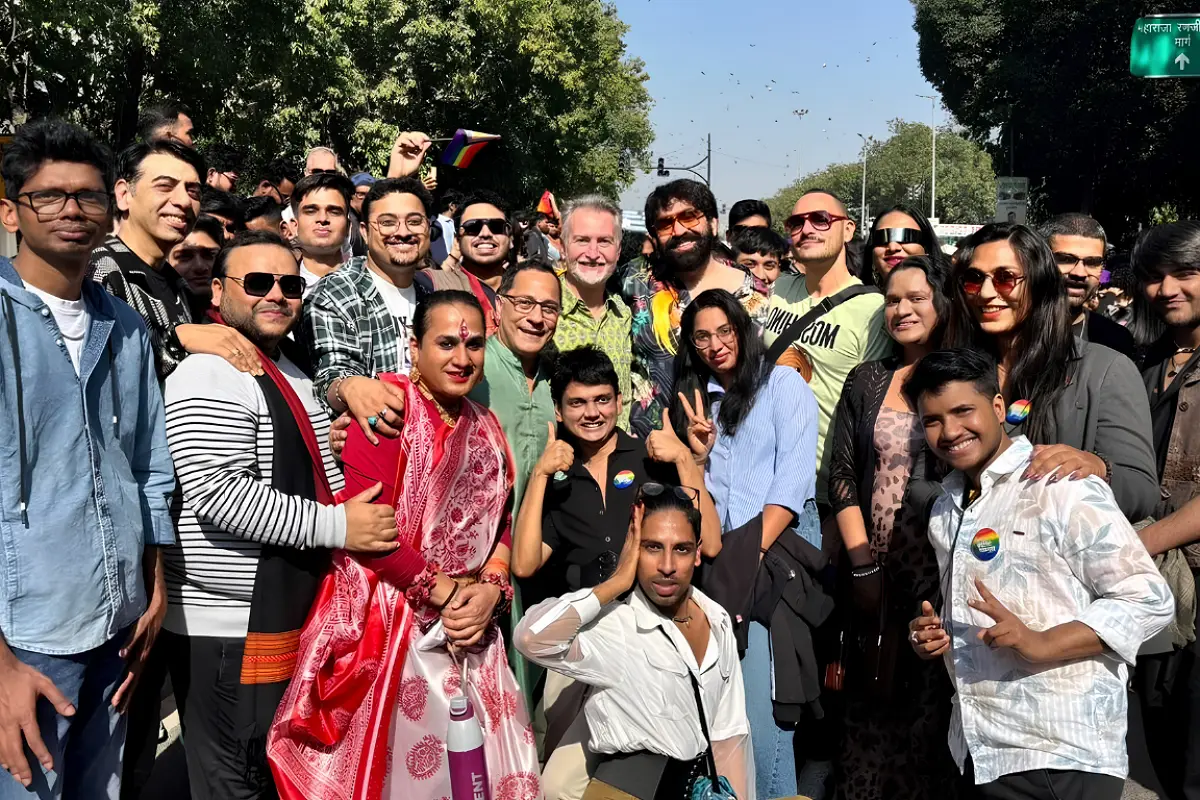
NEW DELHI, May 21, 2026: The LaLiT Suri Hospitality Group has emerged as one of India's most active private-sector employers of transgender professionals, with more than 250 transgender individuals currently working across the group's hotel operations — a number that places it among the largest such employers in the country's hospitality industry.
The group's inclusion programme spans employment, vocational training, scholarship support and destination-led skilling, and has collectively impacted more than one million lives and directly supported over 300,000 individuals through initiatives covering education, healthcare, employment and skill development.
LGBTQIA+ job fairs reach 10,000 jobseekers and deliver 1,500 placements
Beyond in-house hiring, The LaLiT Suri Hospitality Group has organised multiple LGBTQIA+ job fairs that together reached more than 10,000 jobseekers and facilitated over 1,500 job placements. The fairs bring together employers from across the hospitality and services sectors and connect them with candidates from communities that face persistent barriers to formal employment.
The scale of the placement activity positions the fairs as a practical workforce pipeline rather than a symbolic exercise, operating in a sector where employment discrimination against LGBTQIA+ individuals remains a documented challenge.
PrideKraft and Emerging Queer Leaders programmes build vocational capacity
Two dedicated programmes, PrideKraft and Emerging Queer Leaders in Hospitality, have trained thousands of LGBTQIA+ individuals in vocational skills, creative disciplines and the operational knowledge required for entry and mid-level roles across the hospitality industry. Both programmes combine skill training with employment linkages, reducing the gap between training completion and actual job placement.
The group has extended scholarships to students from LGBTQIA+, differently-abled and neurodivergent communities, widening access to formal hospitality education for groups that are systematically underrepresented in the sector's professional pipeline.
Hotel Association of India partners with LaLiT Hospitality School on industry-ready training
The Hotel Association of India has partnered with The LaLiT Suri Hospitality School to develop a training framework that addresses the gap between what hospitality education programmes produce and what employers require operationally. The joint programme focuses on practical skills, communication ability and operational readiness, the three areas most commonly cited by hotel operators as deficient in entry-level candidates.
The HAI–LaLiT collaboration brings institutional validation to the school's training model and creates a pathway for students who complete the programme to access employer networks across the Hotel Association's membership base.
Destination skilling reduces workforce migration in Khajuraho, Bekal, Goa and Mangar
The group runs destination-led skilling initiatives in Khajuraho, Bekal, Mangar and Goa, tourism locations where the hospitality labour market has historically depended on workers migrating from other states. The programmes train residents from the local community in hospitality operations, creating a pool of skilled workers in proximity to the hotels that need them.
The approach serves a dual purpose: it reduces the cost and complexity of workforce migration for hotel operators and creates economic opportunity for residents in tourism-dependent communities without requiring them to relocate.
"Hospitality with a heart" as an operating philosophy
The group describes its social approach as "hospitality with a heart", a framework built on the principles of dignity, inclusion and opportunity creation. Dr. Jyotsna Suri, Chairperson and Managing Director of The LaLiT Suri Hospitality Group, has consistently placed inclusive employment and community development at the centre of the group's public positioning, framing social responsibility not as a separate function but as integral to the hospitality business itself.
During the COVID-19 pandemic, the group repurposed hotel infrastructure to support healthcare workers, providing accommodation, meal distribution, personal protective equipment and vaccination-related assistance, a deployment of hotel assets in a public health context that the group has cited as an example of the hospitality sector's capacity to serve communities beyond its core commercial function.
Context: India's hospitality sector and inclusive employment
India's hospitality industry employs several million people across formal and informal roles. Transgender individuals and members of LGBTQIA+ communities remain significantly underrepresented in the formal workforce, with employment discrimination persisting across both public and private sector employers despite the Supreme Court's 2014 NALSA judgment recognising transgender persons as a third gender. The LaLiT's documented hiring figures represent one of the more concrete private-sector responses to that structural gap.