Washington Hilton Security: 5 Hidden Risks Exposed by Recent Incident
A security breach at Washington Hilton highlights ongoing vulnerabilities in hotels, as operators balance rising security costs with guest experience and privacy concerns.
 Punita Thakur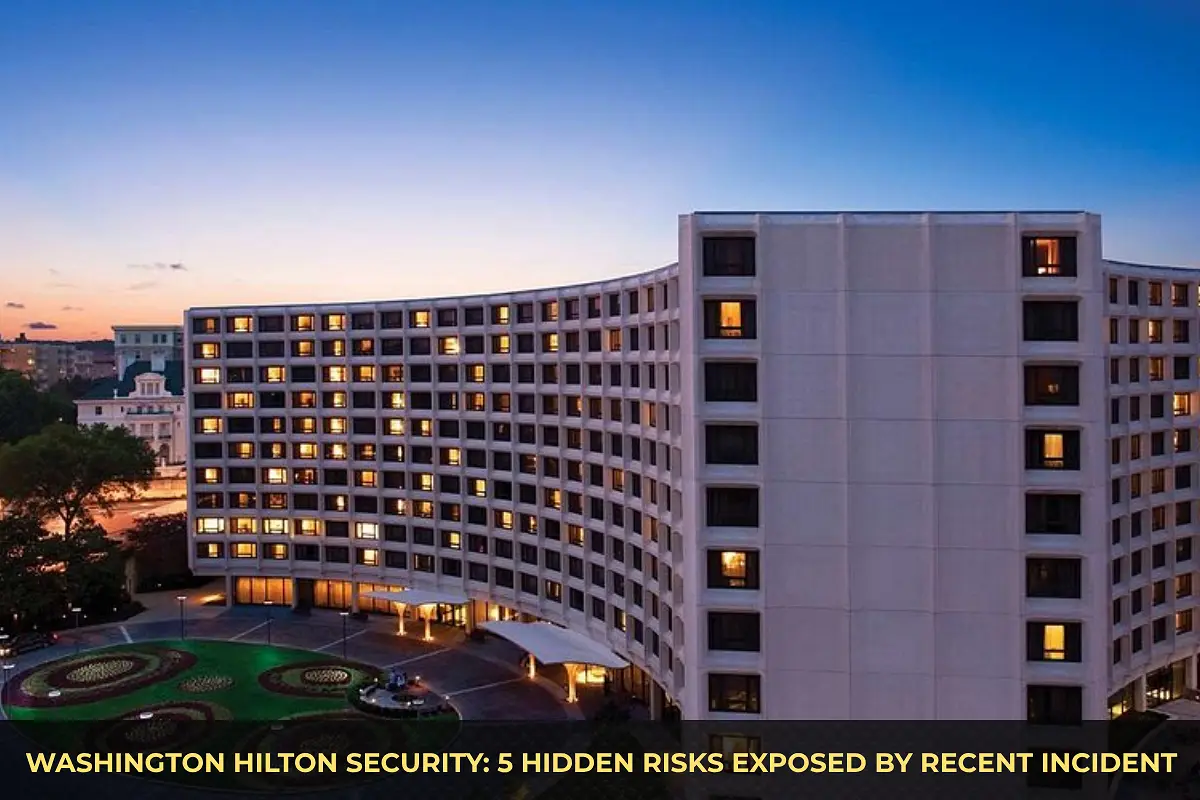
A security breach at the Washington Hilton during the White House Correspondents’ Association dinner on May 2 has brought renewed scrutiny to long-standing vulnerabilities in the global hotel industry, particularly around balancing guest safety with operational costs and service expectations.
The incident involved a suspect who moved through the property and approached a secured area near where U.S. President Donald Trump was present, exposing weaknesses in access control systems despite heightened security protocols. The breach occurred during an event attended by approximately 2,600 guests, including journalists, officials, and dignitaries.
Security Breach Highlights Structural Weaknesses at the Washington Hilton
The suspect, identified by law enforcement as a 31-year-old hotel guest, was able to navigate through multiple areas of the property before confronting a checkpoint. Although no injuries were reported and the president was safely evacuated, the incident demonstrated how internal access remains a critical risk factor in large hospitality environments.
Industry experts point to inherent structural challenges in hotels, including multiple entry points, continuous guest movement, and the coexistence of public and restricted spaces. These conditions make it difficult to enforce uniform screening procedures across all individuals on-site.
Security professionals note that uneven screening standards and unrestricted movement between zones can create exploitable gaps, particularly during high-profile events where partial lockdowns are implemented instead of full closures.
Balancing Security Investment with Guest Experience
The hilton incident underscores a persistent dilemma for hotel operators: enhancing security without compromising the open, welcoming environment central to hospitality. While technologies such as AI-powered surveillance and behavioral detection systems are becoming available, adoption has remained limited due to concerns over cost and guest privacy.
Large hotel operators are already facing margin pressure, with the top nine global hotel, casino, and resort companies generating approximately $102 billion in revenue in 2025. Increased spending on advanced security infrastructure could further strain profitability, particularly in a sector where cost control remains critical.
Experts emphasize that while security improvements are necessary, excessive measures risk undermining the guest experience, which remains a key differentiator in the hospitality industry.
Operational Complexities in Securing Hotels
Hotels hosting major events typically require several days to implement security protocols, including site assessments, credentialing systems, and the creation of controlled zones. Measures often include restricted access floors, designated elevators, and coordination with law enforcement agencies.
However, unlike dedicated event venues, hotels continue to operate during such events, allowing regular guests to access shared spaces such as lobbies, restaurants, and corridors. This operational model creates unavoidable exposure, as not all individuals within the building are subject to the same level of screening.
Security specialists highlight the importance of zoning and access control, noting that inconsistent screening remains a major vulnerability. The challenge is further compounded by the need to manage large volumes of guests, luggage, and service staff moving through the property at all hours.
Historical Incidents Shape Industry Response
The Washington Hilton incident adds to a history of security breaches in hospitality settings that have prompted incremental improvements but not fundamental structural changes. The same property has historical significance, having been the site of a shooting incident involving President Ronald Reagan in 1981, which led to the introduction of enhanced security measures such as secure vehicle access and increased screening protocols.
Globally, major incidents have also influenced industry practices. The 2008 attack on the Taj Mahal Palace Hotel in Mumbai and the 2017 shooting at a Las Vegas hotel highlighted vulnerabilities in both internal access and external exposure. While these events led to improved surveillance and coordination with authorities, experts say many underlying risks persist.
Security Cost and Complexity Limit Technology Adoption
Despite growing interest in advanced security technologies, implementation remains limited. AI-based weapons detection and behavioral monitoring systems are being evaluated, but industry stakeholders describe integration as complex and resource-intensive.
Security providers note that large hotel environments present unique challenges, including high footfall, multiple access points, and diverse operational requirements. These factors make it difficult to deploy single-point solutions effectively.
Budget constraints also play a role. Industry observers indicate that hotels often prioritize visible external threats while underestimating risks posed by registered guests, a gap that has been repeatedly exploited in past incidents.
For now, operators continue to rely on layered security approaches combining staff training, surveillance systems, access controls, and coordination with law enforcement. However, the Washington Hilton breach suggests that these measures may require further refinement as the industry navigates increasing security expectations alongside financial and operational pressures.
Read More News at Hospitality Career Profile Website