Zostel Guwahati Opens Ahead of Ambubachi Mela, Boosts Northeast Travel
Zostel Guwahati opens first property near Kamakhya Temple ahead of Ambubachi Mela, marking the backpacker brand's entry into the Northeast India.
 nishathapa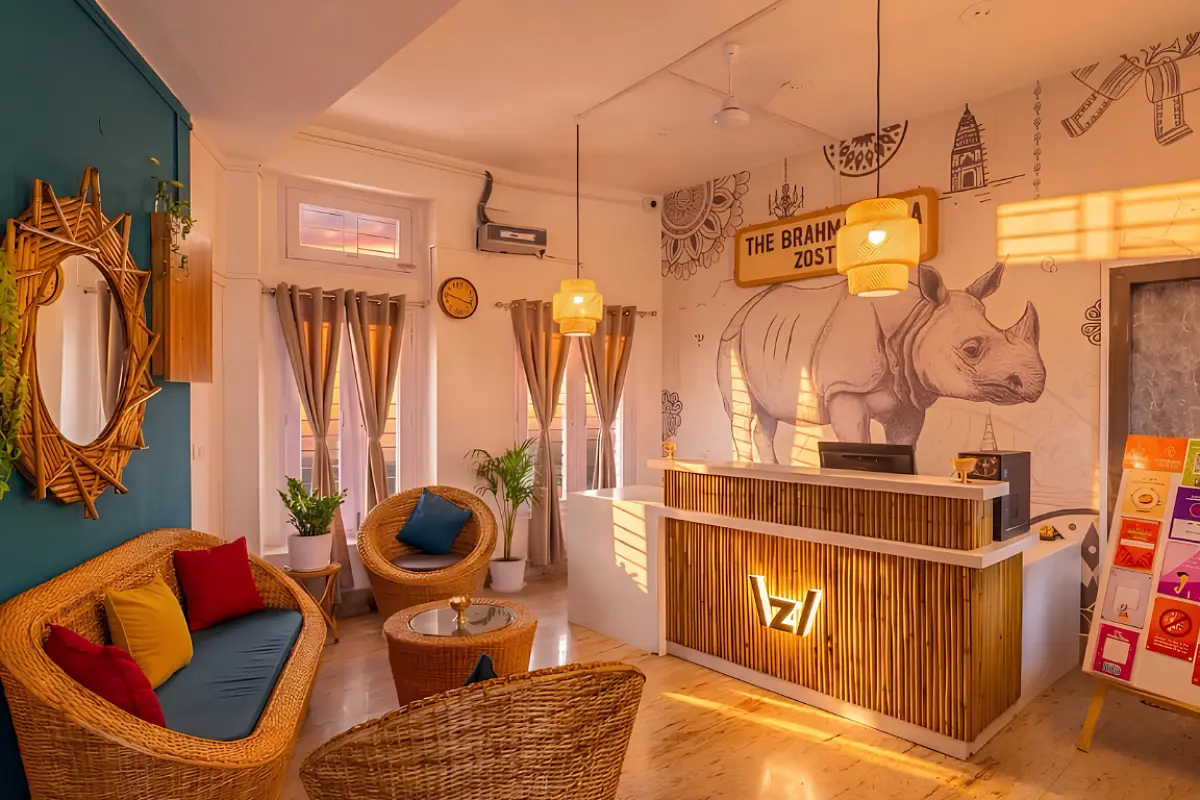
GUWAHATI, June 1, 2026: Zostel has launched its first property in Guwahati, the capital of Assam and the primary entry point for travellers heading into Northeast India. The property opens ahead of the Ambubachi Melal, one of the largest Hindu pilgrimage gatherings in India, held annually at the Kamakhya Temple on Nilachal Hill, and is located on the riverside outskirts of the city, within five kilometres of Kamakhya Temple, Paltan Bazaar and Fancy Bazaar.
Zostel's arrival in Guwahati is not a routine expansion into a convenient tier-two market. It is a deliberate move into the city that functions as the threshold to eight states, Assam, Meghalaya, Arunachal Pradesh, Nagaland, Manipur, Mizoram, Tripura and Sikkim, each with its own distinct geography, culture and traveller appeal. For a hostel brand built around community-centred, experience-led travel, that is exactly the kind of address worth going to.
Zostel Guwahati Opens First Property Near Kamakhya Temple Ahead of Ambubachi Mela
The property features dormitories and private rooms alongside communal spaces designed for the kind of shared travel conversation that Zostel has built its community around. The riverside outskirts location places guests close enough to the city's key landmarks without putting them in the middle of the commercial noise that defines Guwahati's central areas.
The timing relative to Ambubachi Mela is strategically sound. The mela draws hundreds of thousands of pilgrims to Kamakhya Temple each June during the festival period, creating a concentrated demand surge that the city's accommodation ecosystem has historically struggled to absorb at quality. A well-managed hostel within five kilometres of the temple, open and operational in the weeks the mela runs, captures a portion of that demand while serving the broader year-round traveller population that uses Guwahati as a base for Northeast exploration.
Aviral Gupta on Why Guwahati Is Exactly Where Zostel Should Be
Aviral Gupta, CEO of Zostel and Zo World, did not frame the Guwahati launch as a business expansion. He framed it as a homecoming of sorts, a brand going to the place it was built for.
"Guwahati is not a waypoint. It is a world unto itself, and it has long been the most underserved region in Indian travel. That is precisely why we are here. The travellers who seek out Zostel are not looking for comfort at scale. They are looking for encounters that stay with them, that shift something in how they see the country and themselves. Guwahati, with its riverfront energy, its ancient goddess, and its position as the threshold to eight extraordinary states, is exactly the kind of destination Zostel was built for."
— Aviral Gupta, CEO, Zostel and Zo World
The phrase "most underserved region in Indian travel" is the honest starting point for any discussion of Northeast India's hospitality market. The region receives a fraction of the inbound travel its natural and cultural offerings would justify if the accommodation infrastructure, travel awareness and booking ecosystem matched what is available in more developed Indian tourism corridors. Zostel is not arriving in Guwahati because the market is mature. It is arriving because it is not, and because a brand that understands community travel has a specific role to play in markets where the story of the destination is still being told to travellers who have not yet been there.
Guwahati as the Gateway to Eight States, and a Destination in Its Own Right
The city's role as the Northeast's principal transit hub has always been its most commercially reliable hospitality driver. Every traveller heading to Kaziranga, Shillong, Tawang, Ziro, Majuli or any of the region's other increasingly prominent destinations either flies through Guwahati's Lokpriya Gopinath Bordoloi International Airport or arrives by train at Guwahati Railway Station. That makes it one of India's most captive-audience hospitality markets, with guests who need somewhere to stay before the next leg of their journey.
But Gupta's framing, Guwahati as "a world unto itself" rather than a waypoint, reflects something that regular visitors to the city already know. Kamakhya Temple is one of the most significant Shakti Peethas in Hindu religious geography, drawing pilgrims year-round and during the Ambubachi Mela in particular with an intensity that few religious sites in India can match. The Brahmaputra riverfront gives the city a visual and atmospheric character that distinguishes it from every other major urban centre in the country. Umananda Island, Srimanta Sankardev Kalakshetra and the broader Assamese cultural ecosystem give the intellectually curious traveller reasons to stay longer than a transit night.
Zostel's Northeast Entry and the Safestay Partnership Extend Its Global Reach
The Guwahati launch builds on a significant year for Zostel's expansion. Earlier in 2026, the brand announced a strategic partnership with Safestay, the European hostel group, creating a cross-promotional network of more than 8,000 beds across Europe, the United Kingdom, India, Nepal and Thailand. Under that arrangement, Zostel's nearly 3 million community members gain access to Safestay's 21 European locations, while Safestay's guests gain entry into Zostel's 100-plus property network across Asia.
The Guwahati opening adds a strategically important node to the India-Nepal-Thailand side of that network. A traveller who begins their India journey at Zostel Guwahati, uses it as a base for two weeks in Northeast India and then continues south or west through the Zostel network has a seamless community hospitality option across the entire itinerary, which is precisely the kind of end-to-end traveller experience that builds brand loyalty and generates the repeat bookings and word-of-mouth recommendations that grow a hostel network organically.
For India's Northeast, Zostel Guwahati is more than a hostel opening. It is a signal that the region is being taken seriously by one of the country's most recognised backpacker hospitality brands, and that the travellers who come next will find an infrastructure for shared experience-led travel that was not there before.