LPG Shortage Forces Indian Restaurants to Cut Rava Dosas, Parottas and Pizza from Menus
Indian restaurants are reducing menu items such as rava dosas, parottas and pizzas as an LPG shortage disrupts kitchen operations and forces businesses to adapt cooking practices.
 Prajakta Sanjay Warwadkar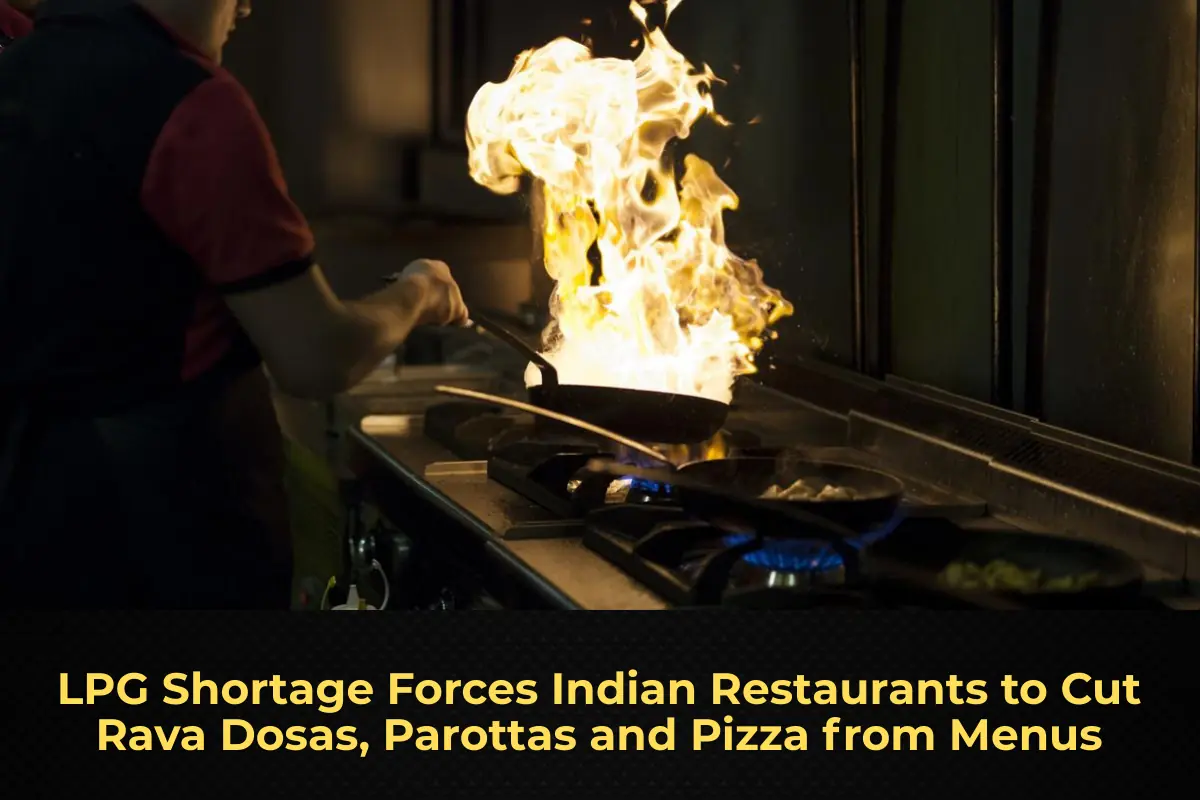
LPG Shortage Disrupts Restaurant Kitchens Across India
Restaurants across India are facing operational challenges as an ongoing shortage of liquefied petroleum gas (LPG) disrupts kitchen activities. The supply crunch has forced several food businesses to temporarily remove certain items from their menus, particularly dishes that require higher cooking time or greater fuel consumption.
Popular dishes such as rava dosas, parottas and pizzas are among the items being cut or limited by some restaurants. These foods typically require prolonged heating or multiple stages of preparation, making them less practical during periods of restricted fuel availability.
The shortage has prompted restaurant owners to reassess their kitchen operations, cooking methods and menu offerings in order to continue serving customers while managing limited fuel resources.
High‑Fuel Dishes Among the First to Be Removed
Menu items that demand continuous or high-temperature cooking are the most affected by the LPG shortage. Dishes such as rava dosa require extended cooking time on griddles, while layered parottas often involve repeated heating and preparation stages.
Pizzas, which rely on ovens operating at high temperatures, also consume considerable fuel. For many restaurants struggling with limited LPG supply, temporarily removing these items has become a necessary operational adjustment.
Restaurant operators are prioritizing dishes that can be prepared quickly and with lower fuel consumption in order to maintain service efficiency.
Operational Adjustments in Restaurant Kitchens
To manage the situation, several restaurants are adopting alternative cooking strategies. These include preparing ingredients in advance, cooking in larger batches and simplifying menus to focus on core dishes that require less energy.
Industry bodies have also advised restaurants to plan kitchen operations carefully to maximize fuel efficiency during the shortage.
Such adjustments are helping businesses maintain service continuity while minimizing disruptions for customers.
Impact on Small and Independent Restaurants
While larger restaurant chains may have access to multiple suppliers or backup fuel options, smaller independent eateries are particularly vulnerable to supply disruptions.
Many small establishments rely on regular LPG cylinder deliveries to keep their kitchens running. Delays or shortages can significantly affect their ability to operate normally.
For these businesses, even temporary disruptions can lead to reduced customer footfall and revenue challenges.
Balancing Costs and Customer Expectations
Restaurant owners are also facing the challenge of balancing operational costs with customer expectations. Removing popular menu items may disappoint regular diners, but maintaining operations during a fuel shortage requires practical decisions.
Many establishments are communicating openly with customers about the temporary menu changes and the reasons behind them.
This transparency helps maintain customer trust while restaurants navigate the ongoing supply constraints.
Industry Bodies Offer Guidance
Restaurant industry associations have issued advisories encouraging operators to use fuel efficiently and adapt their cooking processes during the shortage. Recommendations include pre-soaking grains, preparing ingredients in batches and limiting high-energy cooking techniques.
These measures are intended to help restaurants stretch available fuel supplies while maintaining food quality and safety standards.
Industry leaders are also urging authorities and suppliers to ensure stable LPG distribution to the hospitality sector.
Dependence on LPG in Commercial Kitchens
LPG remains one of the most widely used fuel sources in restaurant kitchens across India due to its affordability, availability and ability to deliver consistent high heat for cooking.
Many commercial kitchens are designed specifically around LPG-based equipment such as burners, griddles and ovens.
As a result, supply disruptions can have immediate effects on food preparation and restaurant operations.
Broader Implications for the Foodservice Industry
The LPG shortage highlights the vulnerability of the restaurant industry to disruptions in energy supply chains. Fuel availability plays a critical role in maintaining daily operations, particularly in high-volume kitchens.
Industry experts suggest that the situation may encourage some restaurants to explore alternative energy options or more fuel-efficient equipment in the long term.
Such changes could help businesses build greater resilience against future supply disruptions.
Exploring Energy-Efficient Solutions
In response to rising energy challenges, some restaurants are considering energy-efficient appliances, induction-based cooking equipment and hybrid kitchen setups that reduce reliance on a single fuel source.
Although such transitions require investment, they may provide long-term operational stability and cost savings.
For now, however, most restaurants remain focused on managing the immediate challenges posed by the LPG shortage.
Looking Ahead
As the supply situation continues to evolve, restaurant owners across India are closely monitoring LPG availability while adapting their menus and kitchen operations. The ability to remain flexible during such disruptions has become an important skill for foodservice operators.
While customers may temporarily notice fewer menu choices, these adjustments are helping restaurants maintain service and navigate the current fuel supply challenges.
Industry stakeholders remain hopeful that improved LPG distribution will restore normal operations for restaurants in the near future.