Restaurant Body Issues Advisory as LPG Shortage Disrupts Kitchens Across India
India’s national restaurant body issues an advisory to restaurants as LPG shortages disrupt kitchen operations, urging operators to rationalise menus, pre‑soak grains and optimise cooking practices.
 Prajakta Sanjay Warwadkar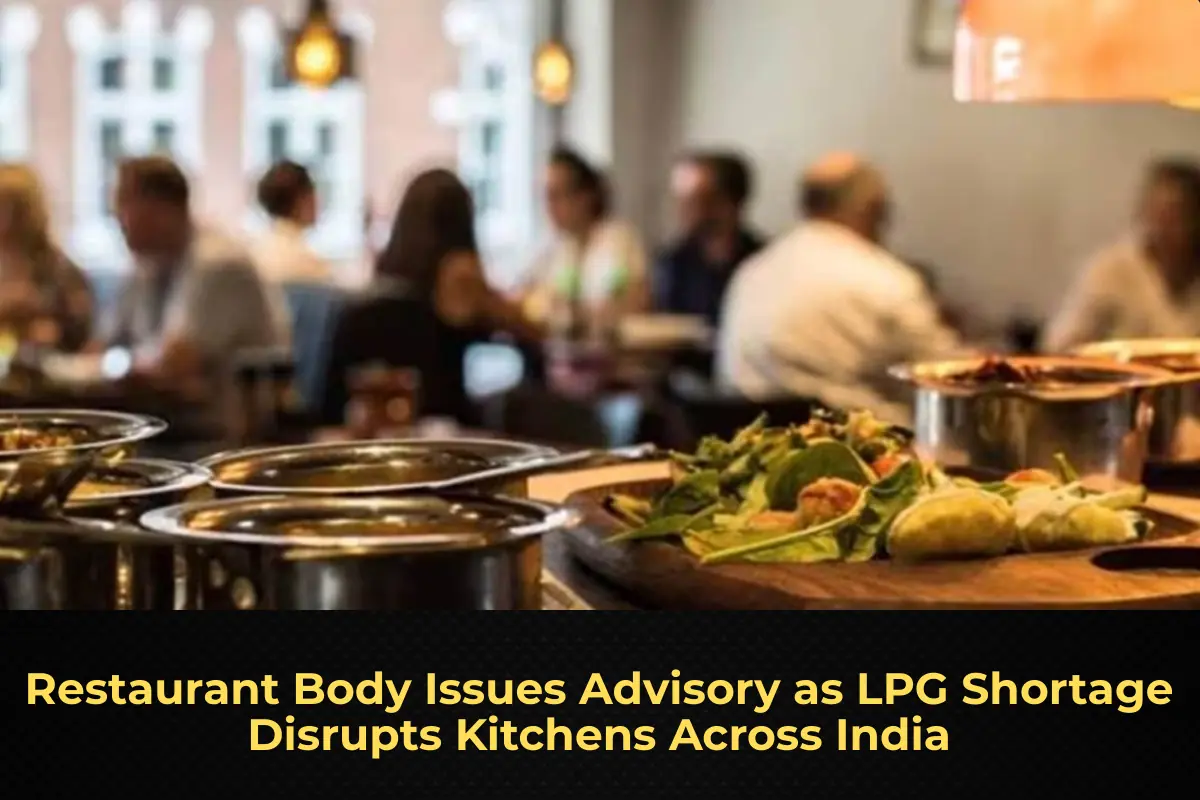
LPG Shortage Creates Operational Challenges for Restaurants
The restaurant and hospitality sector in India is facing an unexpected operational challenge as shortages of liquefied petroleum gas (LPG) begin to affect commercial kitchens across multiple regions. With LPG being one of the most widely used cooking fuels in professional kitchens, any disruption in supply can significantly impact the daily functioning of restaurants, cafés, and food service establishments.
Recognizing the growing concern within the industry, the national restaurant body has issued an advisory to its members and other hospitality businesses. The guidance outlines several practical measures aimed at helping restaurants continue operating effectively despite the limitations in fuel availability.
The advisory focuses on optimizing kitchen efficiency, reducing fuel consumption, and adopting strategic cooking practices. These measures are intended to ensure that restaurants can maintain service quality while managing limited resources.
Importance of LPG in Commercial Kitchens
LPG plays a crucial role in the food service sector due to its efficiency, reliability, and suitability for high‑volume cooking. Many professional kitchens rely on LPG-powered stoves, ovens, and other equipment to prepare a wide range of dishes quickly and consistently.
Compared to other fuel sources, LPG provides immediate heat and precise temperature control, which are essential for preparing complex dishes and managing multiple cooking stations simultaneously. For this reason, restaurants across India have traditionally depended on LPG cylinders as a primary energy source.
However, when supply disruptions occur, kitchens can face delays, reduced productivity, and increased operational stress. Even short-term shortages can create logistical challenges for businesses that serve hundreds of customers daily.
Impact on Daily Restaurant Operations
For restaurant operators, fuel shortages can disrupt multiple aspects of the service process. Without sufficient LPG supply, cooking times may increase, menu availability may be limited, and staff may need to adjust workflows to conserve fuel.
Restaurants that rely heavily on grilled, sautéed, or deep-fried dishes may feel the impact more strongly because these cooking methods require sustained heat.
In addition to operational challenges, fuel shortages can also affect customer experience if restaurants are forced to modify menus or extend waiting times for food preparation.
Advisory Encourages Efficient Kitchen Practices
To help restaurants manage the situation, the industry advisory recommends several practical steps that can reduce fuel consumption without compromising food quality. These measures are designed to encourage more efficient kitchen management during periods of limited LPG supply.
One of the key suggestions involves pre-soaking grains and legumes before cooking. This traditional cooking technique significantly reduces cooking time, allowing kitchens to conserve fuel while maintaining consistency in food preparation.
Pre-soaking also enhances the texture and flavor of many dishes, making it both a practical and culinary-friendly solution.
Cooking in Batches to Reduce Fuel Usage
Another important recommendation from the advisory is batch cooking. Instead of preparing small quantities repeatedly throughout the day, restaurants are encouraged to cook larger batches of staple items at scheduled intervals.
This approach reduces the frequency with which burners must be turned on and off, helping to conserve LPG consumption across the kitchen.
Batch cooking is particularly effective for dishes such as rice, sauces, soups, and slow-cooked curries, which can be stored safely and reheated when needed.
Menu Rationalisation as a Strategic Measure
One of the most significant suggestions from the advisory involves rationalising restaurant menus during the period of LPG shortage. By simplifying menu offerings, restaurants can focus on dishes that require less cooking time or fewer heating processes.
Streamlining menus allows kitchens to operate more efficiently while ensuring that the most popular and profitable dishes remain available to customers.
This approach can also help reduce food waste and improve inventory management during periods of operational uncertainty.
Prioritizing High-Demand Dishes
Restaurants are encouraged to identify dishes that are consistently popular among customers and prioritize them within the menu. These items can be prepared in advance or cooked more efficiently using optimized workflows.
Reducing the number of complex or energy-intensive dishes temporarily allows kitchens to maintain productivity even when fuel supplies are constrained.
Many operators see this as an opportunity to revisit their menu structure and focus on core offerings that represent the restaurant’s identity.
Operational Adaptation in the Hospitality Industry
The hospitality sector has historically demonstrated resilience when faced with operational challenges. From supply chain disruptions to changing consumer behavior, restaurant businesses often adapt quickly to maintain continuity.
The current LPG shortage presents another situation that requires flexibility and creative problem-solving.
Restaurant managers and chefs are exploring multiple approaches to maintain service standards, including revising cooking techniques, adjusting preparation schedules, and training staff on energy-efficient practices.
Staff Training and Coordination
Effective coordination among kitchen staff becomes especially important during periods of limited resources. Teams must communicate clearly to ensure that cooking equipment is used efficiently and that fuel consumption is minimized.
For example, multiple dishes may be prepared simultaneously using shared burners, or cooking schedules may be reorganized to reduce idle heating time.
Such adjustments require careful planning but can significantly improve fuel efficiency in busy kitchens.
Supply Chain Concerns and Industry Dialogue
The LPG shortage has also prompted broader discussions within the hospitality industry regarding fuel supply chains and long-term resilience. Restaurant associations and business groups are engaging with relevant authorities and suppliers to ensure that the needs of commercial kitchens are considered.
Reliable fuel access is critical for the functioning of restaurants, hotels, and catering businesses that serve millions of meals each day.
Industry representatives continue to monitor the situation closely while encouraging members to implement temporary solutions that help maintain operations.
Supporting Small and Independent Restaurants
Smaller restaurants and independent food businesses may face greater challenges during fuel shortages because they often operate with limited resources and smaller inventories.
For these businesses, even minor disruptions can have a noticeable impact on daily revenue and service capacity.
Industry bodies are encouraging collaboration and information sharing among restaurant operators so that businesses can learn from one another and adopt effective strategies.
Exploring Alternative Energy Solutions
The situation has also sparked renewed interest in alternative cooking energy sources. Some restaurants are exploring electric cooking equipment, induction systems, or hybrid kitchen setups that combine multiple energy sources.
While LPG remains the most widely used option for many establishments, diversification of energy sources could help improve resilience against future supply disruptions.
However, transitioning to alternative systems requires investment, infrastructure upgrades, and staff training, making it a longer-term consideration for many businesses.
Sustainability and Energy Efficiency
Energy efficiency has already become an important priority in modern restaurant design. Many new kitchens are being developed with equipment that reduces energy consumption while maintaining high cooking performance.
The current LPG shortage highlights the importance of such initiatives, encouraging operators to evaluate how their kitchens use energy and where improvements can be made.
Even simple adjustments, such as maintaining equipment properly or using lids on cooking vessels, can help reduce fuel usage over time.
Customer Experience During Operational Adjustments
Despite the challenges posed by the LPG shortage, many restaurants are striving to ensure that guests continue to receive high-quality dining experiences. Clear communication with customers can help manage expectations when menus or preparation times change.
Some restaurants are informing diners about temporary menu adjustments or highlighting special dishes that can be prepared more efficiently during this period.
Such transparency often strengthens customer relationships, as guests appreciate understanding the operational realities behind the scenes.
Maintaining Service Standards
Even as restaurants implement efficiency measures, maintaining service quality remains a top priority. Chefs and kitchen teams continue to focus on taste, presentation, and consistency in every dish served.
The advisory from the restaurant body emphasizes that operational adjustments should support efficiency without compromising the culinary standards that customers expect.
By balancing efficiency with quality, restaurants can navigate the current challenges while preserving their brand reputation.
Industry Outlook and Moving Forward
While the LPG shortage presents short-term challenges, many industry observers believe that the situation will encourage restaurants to adopt more efficient and resilient operational practices.
From improved kitchen workflows to smarter energy management, the lessons learned during this period may help businesses strengthen their long-term operations.
Restaurant operators across India continue to demonstrate adaptability and innovation as they implement the advisory’s recommendations and explore additional strategies for managing limited resources.
As supply conditions stabilize, many of these efficiency practices may remain part of everyday kitchen operations, contributing to a more sustainable and resource-conscious hospitality sector.
The advisory ultimately serves as a reminder that collaboration, innovation, and careful planning are essential in navigating challenges within the dynamic restaurant industry.