Agent Washing in Restaurants Fuels Growing AI Skepticism
Agent washing in restaurants is deepening operator distrust of AI, as scripted automation gets marketed as autonomous intelligence across the industry.
 RUKAIYA KADIWAL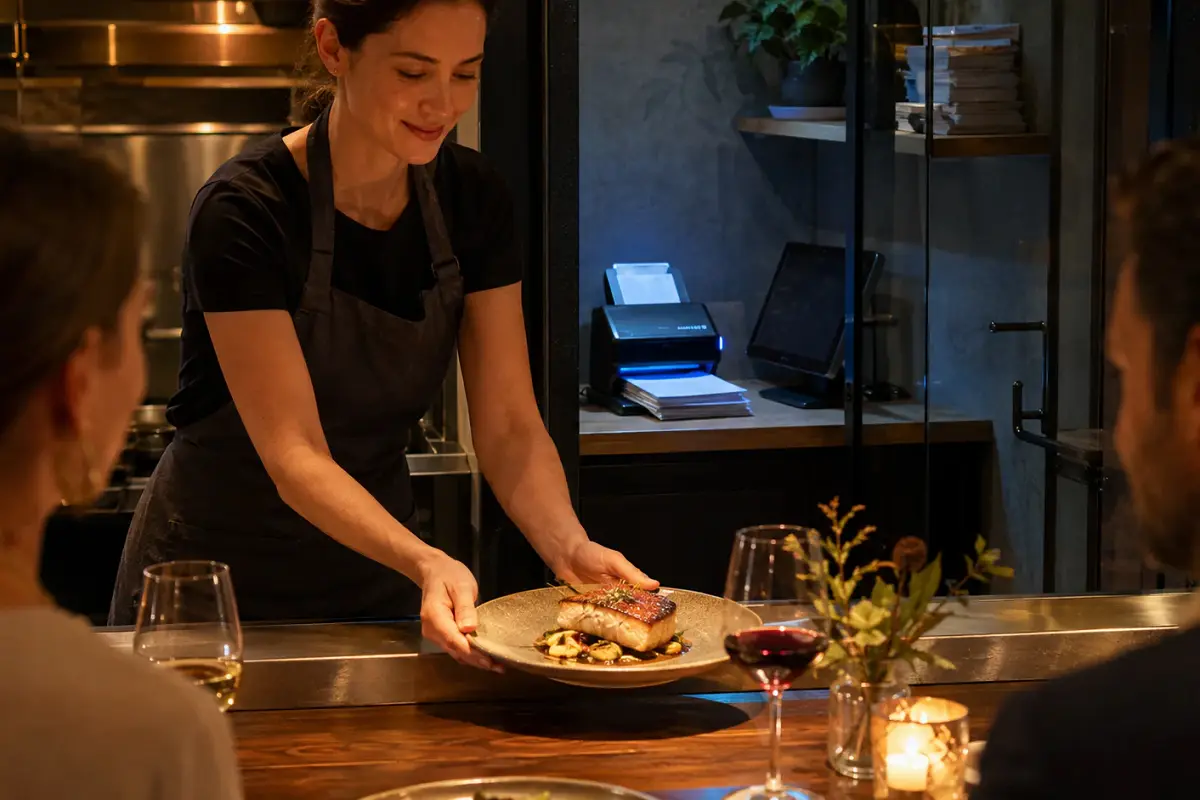
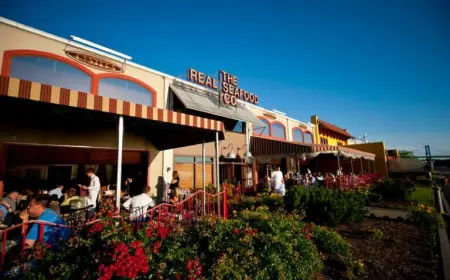
A server sets down a plate of seared fish, candlelight catching the glass beside it, while behind a glass partition a printer and tablet hum quietly at a host stand. That contrast, warmth at the table, machinery just out of sight, captures where the restaurant industry currently stands with automation. Agent Washing in Restaurants has become the phrase operators use for a specific frustration, technology marketed as intelligent that turns out to be little more than a script wearing a new label.
A String of Public Failures
Recent headlines have not helped confidence. Starbucks switched off a computer vision inventory system before it turned a year old, and Pizza Hut's largest franchisees filed a 100 million dollar lawsuit claiming a mandatory AI platform had broken down across more than 110 restaurants. At this year's National Restaurant Association Show, one vendor even sold a hood degreasing service marketed as AI powered, prompting Khara Mangiduyos, owner of Kalei's Kitchenette in San Diego, to ask the obvious question. "Who's gonna scrape that oil? Not a bot. Not AI," she said, a line that captures exactly how far the AI label has stretched beyond meaning.
Ambition, Fabrication, and the Difference Between Them
Some failures come from genuine ambition meeting hard problems. Taco Bell expanded AI voice ordering to more than 890 drive thrus, years after an earlier version famously took an order for 18,000 cups of water, a stumble typical of systems tackling unpredictable, high volume tasks. Other cases cross into outright deception. In January 2025, the SEC charged drive thru voice company Presto Automation over claims that its system had eliminated human order taking, when regulators found workers in the Philippines and India were completing most orders manually.
What Gartner Is Telling Buyers
That gap between claim and reality has prompted analysts to urge caution. "SCP leaders should prepare for an agentic AI future, but they need to separate meaningful capability from market noise," said Jan Snoeckx, senior director analyst at Gartner. His guidance is direct, use plain automation for repetitive work, reserve agentic systems for high volume tasks where mistakes are cheap, and avoid handing full autonomy to hard problems prematurely.
The Tools That Actually Work
Mariano Jurich, a senior product leader at Making Sense, offers a simple test. "If you can describe what the tool does on an if then do type of sentence, then it's probably not agentic 100 percent," he says, adding that for most restaurant tasks, "agentic is probably an overkill." James Tice, head of growth at Tab Commerce, sees the real value elsewhere entirely, in unglamorous work like reconciling invoices and catching vendor overcharges. "Operators care about finances specifically. They need the busywork gone so they can get back on the floor."
What Should Never Be Automated
Tice is emphatic about where automation must stop. "You spend 50 bucks on a plate of food, you're not buying 50 dollars of food, you're buying 50 dollars of experience," he says, arguing that stripping the person out of service misreads the entire business.
A Tool, Not a Solution
Jurich's closing view is the one both men return to. "AI is just another tool that you have in your toolbox to solve a problem, and that's why it should be treated as such." In an industry built on hospitality delivered by hand, that distinction, between a tool and a promise, may matter more than any label a vendor attaches to it.
More information is available on the official website at unite.ai. Further reading on the restaurant industry is available at hospitalitycareerprofile.com.