Food Delivery Apps vs Direct Orders: Where Restaurants Actually Make More Profit in 2026
food delivery apps vs direct orders, restaurant profit margins 2026, Zomato Swiggy commissions, direct ordering benefits, restaurant profitability India, food delivery business model, hospitality trends
 Prajakta Sanjay Warwadkar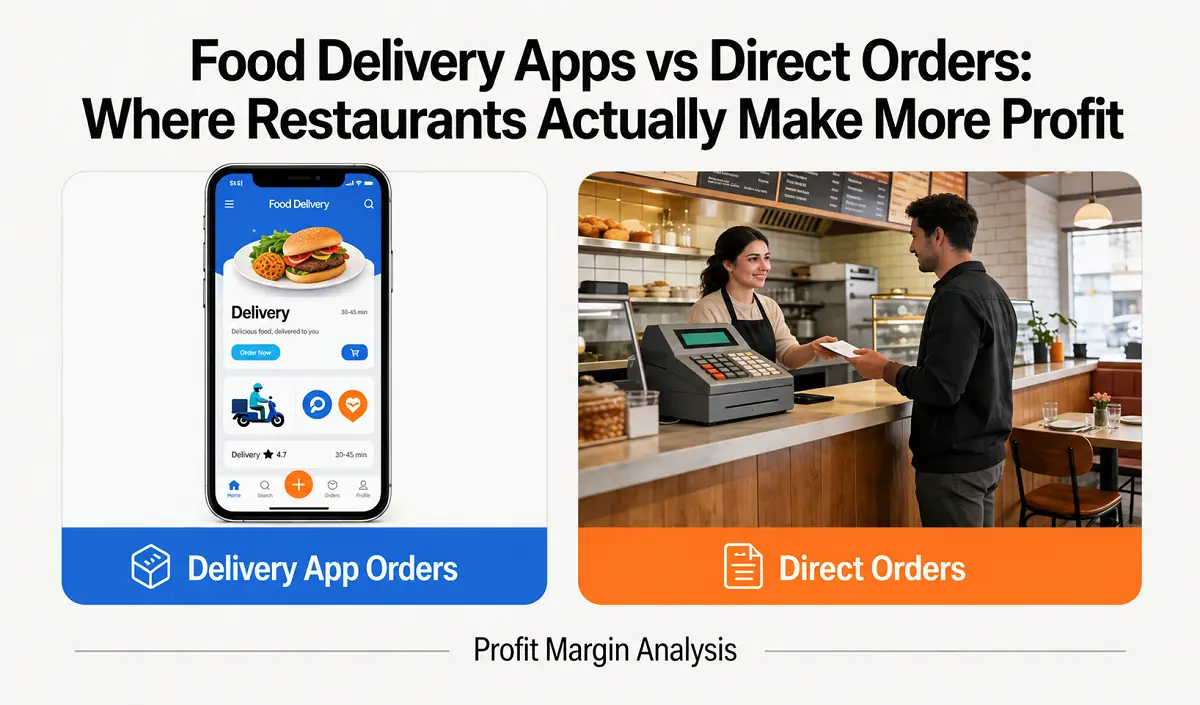
Food Delivery Apps vs Direct Orders: Where Restaurants Actually Make More Profit in 2026
The debate around food delivery apps vs direct orders has become one of the most important discussions in the restaurant industry in 2026. While food delivery platforms have helped restaurants reach millions of customers, the question remains—are they truly profitable for businesses?
As restaurants analyze their numbers more closely, the comparison between food delivery apps vs direct orders is revealing a complex reality. High order volumes through apps do not always translate into higher profits, pushing restaurant owners to rethink their strategies.
Food Delivery Apps vs Direct Orders: Understanding the Core Difference
Marketplace Model vs Direct Control
At the heart of the food delivery apps vs direct orders debate is the difference in control. Delivery platforms act as marketplaces, connecting restaurants with customers while managing logistics and visibility.
On the other hand, direct orders—through a restaurant’s own website or app—give full control over pricing, customer data, and operations. This distinction plays a major role in determining profitability.
Convenience vs Cost Efficiency
Food delivery apps offer unmatched convenience and customer reach. However, this convenience comes at a cost. Restaurants often pay significant commissions to be listed and promoted on these platforms.
In contrast, direct orders may require more effort in marketing and logistics, but they eliminate many third-party costs.
Food Delivery Apps vs Direct Orders: Profit Margins Explained
High Commissions on Delivery Platforms
One of the biggest concerns in the food delivery apps vs direct orders comparison is commission fees. Restaurants typically pay between 20% and 30% per order to delivery platforms. :contentReference[oaicite:0]{index=0}
In some cases, additional costs such as promotions, discounts, and delivery charges further reduce margins. These expenses can significantly impact profitability, especially for small and mid-sized restaurants.
Direct Orders Offer Better Margins
With direct orders, restaurants avoid platform commissions, allowing them to retain a larger share of revenue. This makes the food delivery apps vs direct orders comparison lean in favor of direct channels when it comes to profit margins.
Restaurants with their own delivery systems can reduce costs by up to 20–25% compared to relying solely on aggregator platforms. :contentReference[oaicite:1]{index=1}
Hidden Costs in Food Delivery Apps vs Direct Orders
Operational and Marketing Expenses
While delivery apps handle logistics, they introduce hidden costs such as higher menu pricing, promotional spending, and dependency on platform algorithms. These factors often go unnoticed in initial calculations.
In the food delivery apps vs direct orders debate, these hidden costs can erode profits over time, making app-based sales less sustainable.
Thin Industry Margins
The restaurant industry already operates on narrow margins, typically around 3–9%. :contentReference[oaicite:2]{index=2}
Adding high delivery costs on top of these margins can push businesses into unprofitable territory. This makes the food delivery apps vs direct orders comparison even more critical for long-term survival.
Why Restaurants Still Use Delivery Apps
Customer Reach and Visibility
Despite lower margins, food delivery apps remain a powerful tool for customer acquisition. They provide access to a large user base and help restaurants gain visibility in crowded markets.
For new or small businesses, this reach can be invaluable, even if it comes at the expense of profitability.
High Order Volumes
Food delivery platforms generate high order volumes, which can help maintain cash flow. However, as many restaurant owners have observed, increased volume does not always mean increased profit. :contentReference[oaicite:3]{index=3}
This imbalance is a key issue in the food delivery apps vs direct orders discussion.
Direct Orders: A Growing Trend in 2026
Building Customer Relationships
Direct ordering allows restaurants to build stronger relationships with customers. They can collect data, offer personalized experiences, and encourage repeat business.
This direct connection is a major advantage in the food delivery apps vs direct orders comparison.
Investment in Own Platforms
Many restaurants are now investing in their own ordering systems and apps. Although the initial cost can be significant, it offers long-term benefits in terms of control and profitability.
This shift indicates a growing preference for hybrid models that combine app-based reach with direct ordering efficiency.
Food Delivery Apps vs Direct Orders: Industry Trends and Future Outlook
Hybrid Business Models
The future of food delivery apps vs direct orders is likely to be hybrid. Restaurants are increasingly using delivery apps for visibility while encouraging customers to order directly for better deals.
This approach helps balance reach and profitability.
Changing Platform Dynamics
The industry is also witnessing changes in platform policies and pricing strategies. Rising fees and regulatory scrutiny are forcing delivery companies to rethink their models.
These developments could impact how restaurants approach the food delivery apps vs direct orders decision in the coming years.
FAQ: Food Delivery Apps vs Direct Orders
Which is more profitable for restaurants?
Direct orders are generally more profitable because they eliminate platform commissions and allow restaurants to retain more revenue.
Why do restaurants still use delivery apps?
They provide access to a large customer base and help increase visibility, especially for new businesses.
What are the main costs of food delivery apps?
Costs include commissions, delivery fees, promotional expenses, and potential pricing constraints.
Is a hybrid model the future?
Yes, many restaurants are adopting a mix of delivery apps and direct orders to balance reach and profitability.
Conclusion: Food Delivery Apps vs Direct Orders—Finding the Right Balance
The comparison between food delivery apps vs direct orders clearly shows that while apps drive volume and visibility, direct orders offer better profit margins and long-term sustainability.
For restaurants in 2026, the key is not choosing one over the other but finding the right balance. By leveraging the strengths of both models, businesses can maximize reach while protecting profitability—ensuring sustainable growth in an increasingly competitive market.