KFC Unveils Giant Kebab Installations to Promote New Doner Menu Launch
KFC has launched a creative marketing campaign by transforming restaurant totems into giant kebabs to promote its new doner menu, attracting widespread attention.
 Prajakta Sanjay Warwadkar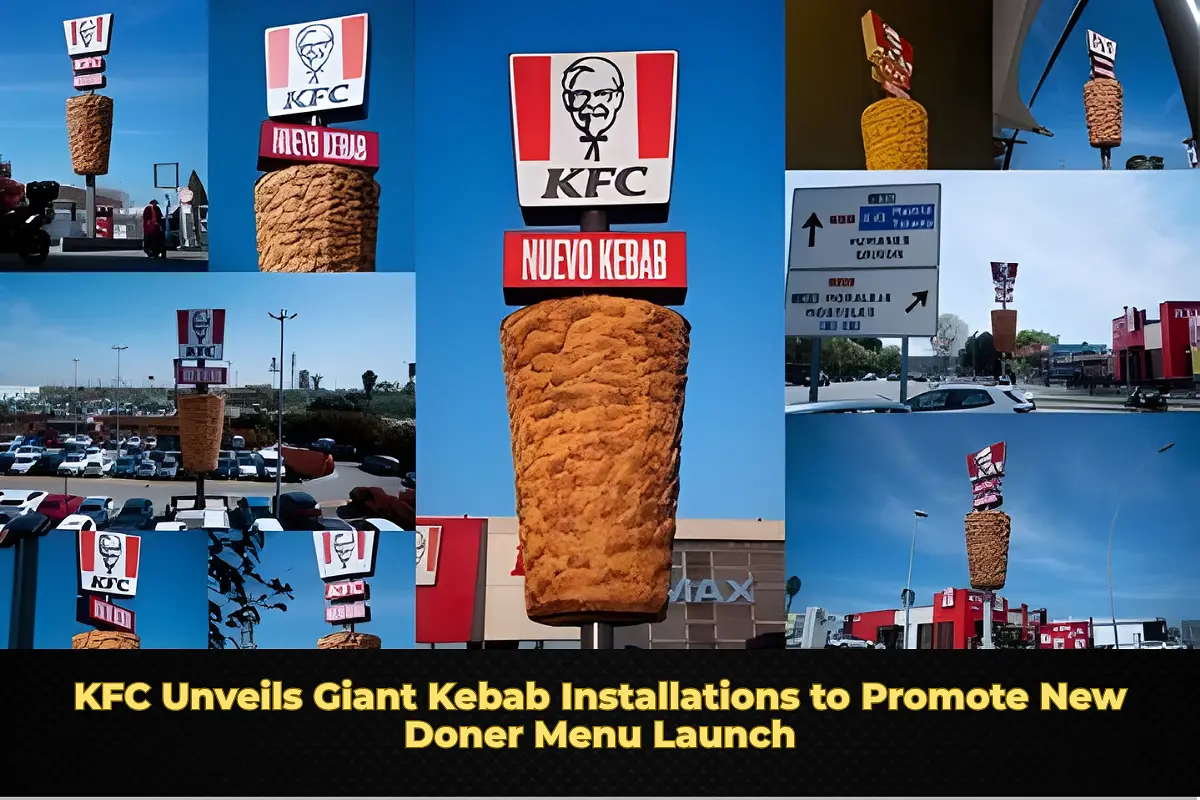
KFC Unveils Giant Kebab Installations to Promote New Doner Menu Launch
:contentReference[oaicite:0]{index=0} has introduced a new marketing campaign in 2026, transforming its restaurant totems into oversized kebab installations to promote the launch of its latest doner-inspired menu item, aiming to capture consumer attention and reinforce its position in the competitive quick-service restaurant segment.
The campaign, launched across select markets, features large vertical structures resembling rotating kebabs, placed outside KFC outlets. The initiative is designed to visually communicate the introduction of the new doner product while creating a striking street-level presence that engages passersby and potential customers.
Innovative Approach to Product Promotion
KFC’s latest campaign reflects a growing trend among quick-service restaurant brands to adopt bold and unconventional marketing strategies. By reimagining standard restaurant signage as eye-catching installations, the brand aims to create a memorable visual experience that differentiates it from competitors.
The giant kebab structures are intended to replicate the look of traditional doner preparation, aligning the visual identity of the campaign with the product being promoted. This approach helps create an immediate connection between the advertisement and the menu item, enhancing brand recall.
Such experiential marketing tactics are increasingly being used to cut through advertising clutter and attract attention in high-traffic urban environments.
Expanding Menu with Global Influences
The introduction of a doner-inspired offering highlights KFC’s strategy of incorporating globally popular flavors into its menu. Doner, widely recognized across Europe and the Middle East, has gained popularity in multiple markets due to its bold taste profile and street-food appeal.
By adapting this concept into its product lineup, KFC is seeking to appeal to younger consumers and urban diners who are increasingly open to diverse culinary influences. The move also reflects a broader industry trend of blending traditional fast food formats with internationally inspired dishes.
Menu innovation remains a key driver for growth in the quick-service sector, where brands लगातार refresh offerings to maintain customer interest.
Marketing in the Experience Economy
The campaign underscores the importance of experiential marketing in today’s restaurant industry. Consumers are no longer influenced solely by traditional advertising but are increasingly drawn to interactive and visually engaging experiences.
By creating installations that double as photo opportunities, KFC is also leveraging social media engagement. Customers who encounter the giant kebabs are likely to share images online, extending the campaign’s reach beyond its physical locations.
This integration of physical and digital marketing channels is becoming a standard approach for brands seeking to maximize visibility and engagement.
Competitive Landscape in QSR Segment
The quick-service restaurant sector remains highly competitive, with major brands continuously introducing new products and campaigns to capture market share. Innovative marketing plays a crucial role in differentiating offerings and attracting customer attention.
KFC’s initiative comes at a time when competitors are also investing heavily in product innovation and brand positioning. The ability to combine creative promotion with appealing menu items is essential for sustaining growth in this segment.
Industry analysts note that campaigns which successfully merge creativity with product relevance tend to generate stronger consumer response.
Consumer Engagement and Brand Recall
The use of large-scale installations is aimed at creating a lasting impression among consumers. Visual storytelling through physical structures can enhance brand recall, particularly when it aligns closely with the product being promoted.
In addition to attracting new customers, such campaigns can also re-engage existing patrons by introducing novelty and excitement into the brand experience. This is especially important in urban markets where consumers are exposed to a high volume of advertising.
Engagement-driven campaigns are increasingly viewed as a way to build deeper connections with audiences.
Integration with Broader Marketing Strategy
KFC’s kebab-themed installations are likely part of a broader integrated marketing strategy that includes digital campaigns, social media promotions, and in-store experiences. Coordinated efforts across multiple channels help reinforce messaging and drive customer action.
The campaign also aligns with the brand’s ongoing focus on innovation, both in terms of menu development and marketing execution. By maintaining consistency between product and promotion, KFC aims to strengthen its brand identity.
Such integrated strategies are essential for achieving sustained impact in a fragmented media landscape.
Future Trends in Restaurant Marketing
The campaign highlights the evolving nature of restaurant marketing, where creativity and experience are becoming as important as the product itself. Brands are increasingly exploring new ways to engage customers beyond traditional advertising formats.
Future campaigns may continue to incorporate elements such as interactive installations, augmented reality, and personalized experiences to enhance engagement. The focus on creating shareable moments is expected to remain a key trend.
As competition intensifies, the ability to innovate in both product and promotion will be critical for success.
Conclusion
KFC’s giant kebab installation campaign demonstrates how creative marketing and global menu innovation can work together to capture consumer attention, reinforcing the brand’s presence in the fast-evolving quick-service restaurant industry.