Kura Sushi USA Reports Same-Restaurant Sales Rebound Amid Ongoing Growth Strategy
Kura Sushi USA reports a rebound in same-restaurant sales, reflecting improved performance amid broader growth and operational focus in 2026.
 Prajakta Sanjay Warwadkar
Kura Sushi USA has reported a rebound in same-restaurant sales in 2026, signaling improved operational performance across its existing outlets as the company continues to navigate a competitive dining landscape in the United States. The update reflects strengthening demand trends alongside ongoing efforts to stabilize store-level performance.
The company’s same-store sales recovery follows a period of pressure, indicating a shift toward more consistent customer traffic and spending patterns at established locations. The development is being closely monitored by investors and industry observers as a key indicator of operational health within the chain’s portfolio.
Same-Restaurant Sales Performance
The rebound in same-restaurant sales suggests that Kura Sushi USA is experiencing renewed momentum across its existing units. Same-store sales, a critical metric in the restaurant industry, measure performance at locations open for a defined period and exclude the impact of new store openings.
The improvement indicates a recovery in guest visits and average transaction values, reflecting stronger alignment between menu offerings, pricing strategies, and customer expectations. This trend points to stabilization after earlier fluctuations in performance, which had raised concerns about consistency across the brand’s operations.
Industry analysts often view same-store sales growth as a key measure of a restaurant chain’s ability to sustain demand without relying solely on expansion. The recent rebound suggests that Kura Sushi USA is making progress in strengthening its core business.
Operational Adjustments and Strategy
The company’s performance improvement is likely linked to ongoing operational adjustments, including menu optimization, service efficiency, and cost management initiatives. Restaurant operators across the sector have been focusing on refining in-store execution to drive repeat visits and enhance customer satisfaction.
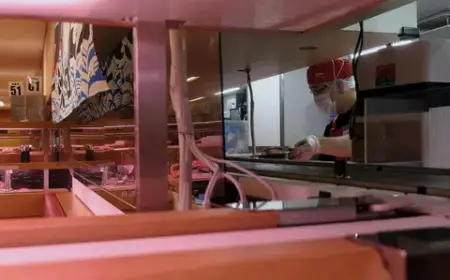
Kura Sushi USA has continued to emphasize its technology-driven dining model, which integrates automated service elements and a distinctive conveyor belt sushi concept. These features contribute to operational consistency while differentiating the brand within the casual dining segment.
Efforts to maintain quality and streamline service processes are essential in supporting same-store sales growth, particularly in a market where customer expectations around speed, value, and experience remain high.
Market Environment and Consumer Trends
The rebound comes amid a broader environment of evolving consumer behavior in the U.S. restaurant industry. While dining demand remains present, customers are increasingly selective in their spending, influencing how restaurant chains approach pricing and value propositions.
Casual dining brands are adapting to these shifts by balancing menu innovation with affordability, aiming to retain customer engagement without compromising margins. Kura Sushi USA’s performance improvement suggests that its offering continues to resonate with its target audience.
The sushi segment, in particular, has maintained steady demand, supported by consumer interest in international cuisine and experiential dining formats. Brands that combine quality with distinctive service models are better positioned to capture this demand.
Expansion and Growth Considerations
While same-store sales provide insight into existing operations, Kura Sushi USA’s broader growth strategy also includes expansion through new restaurant openings. The company has been increasing its footprint in the U.S., contributing to overall revenue growth.
However, maintaining performance at existing locations remains critical, as it ensures that expansion is supported by a stable operational base. The recent rebound in same-restaurant sales strengthens the company’s position as it continues to scale its network.
Balancing expansion with consistent store-level performance is a key challenge for restaurant chains, particularly in competitive markets where customer loyalty and brand differentiation play significant roles.
Industry Context and Investor Outlook
The update on same-store sales comes at a time when investors are closely evaluating restaurant stocks based on their ability to deliver consistent growth. Metrics such as same-restaurant sales, margin performance, and unit economics are central to assessing long-term viability.
Kura Sushi USA’s rebound may signal improving fundamentals, although sustained performance will be necessary to reinforce confidence. The company’s ability to maintain positive trends across multiple reporting periods will be a key factor in shaping market perception.
The broader restaurant sector continues to face challenges related to cost pressures and shifting consumer spending, making operational efficiency and demand stability critical components of success.
Conclusion
Kura Sushi USA’s reported rebound in same-restaurant sales highlights a positive shift in operational performance, reflecting improved customer engagement and execution at the store level. As the company continues to expand its footprint, maintaining consistent results across existing locations will remain central to its growth strategy within the competitive U.S. dining market.