Rosina London Restaurant Review: Italian Soul in SW17
Rosina London restaurant brings an Emilia Romagna-influenced trattoria to Wandsworth Common, where Adam Byatt's fifth venture serves some of the best Italian food in south London.
 RUKAIYA KADIWAL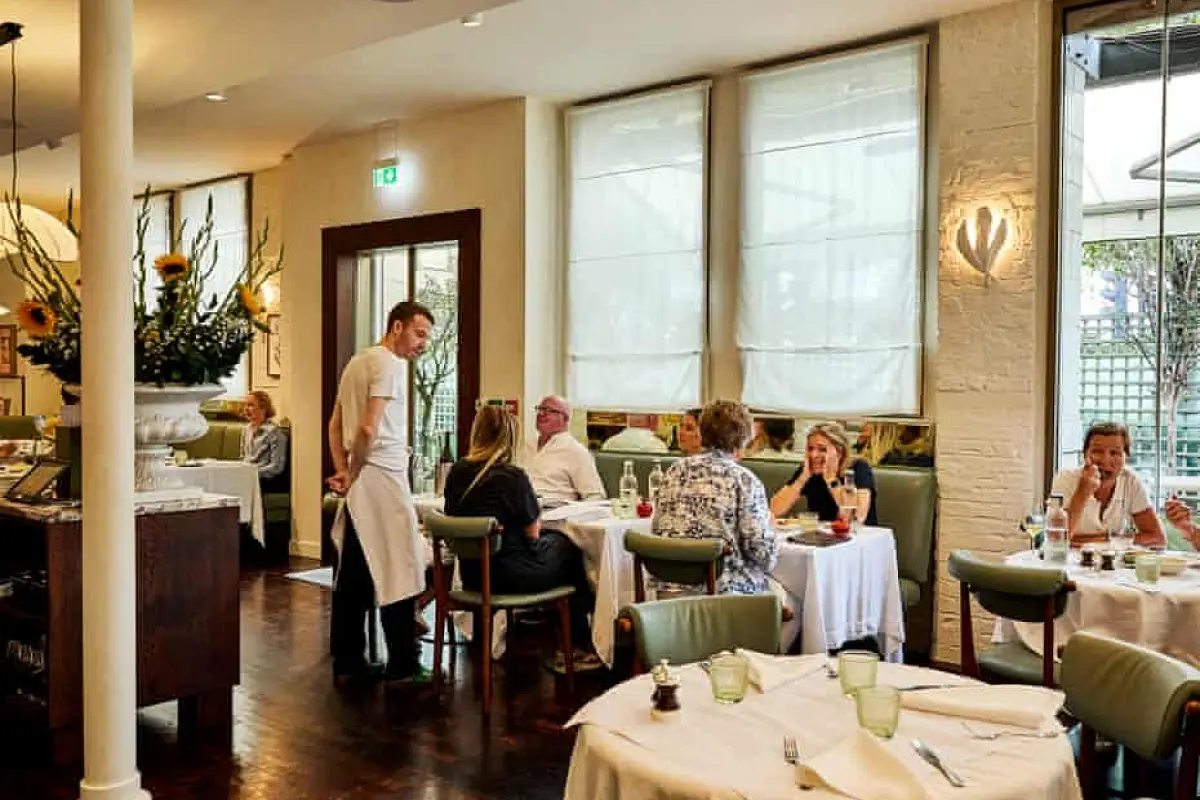
The cloakroom tags at Rosina are small Amalfi Coast pebbles, each one engraved with a number. It is a detail that takes a moment to register, and then takes longer to forget. Someone chose these. Someone ordered them, thought about what they would communicate, decided that the weight of a stone from the Italian coast was the right object to press into a guest's hand when they handed over a coat. The decision is small and completely unnecessary and exactly the kind of thing that distinguishes a restaurant where someone cares from one where someone simply operates.
Rosina London Restaurant Arrives on Wandsworth Common's Best Stretch
Rosina London restaurant sits on Bellevue Road in SW17, just off Wandsworth Common, sharing a stretch with Chez Bruce, and the comparison the address invites is one the restaurant has to live with from its first week. It is Adam Byatt's fifth restaurant, the latest addition to a portfolio that includes Trinity, his Michelin-starred place up the road in Clapham, and it arrives with a concept built around the cooking traditions of Emilia Romagna, the northern Italian region whose culinary contributions include mortadella, culatello di Zibello, and the kind of pasta that rewards patience in both the making and the eating.
The day-to-day cooking is led by Will Bee, whose background includes time at Michelin-starred Lita in Marylebone and Paul Ainsworth at No 6 in Padstow. That formation shows in the precision with which the menu's simpler dishes are executed, and in the confidence to place a cavatelli cacio e pepe at eight pounds alongside a caviar linguine at thirty, treating accessibility and luxury as two ends of the same menu rather than separate products for separate customers.
A Room That Earns Its Intimacy
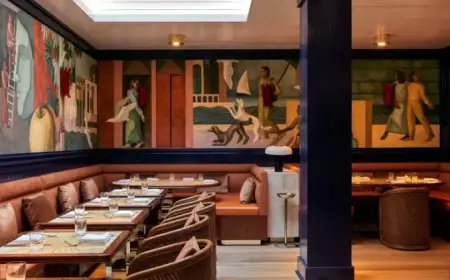
Rosina's dining room creates an impression of intimacy that its actual dimensions do not support. The space is large, as big as a tennis court in the words of one visitor, but the art deco-shaped cocktail bar with its pale marble-topped counter and walls covered in David Steen portraits absorbs the scale rather than advertising it. There is a second, smaller bar area for guests who fall between a light dinner and something more committed in the drinking department, and the restaurant proper occupies a linen-tableclothed main room with a back section for private dining. The weekly laundry costs for those tablecloths are, by any honest accounting, significant. They are also completely in keeping with what the restaurant is trying to be.
Byatt has been documenting the restaurant's origins through a YouTube series called Road to Rosina, in which he visits suppliers, eats pasta alongside Italian grandmothers, and studies tiramisu from a woman named Pina whose recipe eventually appears on the menu. The series does something that most restaurant marketing does not: it shows the actual research rather than the polished result, the learning rather than the arriving. It also builds a set of guests who arrive at the restaurant knowing something specific about what they are going to eat and where it comes from.
What the Menu Actually Delivers
The small plates that open a meal at Rosina include fried taleggio, melanzane fritte, and smoked sardines on toast, dishes that establish an Italian register without trying to surprise anyone before the kitchen has properly introduced itself. The sardines, coated in breadcrumbs with their tails presented with a precision that suggests genuine care for the appearance of a small and affordable plate, signal that the kitchen's attention does not scale with price.
A carpaccio of wild sea bass arrives flecked with chilli and Amalfi lemon, dressed in olive oil of a quality that the kitchen is not inclined to share with guests who have not specifically ordered it. The fish is clean and sharp, the oil round and immediate, and the dish moves quickly from pleasant to something closer to essential. The 'nduja strozzapreti that follows it carries a rich tomato sauce around a pasta shape whose name translates loosely as priest-stranglers, a combination whose simplicity and depth sit in exact productive tension with each other.
The risotto bianco is made with Riso Buono carnaroli rice and finished with a bright egg yolk, and it does what a white risotto is supposed to do, which is to offer the diner no place to hide from its richness. The dish is unapologetically direct about what it is. Roast turbot arrives properly cooked alongside a plate of summer vegetables charred from the grill and dressed with saba from Modena, the grape must reduction that carries the concentrated sweetness of the region alongside its acidity.
The Post-Service Pasta and What It Reveals
Among the menu's more telling entries is what Rosina labels its post-service pasta: spaghetti with anchovy, chilli, and garlic at sixteen pounds. The description identifies it as the kind of food eaten after a restaurant shift is over, the meal that kitchen staff cook for themselves when the restaurant has closed and they are finally hungry enough to eat. Placing it on the menu is a disclosure of sorts, an admission that there is a life behind the pass that the evening's service does not normally reveal. The impulse toward transparency that the dish represents is one worth more of in restaurants generally.
The bruschetta of rabbit livers braised in chianti is the kind of dish that divides a table. Those who eat it with enthusiasm will eat it the way Hugh, the reviewer's companion on the evening of Grace Dent's Guardian visit, reportedly consumed his, with complete conviction. Those who do not eat offal will not order it, which is also fine, and the menu offers them sufficient alternatives that no one should feel constrained by a single item's presence.
The Dessert Course and Pina's Tiramisu
Rosina's dessert menu reads like an exercise in nostalgia that has been executed with sufficient technique to earn the feeling rather than simply invoke it. Orange ricciarelli, marzipan fruits, iced cherries, and an Amalfi lemon tart with blackcurrant leaf ice cream form a list whose vocabulary is Italian and whose register is unhurried. The tiramisu is Pina's recipe, which the Road to Rosina series has already told the story of, wet and light and substantial in the proportions that make tiramisu work as a final statement rather than a polite gesture toward dessert.
What Adam Byatt Has Built Here
Byatt's fifth restaurant is not an experiment. It is a statement about what a neighbourhood Italian restaurant, properly resourced and properly staffed and properly thought through, can be in a part of south London that has the appetite for it. The pricing range, from eight pounds for a pasta to fifty pounds a head as a rough average, treats the neighbourhood as containing diners with different budgets and different appetites rather than assuming a single customer profile. The cavatelli at eight pounds and the caviar linguine at thirty are both on the same menu, served in the same room, with the same white linen on the tables around them.
Rosina operates all week, with lunch from noon to 2.30 and dinner from 5.30 to 10, a schedule that gives the restaurant a presence in the neighbourhood across the full range of occasions a local restaurant is expected to serve. It sits at 35 Bellevue Road, which is an address that will acquire its own associations quickly enough.
A Neighbourhood Restaurant That Knows What It Is
The most durable restaurants are the ones that understand precisely who they are before they open and maintain that understanding through the pressures that follow. Rosina has an Amalfi pebble in its cloakroom, a tiramisu recipe sourced from a woman named Pina, a post-service pasta on the menu, and a chef whose formation in serious kitchens shows in the execution of a dish that costs eight pounds. These things belong to the same sensibility, the same conviction that the details matter at every level and that a guest who notices the pebble and a guest who notices the cacio e pepe are responding to the same underlying care. Wandsworth Common is well placed to appreciate it. South London, more broadly, is well placed to make the journey.
Related reading: Best diner-style breakfasts at five American restaurant chains