Tim Hortons Stumbles: Inside a Canadian Icon's Fight to Reclaim Growth
Tim Hortons faces flat sales and failed campaigns. Inside the test kitchen and boardroom where executives search for the spark that once made the chain unstoppable food business.
 RUKAIYA KADIWAL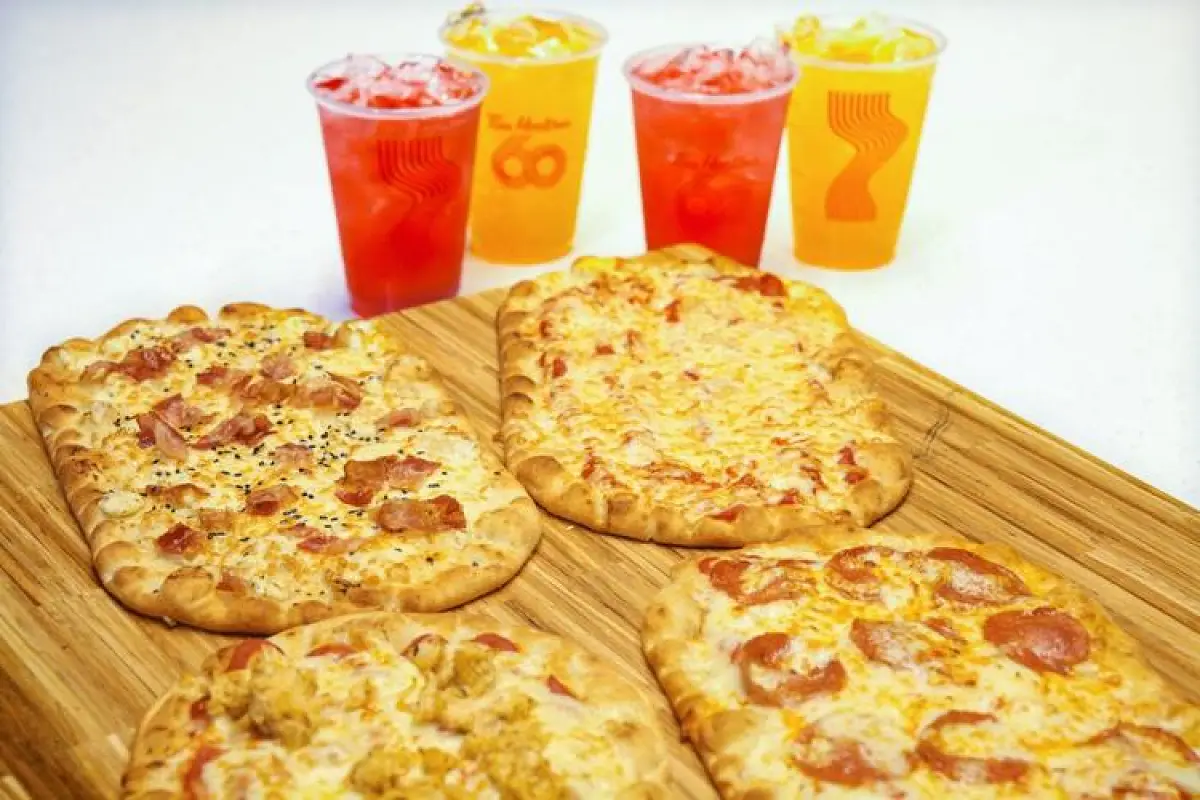
A Season of Flat Dreams
The test kitchen in downtown Toronto sits quiet on a Thursday afternoon in April. It is the kind of space that rarely goes silent—a laboratory where every surface gleams, where recipe cards are pinned to walls, where the smell of caramelized sugar and butter usually hangs in the air. But on this particular day, surrounded by gleaming ovens and cooling racks, something feels different. The kitchen staff moves with the familiar rhythm of their work, arranging flatbread pizzas on wooden boards for photography. The camera flashes. The products look gorgeous. They always do. The problem, no one says out loud yet, is that gorgeous isn't enough anymore.

Three months later, those same flatbread pizzas—the Bacon Everything, the Simply Cheese, the Pepperoni—would become evidence of a deeper problem. Not a problem with the pizza itself, but with the machinery that once reliably turned Tim Hortons' innovations into national moments. On a Thursday in August, Restaurant Brands International announced its second quarter earnings. Tim Hortons, the crown jewel that generates roughly 41 percent of the company's operating profit, had achieved something the brand's executives had come to regard as nearly impossible: flat sales.
Not declining. Flat.
The distinction matters. Decline suggests movement, momentum in the wrong direction. Flatness suggests something worse—stagnation, the slow drift of relevance that comes not from a single catastrophic decision, but from the accumulation of small ones. Tim Hortons, the café that once owned the Canadian morning, that expanded into an empire of nearly 5,000 locations across North America, that had trained generations of people to equate their day's beginning with a double double and a Boston Cream donut, had stopped growing.
The Weight of Expectation
Josh Kobza, the CEO of Restaurant Brands International, stood before analysts and delivered the news with the careful tone of a man accustomed to disappointing markets. "Our calendar didn't drive the growth we've come to expect from Tims," he said, his words carried across the conference call into the ears of investors who had built their portfolios on the assumption that Tim Hortons would always deliver. "We were unable to lap last year's major platform launches."
What this meant, in the language of corporate quarterly reports, was that the chain was competing against its own ghosts. A year earlier, Tim Hortons had released its scrambled egg boxes—a partnership with Ryan Reynolds that turned a breakfast sandwich into a cultural moment. That novelty, that spark of something unexpected, had driven sales upward. Now, as Axel Schwan, the president of Tim Hortons' Canadian and U.S. operations, would later explain, the company found itself chasing yesterday's success instead of creating tomorrow's.
The melts—those grilled cheese sandwiches brought back in response to what the company calls "consumer demand"—had performed adequately. The new quenchers, the cold beverages that arrive in fruity hues and sometimes with added protein, had their adherents. But the Timbits, the chain's legendary bite sized donuts, had disappointed. The company had launched four new flavors with promotional packaging tied to the FIFA World Cup. Except the branding wasn't official. The tournament's real logo was missing. The promotion, in other words, suggested Tim Hortons without being Tim Hortons—a perfect metaphor for a brand searching for its own identity.
"We had higher hopes," Schwan admitted, without fanfare or excuse making. "When we realized that it was not delivering the results we were planning for, we quickly adjusted and changed our priorities."
This is what it looks like when a legacy brand confronts its own limitations. Not with drama or crisis, but with the quiet recognition that the formula, refined over decades, has simply stopped working as reliably as it once did.
The Architecture of a Canadian Ritual
To understand what Tim Hortons has lost, you have to understand what it once was. The chain didn't invent the idea of a quick breakfast or a casual café experience. What it invented was a ritual. For generations of Canadians, stopping at Tim Hortons wasn't merely a transaction—it was a moment woven into the fabric of routine. The double double, that specific combination of two creams and two sugars, became synonymous with a certain kind of Canadianness, a certain kind of morning.
The company understood this in ways that most chains never have. When Tim Hortons launched something new, it didn't just offer a menu item. It offered a story, a reason to visit. The Ryan Reynolds egg boxes worked because they felt like a surprise, an unexpected collaboration that made people want to see what would happen next. They worked because they felt like Tim Hortons taking a chance on something playful and strange.
But playfulness, it turns out, is difficult to replicate on a schedule. Innovation requires the kind of creative courage that doesn't necessarily emerge from quarterly planning cycles and market research. And by the second quarter of 2026, Tim Hortons seemed to be discovering what many large food businesses have learned: that the machinery of corporate decision making and the nimbleness required to surprise customers are often in conflict.
The Numbers Behind the Stagnation
The financial picture only underscored the point. Tim Hortons generated $2 billion in system wide sales during the quarter—roughly the same as a year earlier. Comparable sales, the metric that measures growth at restaurants open for at least a year, ticked up 0.1 percent. For context, Burger King, RBI's other major brand, grew 8.6 percent over the same period. The gap was not just noticeable. It was humbling.
The broader RBI company had performed well enough. Profit attributable to common shareholders reached $507 million, up from $189 million a year earlier. Revenue for the quarter totaled $2.5 billion, up from $2.4 billion. But these gains came largely from international markets and from the company's efforts to rehabilitate the Burger King brand, not from Tim Hortons. The Canadian icon, which had always been expected to carry its parent company's growth, was now a passenger.
Analysts watched the numbers with the concern of people who had come to rely on Tim Hortons' consistency. "Popeyes was the disappointment, coming in worse than an already cautious Street was braced for, while Tim Hortons continued to lag as expected, but at least had slightly positive comp—which is optically better than having negative comp," analyst Danilo Gargiulo observed with the kind of relief that comes from a situation that could have been worse. But relief is not enthusiasm. It is the emotion of lowered expectations.
The Search for the Next Big Thing
If there was any indication that Tim Hortons understood the urgency of its situation, it lay in what was coming next. Schwan spoke of the upcoming launches with the tone of a man holding a deck of cards, hoping that one of them might be an ace. A Harry Potter partnership, bringing Hogwarts house themed donuts and a color changing cup inspired by the Forbidden Forest and designed to reveal a Patronus—this was the kind of property driven novelty that had worked before. New matcha based drinks, another attempt to capture a trend before it passes. The rollout of fountain soda machines, a piece of infrastructure designed to reduce reliance on bottled beverages and introduce customers to something called soda swirls, a play on the "dirty sodas" that had become popular on social media.
By early next year, Schwan said, every Tim Hortons location would have a fountain machine. The company had 1,300 installations complete, with a couple hundred being added every month. It was the kind of logistical undertaking that required serious capital and planning. It was also the kind of project that felt, in some way, like rearranging the furniture of a room that had lost its purpose.
What these initiatives had in common was a certain desperation dressed up as strategy. Each one was a bet that external energy—a beloved fictional universe, a health trend, a piece of equipment—could reignite something that, internally, seemed to be dimming. None of them felt quite organic to Tim Hortons the way that the Ryan Reynolds collaboration had. None of them felt like something the brand had dreamed up on its own terms.
The Difficult Truth About Legacy
The Tim Hortons story, at its core, is not unique. It is the story of every beloved institution that discovers, to its shock, that the world has changed around it faster than it realized. It is the story of a brand that built its identity on consistency and reliability during a period when consistency and reliability were scarce, only to find that in an age of infinite choice, those qualities no longer feel like advantages. They feel like shortages.
The café chain remains a titan by conventional measures. Nearly 5,000 locations still dot the continent. The brand still enjoys affection and habit driven loyalty that most restaurant groups would envy. Tim Hortons still matters. The question, which the Q2 earnings call made impossible to ignore, was whether it still mattered enough.
Kobza had expressed cautious optimism about the "back half calendar," the industry term for the second part of the year. But optimism in the face of flat growth, when your competitors are doubling their sales, begins to sound a bit like hope. And hope is not a strategy. Hope is what a company expresses when it has run out of certainties.
A Moment Suspended in Time
As the afternoon light faded over the test kitchen in downtown Toronto, those flatbread pizzas sat cooling on their wooden boards. They were, by any reasonable standard, good products. The pastry looked golden and properly baked. The toppings were generous and appetizing. When they were photographed and released into the world, they looked beautiful in their way—the kind of thing that might make you pause when scrolling through your phone.
But they were also just flatbread pizzas. They were not a story. They were not a moment. They were not the thing that made you feel like Tim Hortons understood something about you that other people didn't. They were products, released into a market saturated with products, hoping that novelty alone might be enough to matter.
In a way, that was the entire situation in miniature. Tim Hortons had not failed. It had simply become ordinary. And for a brand that had built its empire on being the opposite, ordinariness might be the most dangerous thing of all.
The company would move forward. The Harry Potter donuts would launch. The color changing cups would arrive. The fountain machines would continue their slow march across the continent, one installation at a time. Whether any of it would be enough to move the needle remained, as of that August afternoon, an open question. But one thing seemed clear: Tim Hortons sales decline marketing challenges reveal a deeper struggle. Tim Hortons was searching for something it had lost. Whether it could find it, or whether such things, once they slip away, ever truly come back, remained to be seen.
Visit Tim Hortons Official Website
For more information about Tim Hortons menu offerings, locations, and recent news, visit their official site.
Related Hospitality Industry Coverage
Explore more insights into the hospitality and restaurant industry, including career profiles and business trends:
Hospitality Career Profile: Hotel Industry News & Trade Events