Windows on the World Restaurant Unveils a Lasting Legacy
Windows on the World Restaurant marks its 50th anniversary this year, remembered as a groundbreaking celebration space atop the World Trade Center's North Tower.
 RUKAIYA KADIWAL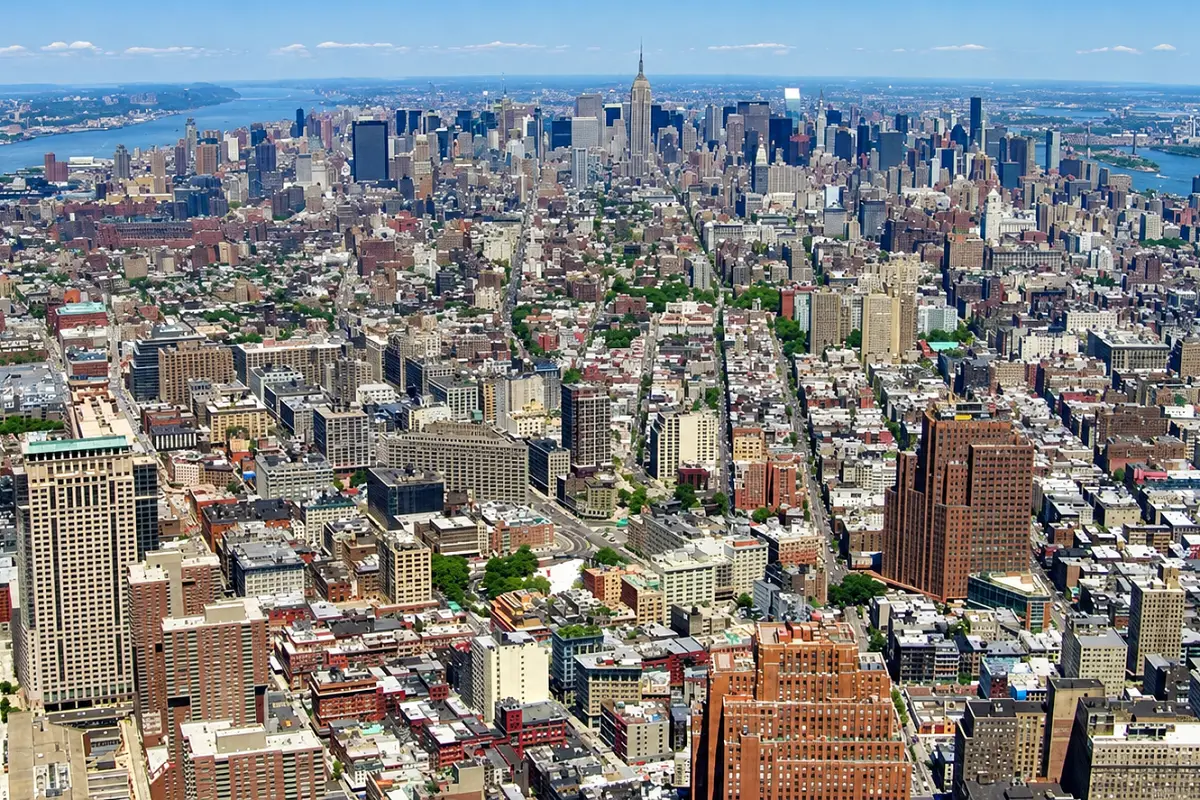
An elevator door slides open on the 107th floor, and suddenly a room nearly the size of a football field unfolds before you, skyscrapers and church spires below, the Hudson and East rivers converging in the distance, sunlight scattering across the harbor's dark water. For twenty five years, that single moment of arrival defined an evening at Windows on the World Restaurant, the celebration space that once crowned the North Tower of the World Trade Center. This year marks the 50th anniversary of the restaurant's opening, a milestone arriving alongside a far more somber one, the 25th anniversary of its destruction.
Windows on the World had a great deal to prove when it opened in April 1976. New York in that era carried the weight of a notorious Daily News headline, Ford To City: Drop Dead, alongside violent crime, mounting garbage and a city widely perceived as past its prime. The World Trade Center's arrival did little initially to dispel that civic malaise, and New York Times architecture critic Ada Louise Huxtable had already voiced public skepticism years earlier, questioning whether the towers represented the start of a new skyscraper age or simply the biggest tombstones in the world.
A Neighborhood That Didn't Do Dinner
Before Windows opened, the Financial District offered little reason to linger past business hours. Restaurateur Drew Nieporent, who later put Tribeca on the fine dining map, recalled the slim dining options available in those earlier years. He said his father worked for the State Liquor Authority, which had moved its offices to the World Trade Center, and before Windows opened, his father would take him to lunch in the Financial District.
Nieporent remembered some genuinely good places existing at the time, though nearly all of them closed before dinner service ever began. He said Windows changed that entirely, attracting Wall Street workers alongside thousands of uptown visitors and tourists to a part of the city that, frankly, didn't do dinner previously.
The Man Given Carte Blanche
Joseph H. Baum, president of Inhilco, a subsidiary of Hilton International, ran every restaurant within the World Trade Center and had created them all himself. Writing in Food and Wine in June 1978, Carl Desens described Baum's artistry as cool, meticulous and intellectual, calling him the wizard of eats, and Windows on the World his masterpiece, the world's premier celebration restaurant.
The Port Authority of New York and New Jersey had given Baum carte blanche to create what New York Magazine critic Gael Greene famously called The Most Spectacular Restaurant in the World, a phrase that later became the title of Tom Roston's definitive history of the venue. Baum, raised in a kosher hotel and restaurant family in Borscht Belt adjacent Saratoga Springs, had lived and breathed hospitality since early boyhood, building a fifty year career that would come to define an entire era of postwar New York dining culture.
The Birth of the Concept Restaurant
Baum pioneered what became known as the concept restaurant, approaching each project as much like a theatrical producer as a traditional restaurateur. Rather than leaning on a chef's individual reputation, Baum built each restaurant around painstakingly researched fantasies developed alongside his partner, Michael Whiteman, throughout the 1950s and 1960s.
Each concept emerged as a unified statement combining design, décor, wall art, flatware weight, plant and flower selection, graphics spanning everything from dinner plates to matchbooks, staff uniforms and a menu built to evoke a specific time and place. The Forum of the Twelve Caesars conjured Imperial Rome as the Metropolitan Opera might have imagined it, while La Fonda Del Sol channeled the brio of Central and South America through curated Latin American folk art. At The Four Seasons on Park Avenue, Philip Johnson's austere modernist design became a timeless triumph, its landscaping changing with each season alongside a massive Pablo Picasso curtain repurposed from a 1919 Ballet Russe production.
From a Concept Template to Modern Dining Empires
Baum demonstrated that a business could operate multiple restaurants successfully without descending into chain restaurant mediocrity, offering a template that would inspire many of today's dining empires. Danny Meyer, widely recognized as the most influential American restaurateur of recent decades, credited Baum and Rich Melman of Chicago's Lettuce Entertain You conglomerate as fundamental inspirations.
Meyer explained that he once believed Lutèce, New York's most admired restaurant of the 1950s and 1960s, represented the only viable business model, one location, the chef restaurateur present on premises, two weeks off for staff each summer. He said Joe and Rich showed him that if the experience itself was strong enough, a single restaurateur could successfully operate more than one place. Meyer's own formula ultimately shifted hospitality itself to the top of his priorities, though Baum deserves credit as the first restaurateur to require waitstaff to introduce themselves personally at the start of a meal.
The Ethereal Concept That Defined Windows
At Windows, Baum's guiding concept proved more ethereal than his earlier creations, built entirely around light and air. Every arrival on the 107th floor thrilled diners anew, skyscrapers and churches, the Hudson and East rivers converging, freighters and ferries moving across New York Harbor, sunlight and shadow shifting across the water's surface, clouds marching endlessly overhead. That view alone awakened a genuine sense of the whole world opening before each guest who stepped off the elevator.
Building the World's Best Wine Collection
Windows also profoundly shaped the history of wine appreciation in America. In 1976, a young wine salesman named Kevin Zraly stopped by the Windows office for a routine sales call, and Baum, rather than simply placing an order, hired him on the spot, granting an unlimited budget and instructions to build the best wine collection in the world. Baum also insisted Zraly carry the title cellar master rather than the more pompous sommelier.
New York Times wine critic Eric Asimov said the legacy of Windows on the World lives on most prominently through Zraly and everyone he influenced, calling the wine list he created inarguably great. Asimov noted that Zraly's Windows on the World Wine School, along with the book that emerged from those classes, turned millions of people onto wine, and credited Zraly as among the first to actively encourage and promote women within the wine industry. Full historical coverage of the restaurant is available on the official Food and Wine website.
Eating With Your Eyes
Concepts and wine lists aside, Windows remained, most importantly, a place where people gathered to eat, and the food itself, under a succession of respected chefs, was usually good. The most celebrated era belonged to Michael Lomonaco, the restaurant's final chef and the only born and bred New Yorker ever given command of Windows' kitchen.
Desens noted in his 1978 review that hot main dishes occasionally marched by with a slight limp, though the lunchtime cold buffet remained consistently exciting, an international mélange of fresher than fresh, audaciously seasoned salads, seafood, meats and vegetables, with desserts that continually outdid one another. Reviews generally acknowledged that serving up to 1,000 covers during a single dinner service meant Windows could not reasonably compete head to head with Midtown's smaller gastronomic temples, yet the view alone drew crowds substantial enough to make Windows the highest grossing restaurant in America for much of its twenty five year run.
A Fairy Tale's Unthinkable Coda
Windows on the World became a destination for celebrating birthdays, romantic dinners, marriages, likely a few divorces too, and deals ranging from modest to billions of dollars. On September 11, 2001, all of it disappeared in the demonic black cloud unleashed by the al Qaeda attack, the Twin Towers falling under a gloriously sunny, unbroken blue sky, an indelible and unthinkable ending to what had felt, for twenty five years, like a beguiling fairy tale of New York.
To mark both the restaurant's 50th anniversary and the 25th anniversary of its destruction, CNN Films will air Top of the World on September 7, a documentary recounting the restaurant's rise, fall and enduring afterlife within American history. Legacies built through hospitality often outlast the physical spaces that first gave them life, a truth echoed across the industry in how longstanding, community rooted establishments continue finding renewed relevance decades later, a theme also visible in recent coverage of Smuggler's at North Shore's own historic revival in Michigan.
What Remains When the View Is Gone
No elevator rises to the 107th floor anymore, no room the size of a football field waits to unfold before arriving guests, no cellar master bounds down an aisle urging a room full of students to repeat pouilly fumé. Yet fifty years after Windows on the World first opened its doors, its influence persists in ways far more durable than glass and steel, in the wine education Zraly spread to millions, in the concept restaurant template Baum handed to generations of restaurateurs who followed, in the simple, radical idea that a room built around light, air and a sweeping view of the world below could become, however briefly, the whole world's celebration table.