Xiaocaiyuan Dine In Dining Unveils a Bold New Strategy
Xiaocaiyuan dine in dining revenue rose 18.1% as the Chinese chain pulls back from delivery, betting affordability and in restaurant experience win long term.
 RUKAIYA KADIWAL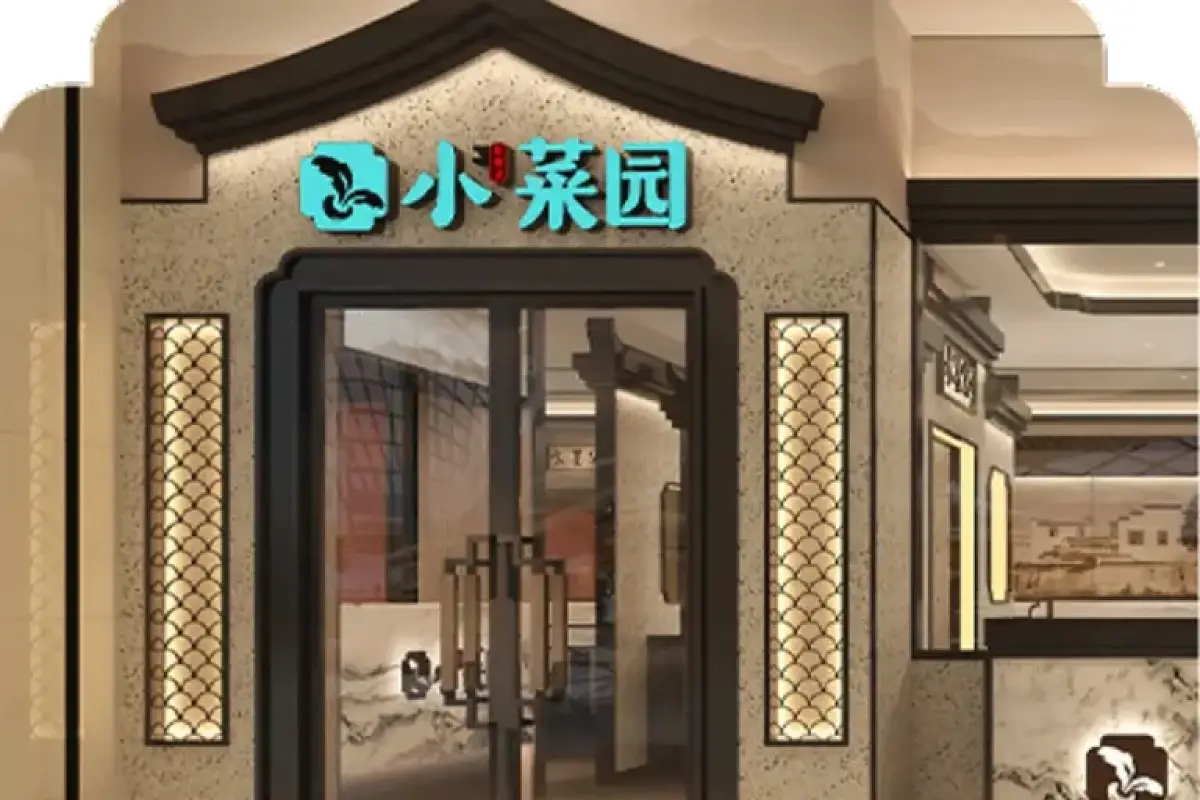
Steam rises from a wok inside a modest storefront in Tongling, its entrance framed by dark timber and stone in a style that nods gently toward tradition without pretending to antiquity. Inside, tables fill quickly with regulars who know exactly what they came for, home style Anhui dishes served fast and priced to keep them coming back weekly rather than saving the visit for a special occasion. This unassuming formula sits at the heart of Xiaocaiyuan dine in dining, a strategy the chain's founders have deliberately doubled down on even as competitors chase China's booming delivery market.
Wang Shugao, founder and chairman of Xiaocaiyuan International Holding Ltd, did not arrive at this business through inherited wealth or formal culinary training. He spent a decade pushing carts after moving from farm life into the city, eventually training as a chef and opening his own restaurant, aptly named Little Vegetable Garden, a name that would later become the company's own.
From Nanjing Setback to Anhui Roots
Wang and his wife, Zhou Taoxia, initially pooled their savings into business hotels before a failed venture in Nanjing pushed them back toward familiar ground, the city of Tongling in East China's Anhui province. Opening their first Anhui cuisine restaurant there in 2013 proved to be the turning point, as the chain's homespun approach and budget friendly meals began resonating widely with diners.
That early success has since scaled considerably. Wang described the period spanning the second half of 2025 through the first half of 2026 as a transformative year for the company, a comment made ahead of results that would soon reveal exactly how deliberate that transformation had become.
Choosing Volume Over Delivery
Xiaocaiyuan's midyear results told a nuanced story. Revenue rose 7% while profit fell 24.3%, figures that on their surface might alarm investors unfamiliar with the underlying strategy. Wang framed the price reductions behind those numbers as a deliberate act of giving back to customers, explaining that the company needed to reduce excess and return value directly to the people eating in its restaurants.
Central to that repositioning was a decision to intentionally rein in the company's delivery business, reinforcing the value of its dine in experience instead. Wang has previously argued that excessive takeout volume actually damages a restaurant brand's image, making it harder to properly serve the customers who choose to sit down and eat. He said takeout revenue should ideally represent around 30% of total sales, rather than the nearly 40% share it occupied in both 2024 and 2025.
What the Numbers Actually Reveal
The shift shows up clearly in the data. Revenue from Xiaocaiyuan's delivery business fell to 32.6% of total revenue in the latest reporting period, edging closer to Wang's stated 30% target, down from 39% just a year earlier. As a direct result, delivery revenue dropped 10.6% over the six month period, even as dine in revenue rose 18.1%, more than double the company's overall 7% revenue growth.
Overall first half revenue reached 2.9 billion yuan, roughly 430 million US dollars, up 7% year on year and 10.3% sequentially. Profit, meanwhile, fell 24.2% year over year to 289.8 million yuan, though the decline was notably smaller on a sequential basis, down just 13%, suggesting the steepest part of the adjustment may already be behind the company.
Investors Read Between the Lines
Despite the headline profit decline, investor sentiment leaned favorably toward the company's direction. The stock rose 2.2% the day following the announcement and continued climbing afterward, closing at HK8.18 dollars, up 4.3% from levels seen before the results were released.
Analyst confidence echoed that market reaction, with seven of eight analysts surveyed by Yahoo Finance rating the stock a buy or strong buy. Xiaocaiyuan's price to earnings ratio of 11.5 sits only slightly behind better known competitor Haidilao, and comfortably ahead of Green Tea Group's 7.3, positioning the company favorably within its competitive set despite the near term profit pressure.
Robots, Factories and a Billion Yuan Bet
Behind the pricing strategy sits a significant investment in operational efficiency. The company's billion yuan central food processing factory in Ma'anshan, Anhui province, carries capacity to serve 3,000 restaurants, using robotic production, AI quality control and intelligent warehouse scheduling to reduce costs at scale. Robots now handle tasks like cutting all of the company's braised pork into chunks, while a chicken fillings production line runs almost entirely unmanned.
Xiaocaiyuan has also installed 300 robots across its restaurant locations and is exploring a separate business supplying cooking robots directly to households, an ambition that extends the company's automation strategy well beyond its own dining rooms. Full details on the chain's restaurant concept and operations are available on the official Xiaocaiyuan website.
Growth Slows, but Small Town Roots Remain the Focus
The chain operated 824 Xiaocaiyuan restaurants by the end of June, up 23% from 672 a year earlier, though new openings slowed sharply to just 17 in the first half of 2026, down from 135 in the second half of 2025, following a typical seasonal pattern. Wang has said the chain, with origins tracing back to smaller third tier cities like his hometown of Tongling, has penetrated only 20% to 25% of the Chinese market and intends to remain focused domestically for the next five to ten years.
Around 40% of the company's revenue came from third tier cities and below during the first half of the year, underscoring how central that smaller town customer base remains to the brand's identity. Each new restaurant costs approximately 1 million yuan to open and typically recoups that investment within 10 to 11 months, though same store sales dropped 12.5% in the first half compared with a year earlier, a direct consequence of the lower pricing strategy.
Cheaper Meals, Busier Tables
Average spending per dine in customer fell from 57.1 yuan in the first half of 2025 to 50.5 yuan in 2026, reflecting the company's deliberate price cuts. Yet that lower spending helped push same store table turnover up to 3.3 times per day, compared with 3.1 a year earlier, suggesting the strategy successfully traded margin for volume exactly as intended.
A new 88VIP membership program, introduced in January and offering 12% discounts for an 88 yuan annual fee, has already attracted 1.5 million members by July, with a repeat customer rate of 65% driving an incremental 1.89 million customer visits. This kind of membership driven loyalty model reflects a broader pattern across the restaurant industry, where operators increasingly experiment with pricing and subscription strategies to retain price sensitive diners, a dynamic also visible in how restaurants elsewhere navigate shifting consumer habits, including the recent closure covered in Loch Bay's restaurant closing story.
A Founder's Philosophy Tested by the Market
Wang has framed his entire approach around a simple conviction, one shaped by his own path from poverty into business ownership. He has said that everyone in the restaurant industry knows food is delicious, yet affordability ultimately wins out, adding that it is no mystery someone born into poverty was able to master that principle. That philosophy now sits at the center of a strategy investors appear willing to back, even through a quarter of declining profit.
Whether Xiaocaiyuan's bet on dine in dining over delivery proves durable will depend on how well the company balances thinner margins against sustained customer loyalty in the years ahead. For now, the tables inside its restaurants across China's smaller cities remain full, turning over faster than before, filled with diners choosing to sit, eat and stay a while longer, exactly as Wang intended.