How to Serve Champagne in a Restaurant (SOP)
Master the art of serving champagne in a restaurant with this detailed SOP. Learn how to impress guests and elevate the dining experience.
 Saurav Sarkar
Champagne service is one of the highlights of fine dining. The elegant pop of the cork and the gentle bubbles of a perfectly chilled glass can make any occasion feel extra special. In restaurants and hotels, knowing the proper way to serve champagne shows professionalism and attention to detail.
Here’s a simple yet complete Standard Operating Procedure (SOP) for serving champagne in a restaurant setting.
Step 1: Check the Champagne List
Before serving, be familiar with the champagne list at your restaurant:
-
Know the different brands and vintages available.
-
Learn about each label’s flavor profile, sweetness (Brut, Extra Dry, etc.), and pairing suggestions.
This helps you answer guests’ questions confidently and offer great recommendations.
Step 2: Prepare the Champagne and Glassware
-
Chill the bottle to the right temperature (6–8°C or 42–46°F).
-
Use clean, polished champagne flutes or tulip glasses.
-
If using an ice bucket, fill it halfway with ice and water for even chilling.
Chilled champagne and clean glassware are essential for great taste and presentation.
Step 3: Present the Bottle
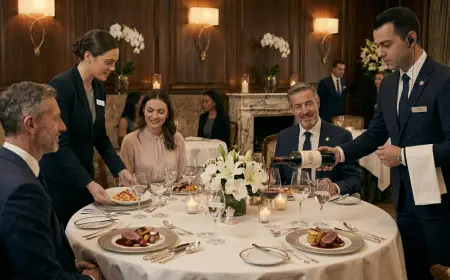
Approach the table with the champagne bottle in hand. Hold it by the base or lower half, with the label facing the guest:
“Here is your [Brand and Vintage] champagne. May I open it for you?”
This polite presentation shows respect and builds anticipation.
Step 4: Open the Bottle Carefully
Opening champagne requires skill and care:
-
Remove the foil neatly, cutting just below the lip of the bottle.
-
Loosen the wire cage (muselet) while keeping a thumb on the cork.
-
Hold the bottle at a 45-degree angle, grip the cork firmly, and slowly twist the bottle (not the cork).
-
Let the cork ease out gently with a quiet sigh, not a loud pop.
A soft opening preserves the champagne’s delicate bubbles.
Step 5: Pour the Champagne Gently
-
Hold the bottle at the base.
-
Pour a small amount into the first glass (about one-third full).
-
Let the foam settle, then continue filling to about two-thirds full.
-
Serve ladies or older guests first, following restaurant etiquette.
Always pour slowly to avoid too much foam and preserve the bubbles.
Step 6: Keep the Bottle Chilled
After pouring the first round, place the bottle back in the ice bucket:
-
Keep the label facing out for easy identification.
-
Offer to top up guests’ glasses as needed.
Chilled champagne throughout the meal ensures a consistent, refreshing taste.
Step 7: Check on Guests and Offer to Refill
Good service means staying attentive. Check on guests discreetly:
“Would you like me to top up your glass?”
Be polite and professional—don’t let glasses go empty for too long.
Additional Tips for Champagne Service
-
Never shake the bottle—it can cause excessive foaming and waste champagne.
-
Use white napkins when serving to wipe away condensation and maintain a polished look.
-
Maintain eye contact and smile—a friendly attitude enhances the experience.
-
Handle the bottle confidently—guests notice your poise and professionalism.
Conclusion
Serving champagne is about more than just pouring a drink—it’s about creating a moment of celebration and luxury for your guests. By following these steps and maintaining a calm, polished demeanor, you can turn a simple bottle of bubbles into an unforgettable experience.
Champagne service done right is a mark of hospitality excellence. Cheers to that!