Professional Front Office Hierarchy Simple Training in Hotel
Learn professional front office hierarchy with SOP, workflow, and service standards for structured hotel operations and effective team coordination.
 Shah Vaibhavi
Talk behind the counter is focused on one thing, who takes charge when the pressure hits. If your hierarchy isn’t clear, the lobby slows down fast.
Overview of Professional Front Office Hierarchy
This is your chain of command. Simple. Clean. No confusion.
The professional front office hierarchy shows who does what and who answers to whom. If everyone knows their lane, the desk runs smooth. If not, things stall.
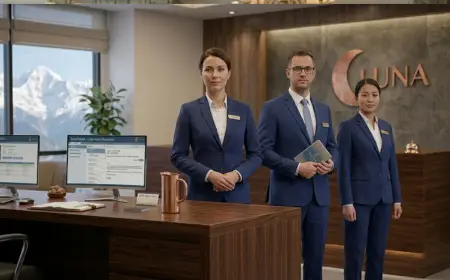
Typical structure:
-
Front Office Manager
-
Assistant Front Office Manager
-
Duty Manager
-
Front Desk Supervisor
-
Guest Service Associates (GSA)
-
Concierge
-
Bell Desk
Each role has its space. And its authority.
Pro-tip: If two people give different answers to the same guest, your hierarchy is broken.
A clear structure keeps:
-
Decisions fast
-
Communication clean
-
Guests handled without delay
SOP Procedure for Front Office Hierarchy Operations
Stick to this. No shortcuts.
Step 1: Role Definition
Everyone knows their job. No overlap confusion.
Step 2: Reporting Structure
Each staff member knows exactly who they report to.
Step 3: Task Allocation
Supervisors assign duties based on shift needs.
Step 4: Communication Flow
Follow the chain. Junior → Supervisor → Manager.
Step 5: Decision-Making Authority
Don’t escalate everything. Handle what’s in your scope.
Step 6: Escalation Process
Move issues up only when needed.
Step 7: Supervision and Monitoring
Supervisors stay alert on the floor, not in the back office.
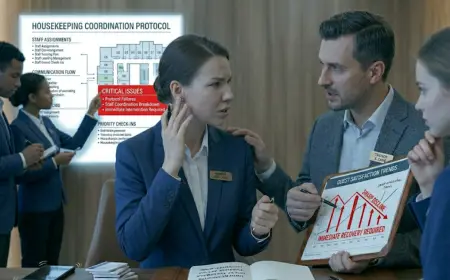
Step 8: Interdepartmental Coordination
Managers handle the hand-offs with housekeeping, F&B, maintenance.
Step 9: Shift Handover
No gaps. Pass everything clearly.
Step 10: Performance Review
Measure staff based on their role, not guesswork.
Front Desk Workflow and Hierarchical Operations
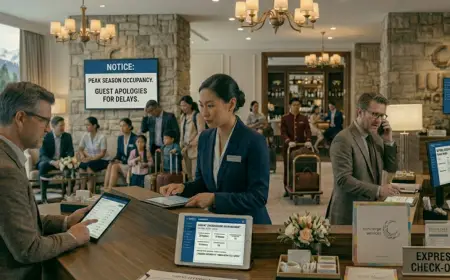
Here’s how it plays out live at the desk:
-
Front Office Manager
Runs the whole show revenue, guest satisfaction, team control. -
Assistant Front Office Manager
Keeps daily ops tight. Handles schedules and team issues. -
Duty Manager
Your problem-solver on shift. Steps in when things go wrong. -
Front Desk Supervisor
Controls the desk. Watches SOP, supports GSAs. -
Guest Service Associate (GSA)
Handles guests directly check-in, check-out, queries. -
Concierge
Deals with guest needs outside the room travel, bookings, local help. -
Bell Desk Staff
Handles luggage, escorts, lobby movement.
Pro-tip: If the GSA is stuck and no supervisor steps in, you’ve already lost time.
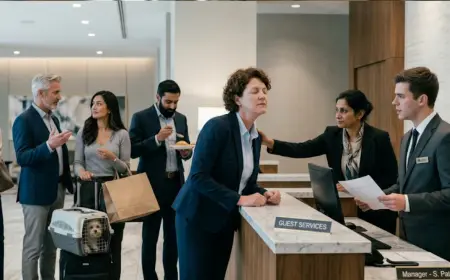
Professional Guest Interaction and Escalation Process
This is where hierarchy proves its value.
Initial Interaction
Handled by GSA. Fast and confident.
Complex Requests
Supervisor steps in.
Complaint Handling Ladder:
-
Level 1: GSA tries first
-
Level 2: Supervisor takes over
-
Level 3: Duty Manager handles serious issues
-
Level 4: Front Office Manager handles VIP or critical cases
VIP Handling
Handled directly by supervisors or managers. No delays.
Emergency Situations
Duty Manager leads. Others support.
Pro-tip: Don’t escalate late. Escalate smart.
Tools and Systems Supporting Hierarchy
Your structure runs on systems. Use them right.
-
Property Management System (PMS): Core control for rooms, guests, billing
-
Task Management Systems: Assign and track work
-
Communication Tools: Intercom, radios, messaging
-
Reporting Systems: Data for decisions
-
Scheduling Software: Staff planning
-
Log Books: Record everything important
No system update = no control.
Professional Service Standards and Performance Metrics
Measure it. Fix it. Repeat.
-
Response Time: 5–10 minutes
-
Escalation Efficiency: Right level, no delay
-
Decision-Making Time: Fast within authority
-
Communication Accuracy: No mixed messages
-
Staff Productivity: Tasks done on time
-
Guest Satisfaction: Positive feedback
-
Operational Control: No confusion on floor
Pro-tip: If guests ask “Who’s in charge?”you failed this section.
Evaluation and Training Assessment
Train it like it’s real. Because it is.
-
Supervisor Monitoring: Watch live performance
-
Performance Reviews: Based on role clarity
-
Audit Checks: SOP and hierarchy compliance
-
Guest Feedback Analysis: Spot service gaps
-
Role-Based Training: Train per position
-
Simulation Exercises: Practice escalation
-
System Training: PMS and tools mastery
Consistency builds confidence on the floor.
In conclusion
Professional hierarchy isn’t about titles, it’s about control at the desk.
When roles are clear, decisions are fast. When decisions are fast, guests stay happy. Keep the chain tight, and the lobby flow will never break.
Also read: expert front office reports with SOP