Housekeeping Department Training Guide: SOPs & Standards for Hotels
Hotel operations with our advanced housekeeping department training guide. Explore SOPs, room cleaning workflows, and hygiene standards.
 Munni Khatun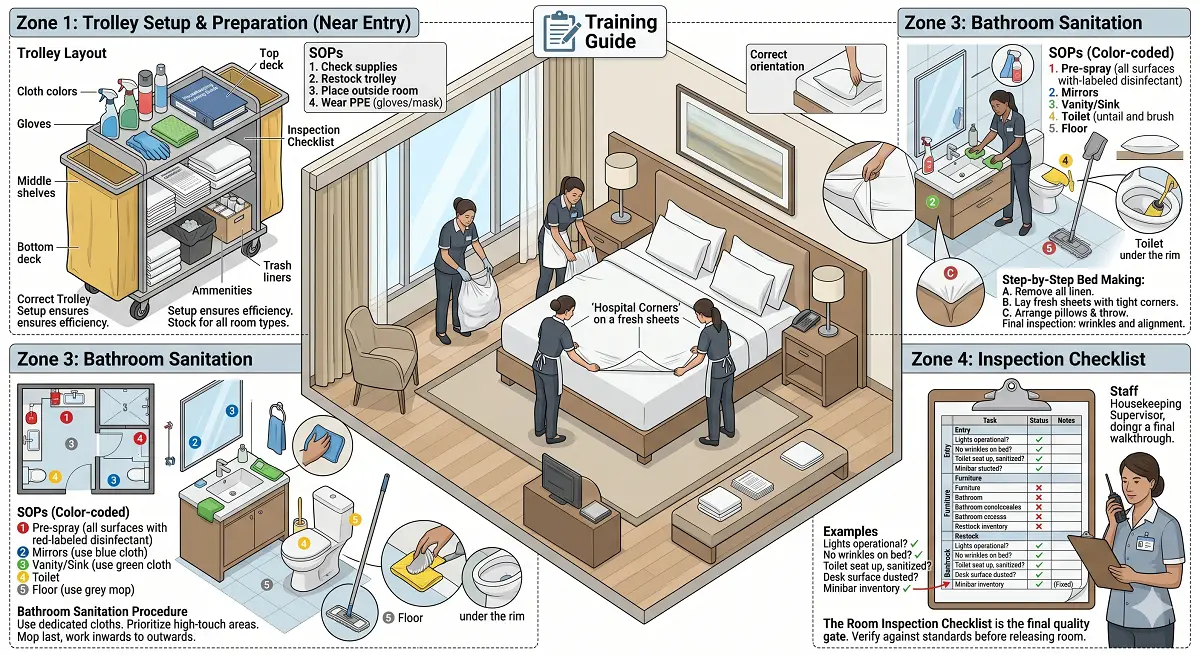
A rock-solid housekeeping department training guide isn't just about handing staff a checklist; it’s the backbone of a hotel's reputation. Let's be honest—nothing sinks a property's online reviews faster than a dirty room. This guide provides a hands-on, realistic overview of core hotel turndown service SOP, room servicing workflows, and the strict inspection benchmarks needed to deliver flawless, guest-ready rooms every single shift.
Overview of Housekeeping Department Training Guide
The housekeeping department carries the heavy lifting of maintaining cleanliness, hygiene, and aesthetic standards across guest rooms and public spaces. They are the unseen heroes of guest satisfaction and operational efficiency.
In a well-run hotel, housekeeping doesn't operate in a silo. They are in constant communication with the front office for check-ins, maintenance for room repairs, and laundry for fresh linen turnarounds.
Structurally, the Executive Housekeeper drives the ship, backed by assistant managers, floor supervisors, and the room attendants who execute the daily grind. Every role must know exactly who they report to and what is expected of them.
Productivity isn't just a guessing game. It is measured heavily through room cleaning efficiency and adherence to standardized housekeeping SOP timelines. In a standard mid-scale property, expect an average room attendant to turn over 12–16 rooms per shift, though this drops if they are tackling luxury suites.
Housekeeping SOP Framework
Ask any veteran hotelier, and they will tell you that standardized operating procedures (SOPs) are non-negotiable. An SOP removes the guesswork, detailing the exact sequence of tasks, which chemicals to use, and the quality benchmarks staff must hit.
A reliable framework always follows a logical flow: preparation, execution, and that critical final inspection. Skipping even one of these stages leads to operational gaps.
Core SOP Principles:
- Follow systematic cleaning sequence (top to bottom, clean to dirty)
- Maintain room servicing timelines
- Ensure cross-contamination prevention
- Adhere to safety and hygiene protocols
- Deliver inspection-ready rooms consistently
The ultimate goal of this standardization is predictability. Whether it's the morning shift on a Tuesday or a fully booked holiday weekend, the guest should experience the exact same pristine room.
Room Cleaning SOP
This is the bread and butter of the department. A step-by-step room cleaning SOP ensures attendants aren't just working hard, but working smart.
Average Cleaning Time Benchmarks
| Room Type | Average Time | Primary Focus |
|---|---|---|
| Stayover Room | 20 - 30 Minutes | Replenishment & Light Cleaning |
| Departure Room | 30 - 45 Minutes | Deep Cleaning & Full Reset |
Step 1: Pre-Shift Preparation
Never walk onto the floor empty-handed. Collect your room assignment sheet, master keys, and restock the trolley with fresh linen and amenities before the shift even begins.
Step 2: Entry Procedure
Always knock three times and clearly announce “Housekeeping.” Wait a full 10 seconds for a response. Only enter if you get confirmation or if the room is dead silent.
Step 3: Room Assessment
Turn on all the lights and throw open the curtains. This is your chance to spot blown bulbs, maintenance issues, or items left behind by the previous guest.
Step 4: Removal of Soiled Items
Strip the room of used linen, wet towels, and trash. Segregate the waste immediately according to your property's recycling and disposal policies.
Step 5: Bed Making
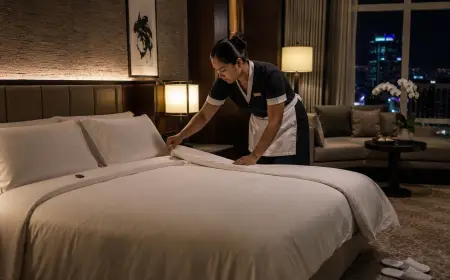
Inspect the mattress protector before putting on fresh linen. Use crisp hospital corners for a tight, wrinkle-free presentation. Pro Tip: A poorly made bed is the first thing a guest notices upon entry.
Step 6: Dusting
Work top-to-bottom so you don't knock dust onto areas you've already cleaned. Hit the high shelves, lampshades, and don't forget the picture frames.
Step 7: Bathroom Cleaning
Apply your heavy-duty cleaning chemicals to the toilet and shower first, letting them sit while you scrub the sink. Rinse thoroughly, dry completely to avoid water spots, and restock fresh towels.
Step 8: Floor Cleaning
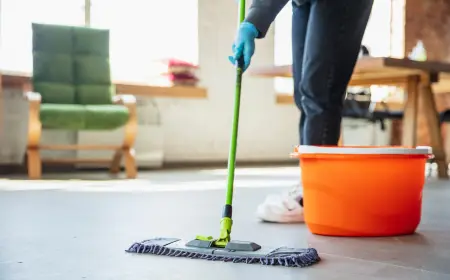
Save this for last. Vacuum carpets or mop hard floors, always working your way from the furthest corner of the room out toward the exit door.
Step 9: Replenishment
Restock the essentials: water bottles, coffee/tea kits, toiletries, and note pads. Make sure all branding logos are facing forward.
Step 10: Final Setup
Do a final visual sweep. Adjust the curtains to the standard open position, reset the AC to a comfortable baseline temperature, and ensure the furniture is perfectly aligned.
Guest Room Servicing Procedure
Not all rooms require the same level of elbow grease. Staff must instantly recognize the room status and adjust their workflow accordingly.
Stayover Rooms:
The golden rule here is respect for the guest's space. Focus on making the bed, taking out trash, and refreshing towels. Never move their personal belongings unless absolutely necessary.
Departure Rooms:
This requires a total reset. Check every drawer and under the bed for forgotten items. The room must look exactly as it did when the hotel first opened.
Occupied Rooms:
Only enter if the guest explicitly grants permission. Work quickly, quietly, and prioritize their immediate requests.
Supervisors play a huge role here, balancing the assignment sheets so no single attendant is overloaded with heavy departure rooms while others have easy stayovers.
Cleaning Tools & Equipment
You can't expect a five-star clean without the right tools. Proper equipment management is a massive part of a housekeeping training guide.
Essential Equipment:
- Housekeeping trolley
- Vacuum cleaner
- Mop and bucket system
- Microfiber cloths (color-coded)
- Scrubbing brushes
- Glass cleaning tools
Chemicals Used:
- All-purpose cleaner
- Disinfectant
- Glass cleaner
- Toilet cleaner
- Floor cleaner
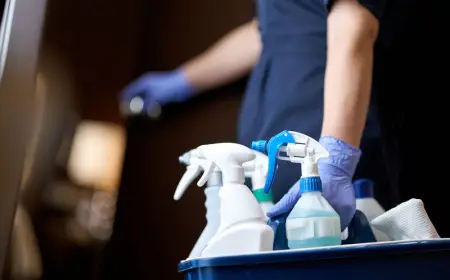
Color coding isn't just a suggestion; it's a critical health standard. You never want the red cloth used on a toilet to wipe down the drinking glasses. Furthermore, chemicals must be diluted exactly to manufacturer specs—using too much leaves a sticky residue, while using too little won't kill bacteria.
Hygiene & Safety Standards
Housekeeping is physically demanding, and safety must come first to prevent workplace injuries and protect guest health.
Personal Hygiene:
- Clean uniform and grooming
- Regular hand washing
- Use of gloves when handling waste
Cross-Contamination Control:
- Separate tools for bathroom and bedroom
- Proper disposal of waste
- Avoid reuse of contaminated cloths
Chemical Safety:
- Do not mix chemicals
- Use labeled containers
- Follow safety guidelines
Ergonomic Safety:
- Use proper lifting techniques
- Avoid repetitive strain
- Maintain correct posture during cleaning
Beyond daily cleaning, executive housekeepers must schedule periodic deep cleans—like mattress sanitization, carpet extraction, and HVAC vent dusting—to maintain long-term hygiene and extend the life of the room's assets.
Inspection & Evaluation Standards
A room isn't clean until a supervisor says it's clean. Inspection is the ultimate quality control safety net before the front desk hands over the keys.
Inspection Checklist:
- Cleanliness of surfaces
- Bed presentation and linen quality
- Bathroom hygiene
- Availability of amenities
- Functionality of equipment
- Floor cleanliness
Ideally, floor supervisors should inspect a room within a few minutes of an attendant finishing it. If there is a missed spot, the attendant should correct it immediately so they learn from the deviation.
Today, smart hotels are dropping the paper clipboards and using digital inspection systems to track room readiness. These tools log performance metrics and instantly alert maintenance if a fixture is broken, ensuring consistent service quality across the entire property.