Alcoholic vs Non-Alcoholic Beverages Explained
Understand the difference between alcoholic and non-alcoholic beverages in F&B service with clear classifications, examples, and practical hospitality insights.
 Ahmed Mainul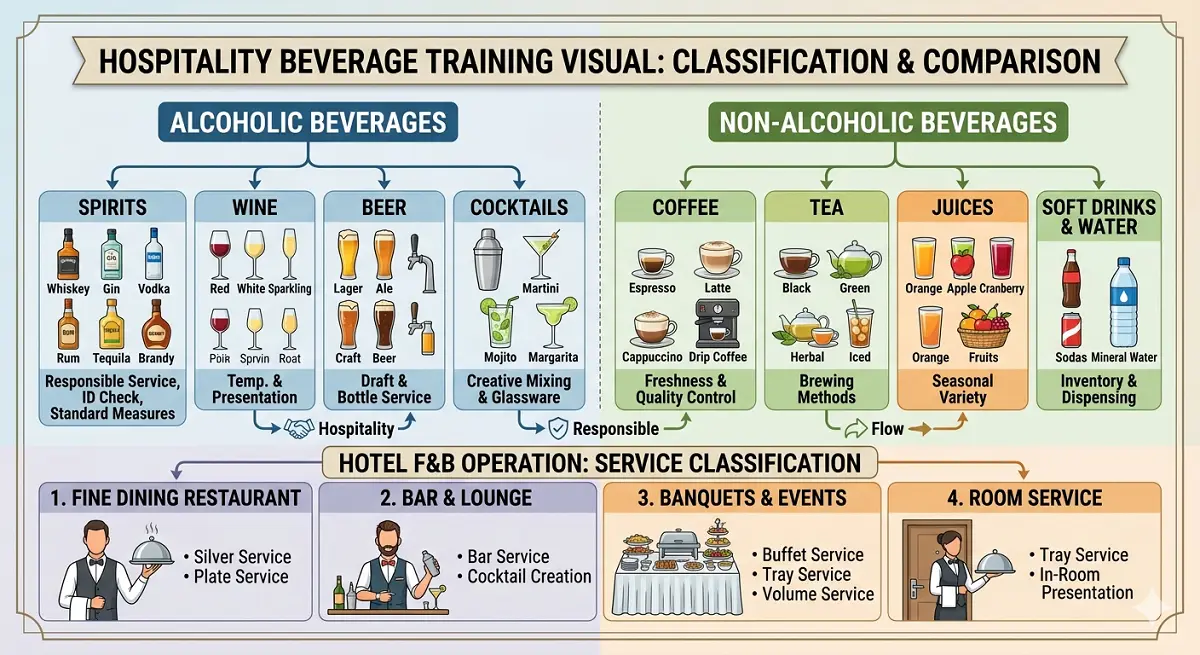
Beverages are a fundamental component of food and beverage service, influencing guest satisfaction, dining experience, and overall service quality. One of the most important classifications in hospitality is the distinction between alcoholic and non-alcoholic beverages. From my experience working in a five-star hotel, understanding this difference is essential for professional service and operational efficiency.
Definition of Alcoholic and Non-Alcoholic Beverages
In hospitality, beverages are broadly categorized based on their alcohol content. This classification helps service staff manage menus, follow legal regulations, and deliver appropriate guest service.
Alcoholic beverages are drinks that contain ethanol, produced through fermentation or distillation processes. These beverages are typically served in bars, restaurants, and lounges under regulated service conditions.
Non-alcoholic beverages, on the other hand, do not contain alcohol and are suitable for all types of guests. These drinks are widely served across all hotel outlets, including restaurants, cafés, banquets, and room service.
During my time in a five-star hotel, I observed that a clear understanding of these categories helped staff confidently recommend beverages and maintain service standards.
Types of Non-Alcoholic Beverages
Non-alcoholic beverages form the foundation of beverage service in hospitality. They are essential for all guest segments, including families, business travelers, and health-conscious individuals.
Hot Non-Alcoholic Beverages: This category includes tea, coffee, and hot chocolate. Proper preparation and presentation are crucial, including correct brewing time, temperature, and serving style. In my experience, even small details like cup selection and garnish can enhance guest satisfaction.
Cold Non-Alcoholic Beverages: These include fresh juices, soft drinks, iced tea, mocktails, and smoothies. Fresh juices are especially popular in luxury hotels due to their freshness and natural appeal.
Specialty Non-Alcoholic Beverages: This includes milkshakes, herbal drinks, and wellness beverages. Many guests today prefer healthier options, making this category increasingly important in modern hospitality.
Non-alcoholic beverages are commonly served during breakfast, meetings, and casual dining, making them a core part of daily operations.
Types of Alcoholic Beverages
Alcoholic beverages are an important revenue-generating segment in the hospitality industry. They require careful handling, proper knowledge, and responsible service practices.
Fermented Beverages: These include beer and wine, which are produced through fermentation. Wine service, particularly in fine dining, requires knowledge of pairing, serving temperature, and glassware.
Distilled Beverages (Spirits): Spirits such as whisky, vodka, rum, gin, and tequila are produced through distillation. These beverages can be served neat, on the rocks, or as part of mixed drinks.
Mixed Drinks: This category includes cocktails and highballs, which combine spirits with mixers, juices, or flavoring agents. In modern hospitality, mixology plays a significant role in enhancing guest experience.
From my professional experience, serving alcoholic beverages requires strict adherence to service standards, including verifying guest eligibility and ensuring responsible consumption.
Key Differences Between Alcoholic and Non-Alcoholic Beverages
Understanding the differences between these two categories is essential for effective service and guest interaction.
Alcohol Content: The primary difference is the presence of alcohol. Alcoholic beverages contain ethanol, while non-alcoholic beverages do not.
Service Regulations: Alcoholic beverages are served under strict legal and operational guidelines, whereas non-alcoholic beverages have no such restrictions.
Guest Preferences: Non-alcoholic beverages cater to all guests, including children and non-drinkers, while alcoholic beverages are limited to eligible guests.
Preparation and Complexity: Alcoholic drinks, especially cocktails, often require more skill and preparation compared to many non-alcoholic beverages.
Revenue Contribution: Alcoholic beverages generally contribute higher profit margins, while non-alcoholic beverages provide consistent volume sales.
In my experience, recognizing these differences helps service staff tailor recommendations and provide a more personalized guest experience.
Importance in Food and Beverage Service
The classification of alcoholic and non-alcoholic beverages plays a critical role in hospitality operations and service delivery.
Guest Satisfaction: Proper understanding allows staff to recommend suitable beverages based on guest preferences, enhancing the overall dining experience.
Operational Efficiency: Clear classification helps in menu planning, inventory management, and smooth service execution.
Professional Service: Knowledge of beverage types ensures that staff follow correct service standards, especially when handling alcoholic drinks.
Revenue Management: Both categories contribute to revenue in different ways—alcoholic beverages through high margins and non-alcoholic beverages through consistent demand.
During my work in a five-star hotel, I noticed that staff with strong beverage knowledge were more confident, efficient, and capable of delivering high-quality service.
Conclusion
Alcoholic and non-alcoholic beverages are two fundamental categories in food and beverage service, each with its own characteristics, service standards, and importance. Understanding their differences, types, and applications is essential for hospitality professionals.
From my experience, mastering this classification not only improves service quality but also enhances guest satisfaction and operational efficiency. For anyone pursuing a career in hospitality, strong beverage knowledge is a key skill that supports long-term professional growth.