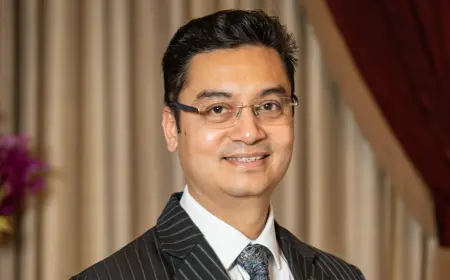
HDFC Bank Announces Chairman Mr Atanu Chakraborty Resignation and Interim Appointment of Mr Keki Mistry
HDFC Bank announces the resignation of its part-time chairman and names an interim successor, with the development drawing attention from investors and markets.
 Punita Thakur
HDFC Bank Announces Chairman Resignation and Interim Appointment
HDFC Bank has announced the resignation of its part-time chairman and appointed an interim successor, marking a significant leadership transition at India’s largest private sector lender.
On March 18, 2026, Mr Atanu Chakraborty tendered his resignation from his role as the Part-time Chairman and Independent Director of HDFC Bank.
Following Mr. Chakraborty's resignation, HDFC Bank sought approval from the Reserve Bank of India (RBI) for the appointment of Mr Keki Mistry as the interim Part-time Chairman. The approval was granted on March 18, 2026, and Mr Mistry will assume his new role on March 19, 2026, for a period of 3 months. This appointment ensures continuity in leadership and stability within the bank's governance structure.
The development, disclosed in March 2026, comes as the bank moves to ensure continuity in governance and maintain stability during the transition period. The decision is expected to have implications for investor sentiment and the bank’s strategic direction in the near term.
The outgoing chairman stepped down from the role citing personal reasons, according to the bank’s official communication. In response, the board moved swiftly to appoint an interim chairman to oversee operations and governance until a permanent successor is identified and approved by regulatory authorities. The bank emphasized that the transition process has been structured to ensure minimal disruption to its ongoing operations and long-term plans.
HDFC Bank is a key player in India’s banking and financial services sector, with a strong presence across retail, corporate, and digital banking segments. Leadership changes at such a major institution are closely monitored by investors, analysts, and regulators due to their potential impact on strategy and performance.
Leadership Transition and Immediate Impact
The resignation of a chairman is a significant development in corporate governance, particularly for a systemically important financial institution. The chairman plays a crucial role in overseeing the board, ensuring compliance with regulatory frameworks, and guiding the organization’s long-term strategy.
The interim chairman has been appointed to maintain continuity and provide leadership during this transitional phase. This role involves coordinating with the board of directors, ensuring effective governance, and supporting the executive management team in executing business strategies.
The bank reassured stakeholders that the transition has been planned carefully, with a clear roadmap for identifying a permanent replacement. The appointment of an interim leader is a common practice in such situations to ensure stability while allowing time for a thorough selection process.
Market participants are likely to assess how this leadership change may influence the bank’s strategic priorities and operational performance in the coming months.
Corporate Governance and Regulatory Oversight
Corporate governance remains a critical aspect of the banking sector, where regulatory oversight is stringent and continuous. The Reserve Bank of India (RBI) plays a key role in approving senior appointments, including that of the chairman, to ensure that leadership meets required standards of experience and integrity.
HDFC Bank has indicated that it will follow due regulatory procedures in appointing a permanent chairman. This includes identifying suitable candidates, conducting internal and external evaluations, and seeking necessary approvals from the RBI.
Strong governance practices are essential for maintaining investor confidence and ensuring long-term sustainability. The bank’s proactive approach in managing the transition reflects its commitment to upholding these standards.
The board is expected to play an active role in overseeing the selection process and ensuring that the new chairman aligns with the institution’s strategic vision.
Market Reaction and Investor Sentiment
Leadership changes in major financial institutions often influence market sentiment, particularly when they involve key governance roles. HDFC Bank’s announcement has drawn attention from investors, with the bank’s share price remaining in focus following the news.
Analysts typically evaluate such developments based on factors including the reasons for the resignation, the profile of the interim appointee, and the bank’s overall stability. In this case, the swift appointment of an interim chairman may help mitigate concerns about uncertainty.
The bank’s strong fundamentals, including its asset quality, capital adequacy, and growth trajectory, are expected to provide a buffer against short-term volatility. However, the market will closely watch further developments related to the appointment of a permanent chairman.
Investor confidence is likely to depend on the clarity of the transition process and the bank’s ability to maintain consistent performance during this period.
Strategic Continuity and Business Operations
Despite the leadership change, HDFC Bank has emphasized that its strategic priorities and business operations remain unchanged. The bank continues to focus on expanding its retail and digital banking capabilities, strengthening its corporate banking portfolio, and enhancing customer experience.
The interim chairman will work closely with the executive management team to ensure that these priorities are executed effectively. Continuity in leadership is essential to avoid disruptions in decision-making and maintain operational efficiency.
The bank’s management has reiterated its commitment to delivering sustainable growth, maintaining strong asset quality, and leveraging technology to drive innovation. These objectives are expected to remain central to its strategy regardless of the leadership transition.
Maintaining consistency in execution will be critical in sustaining the bank’s competitive position in the industry.
Importance of Leadership in Banking Sector
Leadership plays a vital role in shaping the direction of financial institutions, particularly in a dynamic and highly regulated environment. The chairman, along with the board, is responsible for setting the tone for governance, risk management, and strategic planning.
In recent years, the banking sector has faced increasing complexity due to factors such as digital transformation, evolving regulatory requirements, and changing customer expectations. Effective leadership is essential for navigating these challenges and capitalizing on growth opportunities.
The appointment of a new chairman will be a key milestone for HDFC Bank, as it seeks to align leadership with its long-term vision and evolving market dynamics.
The selection process is expected to prioritize candidates with strong experience in banking, governance, and strategic leadership.
Outlook for HDFC Bank
HDFC Bank remains one of India’s leading financial institutions, with a robust track record of growth and profitability. The current leadership transition is unlikely to alter its long-term outlook, given the strength of its business model and management team.
The bank’s ability to manage this transition smoothly will be an important factor in maintaining stakeholder confidence. Clear communication, strong governance practices, and consistent performance will be key to navigating this phase successfully.
As the process of appointing a permanent chairman progresses, the bank is expected to provide updates to regulators, investors, and other stakeholders.
The development underscores the importance of structured succession planning and governance in large financial institutions.
Conclusion
HDFC Bank’s announcement of its chairman’s resignation and the appointment of an interim successor marks a significant moment in its leadership journey. While the transition introduces a degree of uncertainty, the bank’s proactive approach and strong operational foundation are expected to support stability during this period.
The focus now shifts to the selection of a permanent chairman, a decision that will play a crucial role in shaping the bank’s future direction and sustaining its leadership in India’s banking sector.