Chinese Wok Expansion Hits 50 Cities With Belagavi Launch: South India Footprint Reaches 89 Outlets
Chinese Wok enters its 50th city with the Belagavi launch, growing to 89 South India outlets as India's QSR market expands rapidly. Read the full story.
 Prajakta Sanjay Warwadkar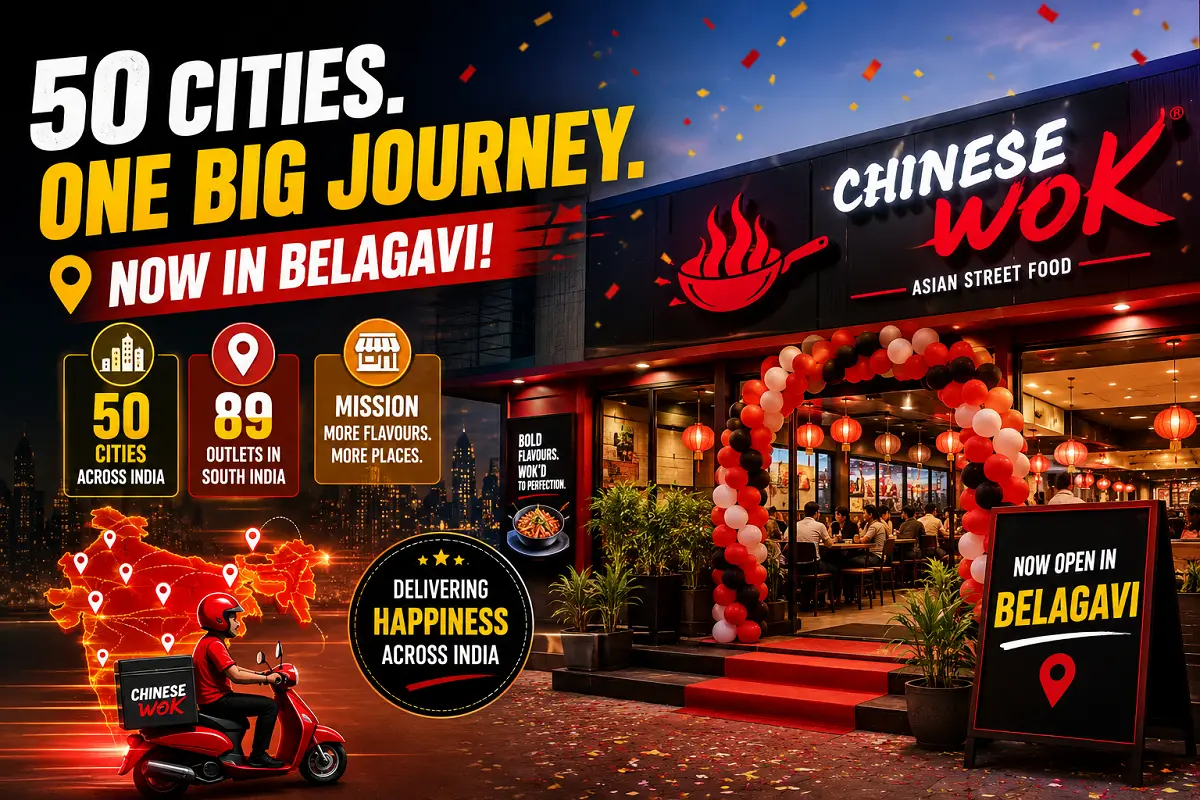
The Indian quick-service restaurant industry is expanding rapidly, but not every brand manages to scale across dozens of cities while maintaining momentum.
That's what makes Chinese Wok's latest milestone interesting.
With the launch of its new outlet in Belagavi, Chinese Wok has officially entered its 50th city, while strengthening its South India presence to 89 outlets. On paper, it looks like another restaurant opening.
In reality, it signals something much bigger.
It reflects how aggressively organised food brands are expanding beyond traditional metro markets and finding growth opportunities in emerging cities across India.
And honestly, that's where some of the most exciting restaurant growth stories are happening right now.
Why Is The Chinese Wok Expansion Important?
Reaching 50 cities is more than a number.
It shows that a restaurant brand has moved beyond regional success and established a broader national footprint.
For Chinese Wok, the Belagavi launch represents:
-
Entry into its 50th city
-
Expansion of its South India network to 89 outlets
-
Continued growth beyond major metropolitan markets
-
Stronger brand visibility across emerging food markets
-
Increased accessibility for customers in growing urban centres
The achievement also highlights changing consumer behaviour.
People across India are becoming more comfortable ordering from organised restaurant chains and exploring quick-service dining options that offer consistency, convenience, and familiar flavours.
Chinese Wok's Growth At A Glance
| Growth Metric | Milestone |
|---|---|
| Cities Reached | 50 |
| South India Outlets | 89 |
| Latest Expansion | Belagavi |
| Business Segment | Quick Service Restaurant (QSR) |
| Focus Area | Expansion Across Emerging Markets |
While major cities remain important, brands are increasingly looking beyond traditional markets for growth opportunities.
That's exactly where Belagavi fits into the story.
Why Are Restaurant Chains Expanding Into Emerging Cities?
A few years ago, most large restaurant brands focused heavily on metros.
Today, the equation looks different.
Consumers in Tier-2 and emerging cities are spending more on dining, food delivery, and branded restaurant experiences. Digital payments, food delivery apps, and growing urban populations have made these markets far more attractive than before.
Several factors are driving expansion:
-
Rising disposable income
-
Increased food delivery adoption
-
Growing appetite for branded dining experiences
-
Stronger digital infrastructure
-
Expanding middle-class consumer base
-
Faster urbanisation
For restaurant operators, these cities often offer significant growth potential without the intense saturation seen in larger metropolitan markets.
What This Means For The Indian QSR Industry
The Chinese Wok expansion reflects a larger trend happening across India's restaurant industry.
Quick-service restaurant brands are no longer building growth strategies around just a handful of major cities.
They're creating networks.
The focus is shifting toward:
-
Multi-city expansion
-
Delivery-first operations
-
Regional market penetration
-
Brand consistency
-
Scalable restaurant formats
-
Technology-enabled operations
Brands that successfully balance operational efficiency with local customer preferences are often the ones expanding the fastest.
And competition is becoming increasingly intense.
Why Customers Benefit From Restaurant Expansion
Restaurant expansion isn't only about business growth.
Customers benefit too.
As organised chains enter more cities, consumers typically gain:
-
Greater food variety
-
Consistent dining experiences
-
More delivery options
-
Improved service standards
-
Better accessibility
-
Increased food safety and quality controls
The result is a more competitive marketplace where brands must continuously improve to retain customer loyalty.
What Could Be Driving Chinese Wok's Success?
While every restaurant brand follows its own strategy, several factors often contribute to successful expansion.
These typically include:
-
Strong brand positioning
-
Consistent menu offerings
-
Operational efficiency
-
Strategic location selection
-
Delivery platform presence
-
Scalable business systems
In today's market, growth requires more than opening new outlets.
Brands need systems capable of maintaining consistency across dozens of locations.
That's often the harder challenge.
What Happens Next?
The Indian food service industry continues to evolve rapidly.
Consumer expectations are changing. Delivery continues growing. New markets are opening up. Competition remains intense.
Against that backdrop, reaching 50 cities is a meaningful milestone.
The Belagavi launch may look like a single outlet opening, but it reflects a broader story unfolding across India's restaurant industry.
More brands are expanding beyond traditional strongholds.
More consumers are embracing organised dining.
And the race to build India's next major food-service success story is only getting faster.
Pro Tip
For restaurant operators watching brands like Chinese Wok expand, one lesson stands out clearly: growth isn't just about opening more outlets. Sustainable expansion usually comes from strong operational systems, consistent customer experiences, and the ability to adapt to new markets without losing brand identity. The restaurant chains scaling successfully across India are often the ones that focus on process as much as expansion.
Frequently Asked Questions
What milestone did Chinese Wok achieve with its Belagavi launch?
Chinese Wok entered its 50th city with the launch of its Belagavi outlet, marking a significant expansion milestone.
How many outlets does Chinese Wok have in South India?
Following the Belagavi launch, Chinese Wok's South India footprint has grown to 89 outlets.
Why are restaurant chains expanding into Tier-2 cities?
Growing consumer demand, increasing disposable income, food delivery adoption, and expanding urban populations make these markets attractive for restaurant growth.
What is driving QSR expansion in India?
Factors include digital adoption, changing dining habits, food delivery growth, urbanisation, and rising demand for organised restaurant brands.
Why is the Chinese Wok expansion significant?
The expansion demonstrates the growing importance of emerging Indian cities in restaurant growth strategies and highlights the continued evolution of India's quick-service restaurant industry.
Sources: Hospitalitycareerprofile.com
Read more: Restaurant Technology Trends Reshape Hospitality in 2026