Boeing to Raise 737 MAX Output to 47 Jets Monthly by Mid-2026
Boeing will increase 737 MAX production to 47 aircraft per month by mid-2026, driven by demand and improved supply chain stability.
 Jishan Khan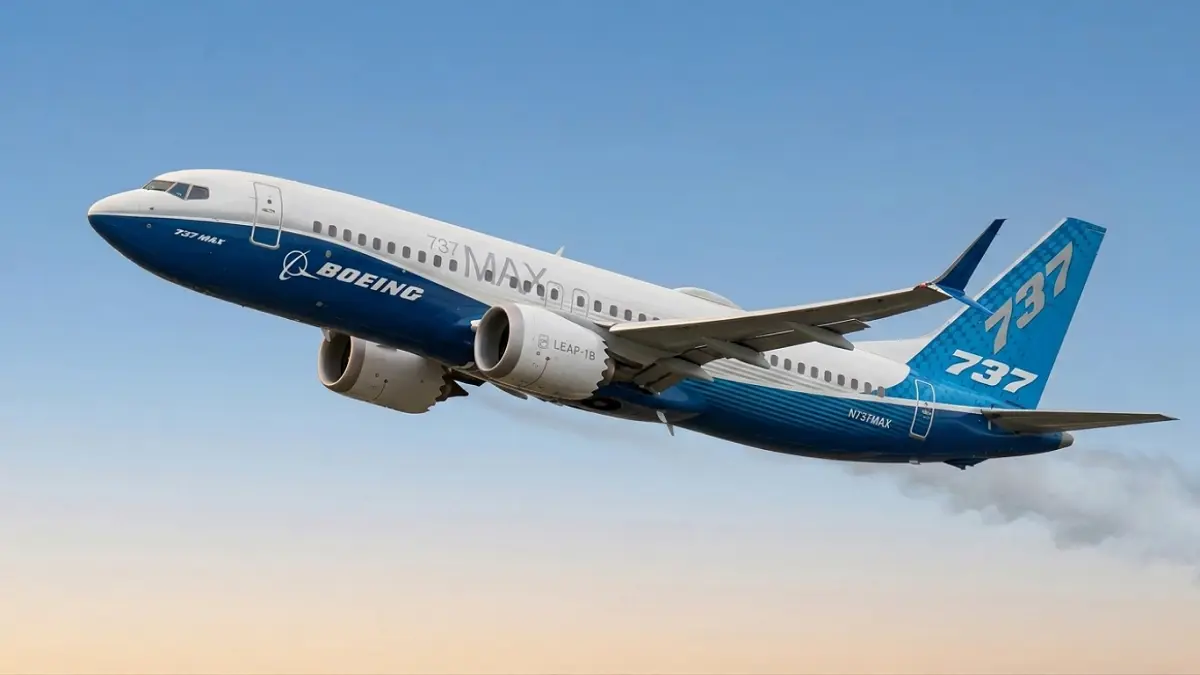
Boeing is preparing to increase boeing 737 max production to 47 aircraft per month by mid-2026.
This marks a key step in boeing manufacturing expention and recovery strategy.
The planned ramp-up from about 42 jets per month reflects improving supply chain stability. It also reflects sustained demand in the single-aisle segment.
Boeing 737 Max Production Ramp-Up Timeline to 47 Aircraft
The targeted increase to 47 aircraft monthly is expected by mid-2026. This follows a gradual scaling approach rather than an abrupt jump.
This aligns with Boeing’s efforts to stabilize production systems after years of disruption.
The current output of about 42 aircraft per month shows steady progress. It reflects recovery from earlier production constraints.
Moving to 47 aircraft monthly signals confidence in internal processes. It also reflects improved supplier readiness.
The ramp-up is part of broader boeing 737 max production recovery plans. It focuses on quality control and delivery reliability.
Supply Chain Stabilization Supporting Boeing 737 Max Production
The increase in boeing 737 max production depends on improvements in the global aerospace supply chain.
Recent years saw disruptions including component shortages, labor constraints, and logistics bottlenecks.
These challenges limited production capacity across multiple aircraft programs.
Recent stabilization across supplier networks now supports higher manufacturing throughput.
Consistent parts availability is critical for sustaining boeing 737 max production at higher levels.
This progress reflects coordination between Boeing and suppliers. It improves planning, inventory, and delivery timelines.
Demand Driving Boeing 737 Max Production Growth
Strong demand for narrowbody aircraft supports boeing 737 max production strategy. Airlines prioritize fuel-efficient jets for short- and medium-haul routes.
The aircraft plays a key role in fleet renewal and network expansion plans.
Boeing manufacturing expansion aim to reduce operating costs and improve efficiency. This keeps demand for the boeing 737 max strong.
Sustained demand supports Boeing’s decision to increase output to 47 aircraft per month.
Boeing Manufacturing Expention Through New Assembly Lines
The planned increase to 47 aircraft links directly to boeing manufacturing expention. New assembly lines support higher production volumes.
Expanded infrastructure allows Boeing to maintain efficiency while increasing output.
New facilities support current and future boeing 737 max production targets.
This ensures scalability as global demand continues to grow.
The expansion reflects a shift toward more resilient production systems. These systems handle fluctuations in demand and supply conditions.
Competitive Impact of Boeing 737 Max Production Increase
The move to scale boeing 737 max production strengthens Boeing’s position in the single-aisle market.
This segment remains highly competitive and critical for manufacturers.
Increasing output helps Boeing meet delivery commitments faster. It also improves competitiveness in global markets.
Higher production rates support airline fleet expansion and modernization plans.
Boeing has indicated plans to expand beyond 47 aircraft in the future. This highlights long-term growth ambitions.
Current Status of Boeing 737 Max Production at 47 Aircraft Target
Boeing currently produces about 42 boeing 737 max aircraft per month. It is preparing to reach 47 aircraft by mid-2026.
The transition depends on supply chain stability and successful capacity expansion.
This milestone reflects progress in boeing manufacturing expention efforts.
It also highlights recovery and sustained demand for the boeing 737 max program.