Complete Food Storage SOP: Complete Training Guide with SOP & Professional Standards
Learn complete food storage SOP training with storage methods, temperature control, hygiene standards, and inventory practices for hotel kitchens.
 Jyoti Kushwaha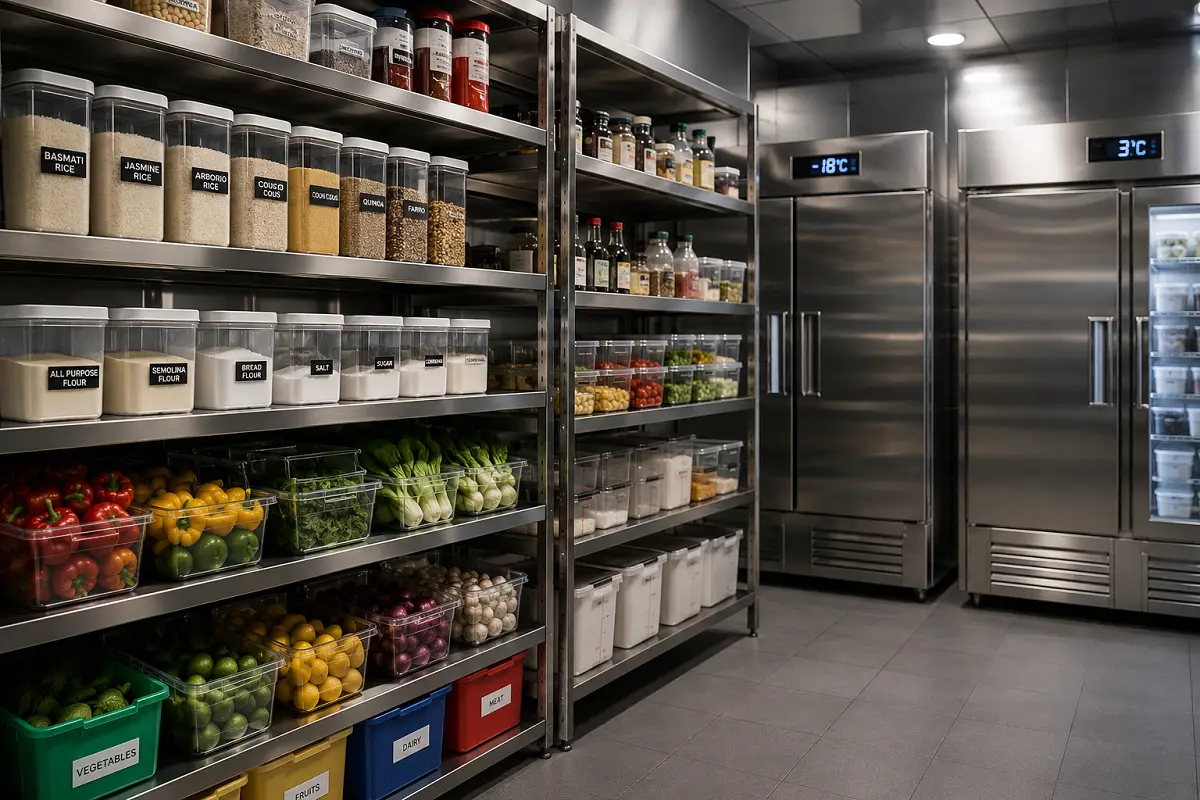
The latest feedback from the stores room is clear… most kitchen issues don’t start on the line, they start in storage. Fix storage, and half your service problems disappear.
This food storage SOP training module is designed for kitchen and food production staff in hotel and restaurant operations. It focuses on standardized storage procedures, temperature control, hygiene practices, and inventory management. Proper food storage is critical to maintain food safety, prevent contamination, reduce wastage, and support smooth kitchen operations.
Overview of Food Storage SOP in Kitchen Operations
Food storage SOP training sits at the backbone of any professional kitchen. If storage slips, everything else follows.
Every ingredient, raw or cooked, must be stored right. That’s how you protect quality, avoid spoilage, and keep food safe for service.
In hotel kitchens, storage is split into three zones: dry, refrigerated, and frozen. Each one has strict rules for temperature, labeling, and handling. Ignore those rules, and you risk contamination, guest complaints, and wasted stock.
This SOP keeps everyone on the same page, from receiving to issuing. It also keeps you compliant and in control of inventory.
Bottom line. Clean storage means smooth service and fewer last-minute problems.
SOP Procedure for Food Storage
The food storage SOP training follows a structured approach to keep everything safe, clean, and organized.
1. Receiving and Inspection
Check every delivery. Look at quality, freshness, and expiry dates. If it’s damaged or spoiled, reject it on the spot.
2. Labeling and Dating
Label everything. Name, date of receipt, expiry date. No shortcuts. Clear labels save time and prevent mistakes.
3. Storage Allocation
Put items in the right zone. Dry, chilled, or frozen. No mixing, no guessing.
4. Temperature Control
Hold the correct temperature at all times. Check regularly with thermometers. Don’t rely on assumptions.
5. FIFO Implementation
First In First Out. Always. Older stock goes first, new stock behind.
6. Cross-Contamination Prevention
Keep raw and cooked food separate. Meat, seafood, vegetables all in their own sections.
7. Regular Monitoring
Check storage daily. Look for spoilage, leaks, expired items. Catch problems early.
8. Cleaning and Maintenance
Clean storage areas regularly. Keep shelves, racks, and units spotless.
Pro tip: If your storage smells off, something is already wrong.
Food Storage Types and Operational Methods
Storage is not one-size-fits-all. Each type has its own rules.
Dry Storage (10°C – 21°C):
1. Used for grains, pulses, canned goods, packaged items
2. Keep the area cool, dry, and ventilated
3. Store items off the floor using racks
4. Protect from moisture and pests
Refrigerated Storage (0°C – 5°C):
1. Used for dairy, vegetables, cooked food
2. Always store in covered containers
3. Maintain airflow inside refrigerators
4. Do not overload shelves
Frozen Storage (-18°C or below):
1. Used for meat, seafood, frozen products
2. Use airtight packaging to avoid freezer burn
3. Never refreeze thawed items
Operational Importance:
1. Maintains freshness and quality
2. Stops bacterial growth
3. Extends shelf life
4. Keeps kitchen flow steady
Operational Workflow and Storage Management
Good storage runs on routine. No routine, no control.
Step-by-Step Storage Workflow:
1. Receive and inspect items
2. Label and date immediately
3. Move to correct storage area
4. Arrange using FIFO
5. Monitor temperatures regularly
6. Conduct daily quality checks
7. Issue items as per kitchen needs
8. Record stock movement
Storage Timing Benchmarks:
1. Receiving and inspection: immediate
2. Labeling and storage: within 15 minutes
3. Temperature checks: every 4 hours
4. Daily inspection: once per shift
5. Deep cleaning: weekly
Keep it tight. Delays in storage create service friction later.
Food Safety, Hygiene, and Handling Practices
This is where discipline shows. No compromise here.
Personal Hygiene Standards:
1. Wash hands before handling food
2. Wear clean uniform and gloves
3. Avoid direct contact with ready-to-eat food
Storage Hygiene Standards:
1. Clean storage areas regularly
2. Sanitize shelves and containers
3. Maintain pest control
Food Handling Practices:
1. Separate raw and cooked food
2. Keep food covered at all times
3. Avoid overcrowding storage units
Temperature Safety Guidelines:
1. Hot food above 60°C before cooling
2. Cold storage between 0°C – 5°C
3. Frozen storage below -18°C
Simple rule. Control temperature, control safety.
Tools and Equipment for Food Storage
Right tools make storage easier. Poor tools slow everything down.
Primary Equipment:
1. Refrigerators and freezers
2. Storage racks and shelving units
3. Airtight containers
4. Temperature monitoring devices
Support Equipment:
1. Labeling tools and markers
2. Food-grade storage bins
3. Plastic wraps and sealing materials
4. Inventory tracking systems
Handling Guidelines:
1. Keep equipment clean and working
2. Check temperature settings regularly
3. Do not overload units
4. Fix faulty equipment immediately
If equipment fails, storage fails. Stay ahead of it.
Service Standards and Performance Metrics
What gets measured gets fixed.
Key Performance Metrics:
1. Storage compliance: 100%
2. Temperature accuracy: 100%
3. FIFO adherence: above 95%
4. Hygiene compliance: 100%
5. Wastage control: minimized
These numbers are not targets. They’re expectations.
Evaluation and Continuous Improvement
Storage needs daily attention. Not just audits.
Evaluation Methods:
1. Daily storage inspections
2. Temperature log checks
3. Hygiene audits
4. Inventory reviews
5. Supervisor checks
Common issues show up fast. Poor labeling, temperature swings, weak FIFO. Fix them early or they hit the plate later.
Food storage SOP training is the backbone of kitchen discipline. Get this right, and the kitchen runs smoother, waste drops, and food stays safe every single service.
Read more about professional knife skills here.