Idli Sambar Recipe 15-minute fast (Tiffin Sambar)
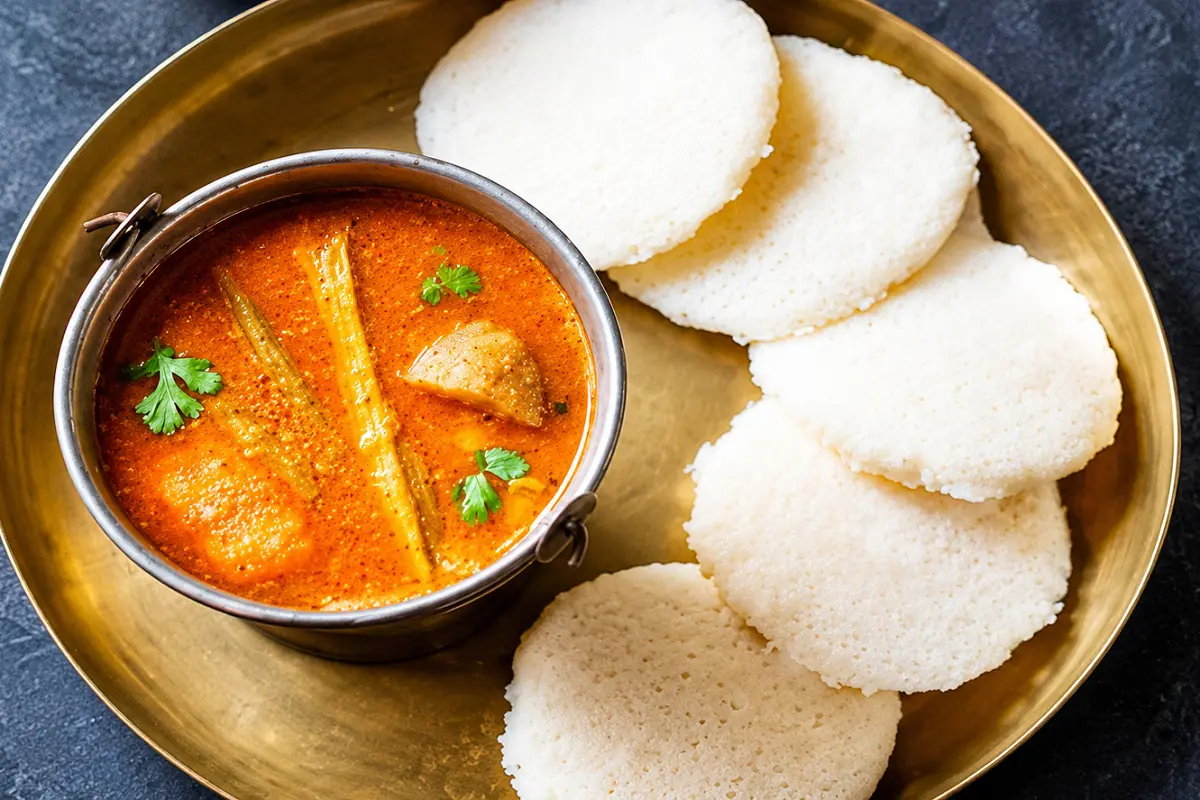
Idli Sambar is a traditional South Indian breakfast of steamed idli served with spiced lentil and vegetable Tiffin Sambar.
 RUKAIYA KADIWAL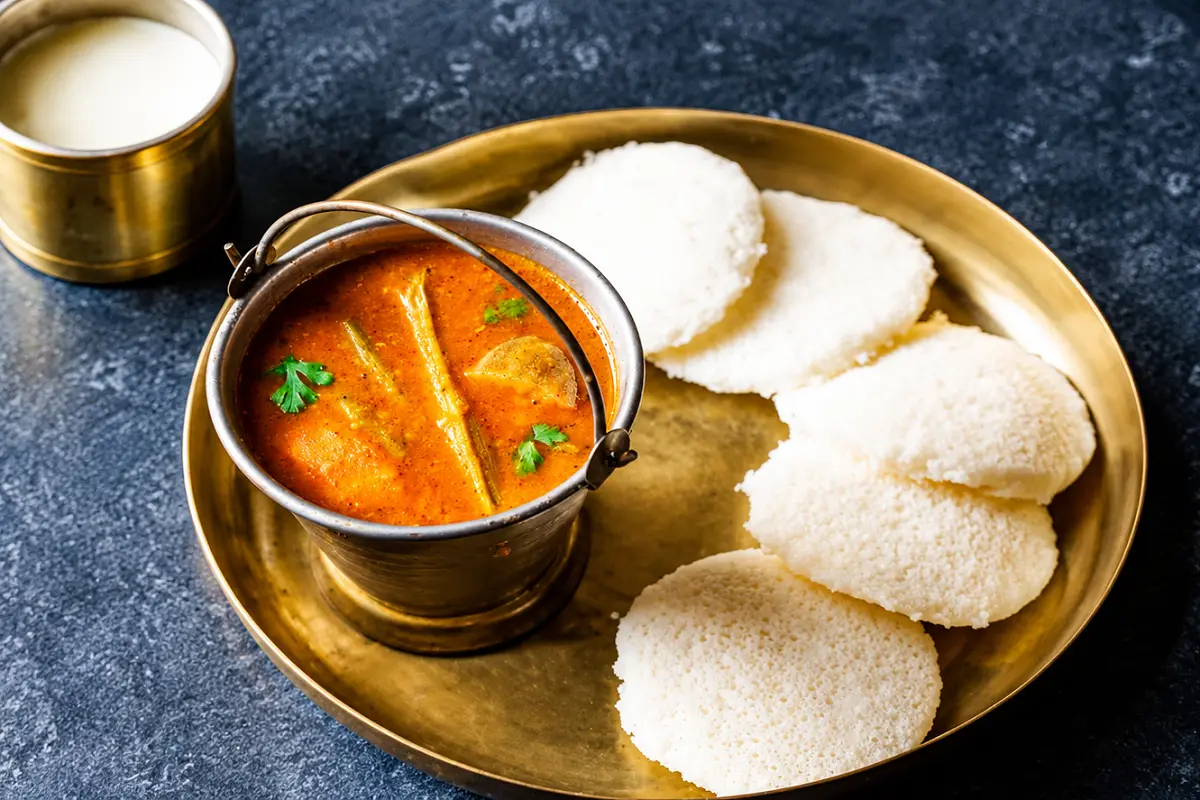
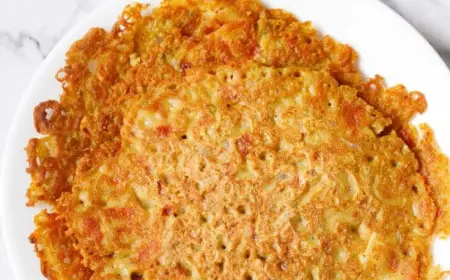
Neer Dosa are soft, thin and lacy crepes from Mangalorean cuisine, made with a simple batter of rice, water and salt. They are naturally gluten-free and vegan. Unlike regular dosa, this recipe does not require fermentation. Light and quick to prepare, neer dosa is often served for breakfast or tiffin.
Neer dosa is a popular Dosa variant from Karnataka. "Neer" means water in the Tulu language, referring to the thin and watery batter used to make these soft, lacy crepes.
This dosa is easy to prepare as it does not require fermentation. You only need to soak the rice for 4 to 5 hours and grind it to a smooth batter.
One of my aunts from the Bunt community in Mangalore introduced me to this dish. I make it often as it is simple and quick to prepare.
If you want to make it early in the morning, soak the rice overnight. You can also use rice flour for a quicker version, which needs only a short soaking time.
Neer dosa pairs well with coconut chutney and can also be served with Veg Sagu, Vegetable Kurma or Potato Kurma. For kids, it is often served with Coconut Milk or milk sweetened with some jaggery or sugar.
If you enjoy breakfast dishes from the Karnataka cuisine, you can also try:
Mysore Masala Dosa
Benne Dosa
Set Dosa
Mangalore Buns
Oats Dosa
Serving Suggestions
Serve neer dosa warm with Coconut Chutney, Potato Sagu, or veg kurma. Neer dosa will remain soft even after they cool, so you can serve them later, too.
Since they remain soft, they are a good option to pack in tiffin-box or lunch-box.
Storage Notes
Do not stack neer dosa while they are hot, as they may stick together. Let them cool completely before stacking, or place parchment paper between each dosa.
You can store the batter in the refrigerator for 1 to 2 days in an airtight container. Do not store longer, as it may turn sour.
If the batter thickens after refrigeration, add a little water to adjust the consistency.
Tips & Tricks
Neer dosa is easy to make, but a few small points help you get the best texture.
Batter consistency: The batter should be thin, watery and easy to pour. This helps create the characteristic lacy texture. If the batter is too thick, the dosa may crack. Add a little water to adjust. If the batter is too thin, the dosa can break while lifting. In this case, add a little rice flour to slightly thicken it.
Cooking tips: Heat the tawa or skillet well before pouring the batter. Stir the batter before each dosa, as it tends to settle. If using a cast iron tawa, make sure it is well seasoned, otherwise the dosa may stick. You can also use a non-stick pan.
Variations: Adding coconut is optional, but it gives a light flavor and soft texture. You can add 2 to 3 tablespoons of fresh grated coconut while grinding the batter, or use 1 to 2 tablespoons of unsweetened desiccated coconut.
Rice varieties: Neer dosa can be made with different types of rice. Sona masuri, surti kolam, ponni or parmal rice work well. You can also use basmati rice.
Dassana's Notes
Batter consistency: The batter should be thin, watery and easy to pour. If thick, add water. If too thin, add a little rice flour.
Heat the pan well: Cook on a medium to medium-high heat. A well-heated tawa helps get the lacy texture.
Use a seasoned pan: A well-seasoned cast iron tawa works best. You can also use a non-stick pan.
Stir the batter: Stir before making each dosa as the rice settles at the bottom.
Adding coconut: Add 2 to 3 tablespoons grated coconut while grinding for extra flavor.
Rice options: Use sona masuri, surti kolam, ponni or basmati rice.
Storage: Do not stack while hot as they may stick. Once cooled, stack or place parchment between each dosa.
Serving: Neer dosa tastes best hot, but remains soft even after cooling.
Neer Dosa recipe from the archives was first published on April 2015.
Ingredients
- ¼ cup tur dal (husked & split tuvar dal or pigeon pea lentils)
- ¼ cup masoor dal (husked & split red lentils)
- ¼ teaspoon turmeric powder (ground turmeric
- 1.25 to 1.5 cups water – for cooking in a 2 litre stovetop pressure cooker
- 2 tablespoons oil – gingelly oil, sunflower oil or peanut oil
- ½ teaspoon mustard seeds
- 1 teaspoon urad dal (husked & split black lentil)
- 4 to 5 curry leaves
- ¼ teaspoon asafoetida powder (hing)
- 1 large (100 grams) onion – chopped or 10 to 12 pearl onions or small shallots
- 3 medium-sized (220 to 230 grams) tomatoes – chopped
- 1 to 2 drumsticks – scraped and chopped in 2 to 3 inch pieces
- 1 carrot – medium-sized
- 6 to 7 green beans or or flat beans, chopped
- 1 potato – medium-sized, optional
- 4 to 5 okra – chopped (bhindi)
- 6 to 7 nos or (80 to 100 grams) brinjals – small sized, (mini or baby eggplants) quartered or halved depending on the size
- 1 to 1.25 cups water or add as required
- salt as required
- 1 tablespoon tamarind
- ¼ to ⅓ cup water – warm or hot
- 5 kashmiri chilies or or byadagi/bedgi chilies or 4 to 5 dry red chilies – reduce depending upon the heat in the chilies
- 11 to 12 large curry leaves or 16 to 18 small curry leaves
- 1.5 tablespoons coriander seeds
- 1 tablespoon chana dal (split & husked bengal gram)
- 1 teaspoon cumin seeds
- ½ teaspoon mustard seeds
- ½ teaspoon whole black pepper
- ¼ teaspoon fenugreek seeds (methi dana)
- 2 teaspoons oil – gingelly oil, sunflower oil or peanut oil
- 1 cup water – to be added later or add as required
- 1 to 2 tablespoons coriander leaves – chopped for garnish
Nutritional Information
- Calories: 219kcal
- Carbohydrates: 31g
- Protein: 8g
- Fat: 8g
- Saturated Fat: 1g
- Polyunsaturated Fat:: 1g
- Monounsaturated Fat: 6g
- Sodium: 266mg
- Potassium: 596mg
- Fiber: 9g
- Sugar: 6g
- Vitamin A: 2796IU
- Vitamin B1 (Thiamine): 0.2mg |: 0.2mg
- Vitamin B2 (Riboflavin): 0.1mg
- Vitamin B3 (Niacin) |: 38mg
- Vitamin B6: 0.3mg
- Vitamin C: 86mg
- Vitamin E: 4mg
- Vitamin K: 15µg
- Calcium: 86mg
- Vitamin B9 (Folate): 453µg
- Iron: 3mg
- Magnesium: 55mg
- Phosphorus: 119mg
- Zinc: 1mg
Directions
How To Make Idli Sambar (Step-By-Step
Step 1: Cook Lentils
In a bowl, take ¼ cup each of tur dal/arhar dal (pigeon pea lentils) and masoor dal (red lentils). You can also just use a total of ½ cup tur dal.
As you see in the picture below, pigeon pea lentils are yellow colored and they are split and without husk. The red lentils or orange colored lentils are also husked and split.
Rinse the lentils well in fresh water and add in a 2-liter stovetop pressure cooker.
You can also cook these lentils on a stovetop pan or Instant Pot. If cooking in a pan, I suggest to soak the lentils in enough water for at least half an hour, so that they cook faster.
Add ¼ teaspoon turmeric powder and 1.25 to 1.5 cups water in the pressure cooker.
Pressure cook the lentils on medium heat for about 7 to 8 whistles, 11 to 12 minutes or till soft, mushy and well cooked.
Open the lid once the pressure settles down naturally in the cooker. The lentils should have softened very well, so that they can be easily mashed.
Mash the lentils with a spoon or wired whisk. Set cooked lentils aside.
Step 2: More Preparation
Take 1 tablespoon tamarind and soak it in ¼ to ⅓ hot or warm water for 20 to 30 minutes.
Tip: If you don't have dried tamarind, then you can use about ½ tablespoon packaged tamarind paste or as needed.
Later, squeeze the tamarind in the water and you get the tamarind pulp. You can even strain tamarind pulp and keep it aside.
In a heavy small frying pan, heat 2 teaspoons oil. Keep the heat to its lowest. First, add ½ teaspoon mustard seeds. Mix and stir.
You can use any neutral flavored oil.
Then, add the following ingredients:
1.5 tablespoons coriander seeds
¼ teaspoon fenugreek seeds
1 teaspoon cumin seeds
½ teaspoon black peppercorns
1 tablespoon chana dal (husked and split Bengal gram)
Mix and stir.
Immediately, add 5 Kashmiri dried red chilies or 5 byadagi chilies (broken and seeds removed).
Next, add 11 to 12 curry leaves.
Mix very well. On low heat, stir continuously and roast till the spices and lentils become aromatic. Ensure not to burn the spices.
Once the spices are roasted well, you can also add 2 to 3 tablespoons fresh coconut or desiccated coconut. Mix the coconut and roast for 1 to 2 minutes and turn off the heat.
Set the roasted spices and lentils aside to cool.
Once the spices cool, grind to a fine powder in a dry grinder or coffee grinder.
Keep the Tiffin Sambar powder aside.
Rinse and peel vegetables. Chop them and set aside.
You can use a mix of drumsticks, carrots, pearl onions, yellow pumpkin, radish, green beans, ash gourd, potatoes, small brinjals (baby eggplants), okra, etc.
While cooking, just remember to add the vegetables that take more time to cook first and later add the veggies which take less time to cook.
For brinjals, chop and add them to water so that no discoloration occurs.
Step 3: Sauté Spices, Onions & Tomatoes
In a pot, heat 2 tablespoons oil first. Keep heat to low or medium-low.
Add ½ teaspoon mustard seeds and let them crackle.
Next, add 1 teaspoon urad dal (husked and split black gram).
Let the urad dal turn into a maroonish color.
Next, add 1 large quartered onion or 10 to 12 pearl onions (whole or halved), 4 to 5 curry leaves and ¼ teaspoon asafoetida (hing).
Stir and sauté on medium-low heat for 2 minutes.
Sauté till the onions soften a bit.
Next, add 3 medium-sized chopped tomatoes (about 1.25 to 1.5 cups).
Sauté tomatoes on medium-low heat for 4 to 5 minutes.
Step 4: Make Idli Sambar
Next, add the vegetables which take more time to cook like carrots, beans, potatoes, drumsticks, etc.
I have used the following vegetables:
1 to 2 drumsticks – scraped and chopped in 2 to 3 inch pieces
1 medium carrot – chopped
6 to 7 green beans or flat beans – chopped
1 medium potato – chopped, optional
Sauté on medium heat, stirring often, for 4 to 5 minutes.
Then, add the remaining quick-cooking vegetables like small brinjals, ladyfingers (okra), pumpkin, etc. Mix well.
Here I have added:
4 to 5 okra – chopped into 1 to 1.25 inches
6 to 7 small brinjals (baby eggplants) – quartered or halved, 80 to 100 grams
Add the prepared tamarind pulp.
Add 1 to 1.25 cups of water.
Add salt as per taste and mix well.
Cover the pan and simmer on medium-low heat until the raw aroma of the tamarind goes away and the vegetables are almost tender and cooked.
If they are undercooked, then continue to simmer until they soften.
The vegetables should be almost cooked before you proceed to another step.
Add all of the prepared sambar powder.
Mix very well.
Add the mashed lentils.
Mix again very well. Also, add 1 cup water or more to get the consistency you want.
The Tiffin Sambar served in the hotels is usually thinner. For serving with idli, dosa and medu vada, you can keep the sambar having a medium to thin consistency.
For serving with rice, keep the sambar slightly thick.
Stir and simmer without lid for about 6 to 7 minutes or until it comes to a boil.
Then, turn off the heat. Stir at intervals so that the lentils do not stick at the bottom of the pan.
Meanwhile, you can steam idli. Both mini idli or the regular traditional Idli pairs well with this Tiffin Sambar.
Rate this Recipe
User Reviews
No reviews yet. Be the first to share your thoughts!