Avelo Ends International Flights, Refocuses on US Network
Avelo Airlines ends all international flights after low load factors, shifting focus to five US bases and domestic growth strategy in 2026.
 Jishan Khan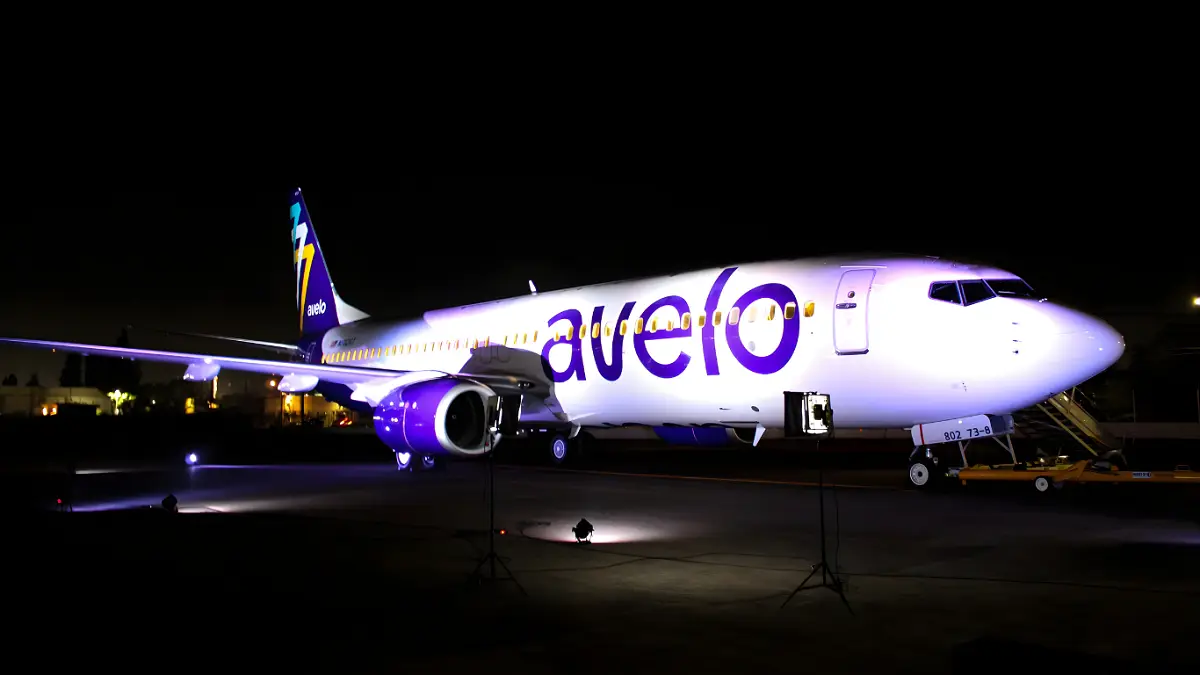
Avelo airline has exited all scheduled international operations as of January 2026, ending routes to Mexico and the Caribbean while restructuring its network around five US bases. The move follows weak load factors on overseas services and marks a strategic shift toward a streamlined domestic-focused operation.
The carrier’s final international flight operated on January 25, connecting Windsor Locks, Connecticut, and Montego Bay, Jamaica, according to scheduling data. The withdrawal concludes Avelo’s short-lived expansion beyond the United States, as the airline pivots to improving efficiency and profitability.
International Network Closure
Avelo’s international footprint consisted of six routes linking the eastern United States to leisure destinations in Mexico and the Caribbean. USA served as the primary gateway, accounting for three routes to Cancun, Montego Bay, and Punta Cana.
Additional services included flights from Wilmington, North Carolina, to Punta Cana, and from Raleigh-Durham to both Montego Bay and Punta Cana. These routes formed the entirety of Avelo’s international network prior to its withdrawal.
The airline confirmed in January 2026 that network changes were designed to support scaling around a smaller number of operational bases, stating the adjustments would allow it to “focus on sustainably scaling five core bases in 2026.”
Load Factor Performance and Route Economics
Operational data shows that Avelo’s international routes consistently underperformed relative to global benchmarks. The strongest-performing route, Windsor Locks–Montego Bay, recorded a load factor of 78.2% in 2025, below the global industry average of 83.6%.
Other routes delivered weaker results. Services between Raleigh-Durham and Punta Cana, and Windsor Locks and Punta Cana, posted load factors in the 70% range. Windsor Locks–Cancun recorded 61.5%, while Raleigh-Durham–Montego Bay performed worst at just 52%.
These figures highlight sustained underutilization across the international network, limiting profitability and contributing to the airline’s decision to discontinue overseas operations.
Shift to Five Core Bases
The restructuring centers on consolidating operations at five domestic bases. Four existing locations—New Haven, Connecticut; Philadelphia/Delaware Valley; Charlotte/Concord, North Carolina; and Lakeland, Florida—form the backbone of the network.
A fifth base is scheduled to open later in 2026 at Dallas/McKinney Airport in Texas, further reinforcing the airline’s domestic footprint. Notably, none of the airports previously supporting international routes are included in this revised base structure, making the withdrawal from foreign markets a structural outcome of the redesign.
This hub-focused approach is intended to improve aircraft utilization, reduce operational complexity, and concentrate demand within core markets.
Fleet Strategy and Capacity Adjustments
Alongside network changes, Avelo is modifying its fleet composition to better align with domestic demand. The airline has placed an order for up to 100 aircraft, including 50 firm orders and options for 50 additional jets, announced in September 2025.
The introduction of smaller, next-generation regional jets is expected to support higher load factors by better matching capacity to demand on domestic routes. The aircraft are also positioned as part of the airline’s strategy to deliver cost-efficient operations across the United States.
In parallel, Avelo is reducing its existing fleet, including the removal of six aircraft. This adjustment reflects a broader effort to streamline operations and optimize fleet efficiency.
Strategic Context and Current Position
The restructuring follows a challenging period for Avelo, during which the airline faced criticism related to its involvement in deportation charter operations. With those activities now ceased, the carrier is repositioning its business model around core domestic services.
The combined impact of underperforming international routes, fleet restructuring, and operational consolidation underscores a shift toward a more focused, lower-risk growth strategy. By concentrating on domestic markets and right-sizing capacity, Avelo aims to stabilize performance and improve long-term sustainability.
As of early 2026, the airline’s international network has been fully discontinued, with all resources redirected toward expanding and optimizing its US operations.