Cathay Pacific Eyes 300 Aircraft Fleet Expansion
Cathay Pacific is targeting a 300-aircraft Cathay Group fleet by 2033 as Hong Kong’s third runway unlocks new capacity, routes and long-term aviation growth.
 Jishan Khan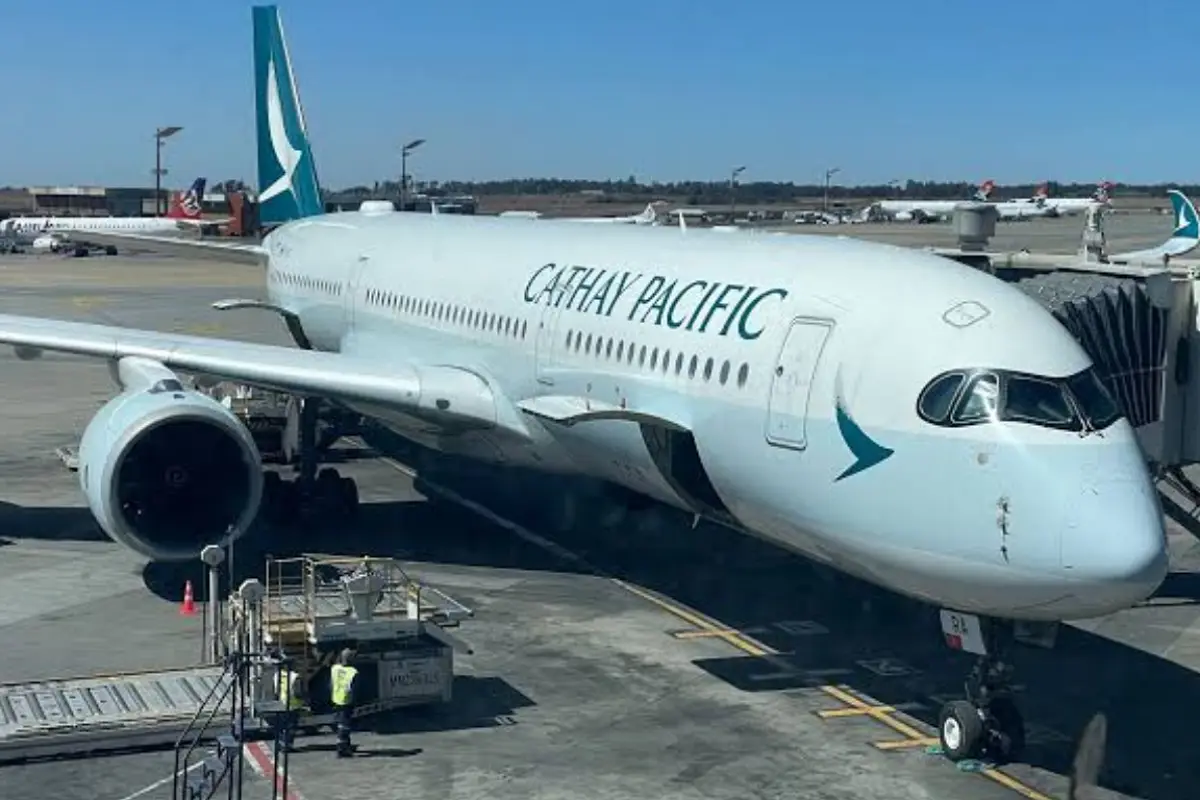
Cathay Pacific Just Said "There Will Be More Orders For Sure", Hong Kong's Third Runway Is Why
Cathay Group is targeting a fleet of approximately 300 aircraft by 2033, CEO Ronald Lam confirmed at the IATA annual general meeting in Rio de Janeiro, pointing to a decade of growth built around Hong Kong International Airport's newly operational third runway. The group's existing orderbook already runs past 100 aircraft with a programme valued at over HK$100 billion covering aircraft, cabins, lounges and digital systems. Not a single one of those ordered jets has been delivered yet.
The third runway opened in late 2024. A ten-year fleet plan and HK$100 billion later, Hong Kong is making its most ambitious aviation bet in a generation.
What the Three-Runway System Actually Unlocks
Hong Kong International Airport's third runway was one of the most debated infrastructure projects in Asia, a HK$141 billion expansion built on 650 hectares of reclaimed land that took a decade to complete. The business case was simple but politically complex: without more runway capacity, Hong Kong would lose traffic to Singapore, Dubai and mainland Chinese hubs as its two-runway system hit its ceiling. With three runways, HKIA can handle 102 million passengers annually by the time the full system is operational, up from approximately 75 million at peak pre-COVID capacity.
Lam described the coming decade as the chance to fill that added capacity, with HK Express as one of the group's fastest-expanding units and its single-aisle deliveries stretching into the late 2020s. The parent group has separately ordered 30 Airbus A330-900s scheduled from 2028 to renew the regional widebody fleet working Cathay's busiest Asia-Pacific routes. The third runway is not just more slots, it is the physical infrastructure that makes 300 aircraft economically viable at a single hub. Without it, Cathay's fleet would outrun the airport's capacity to absorb departures.
The Five-Brand Machine Cathay Is Building
The 300-aircraft target is not a Cathay Pacific number. It is a Cathay Group number, covering five distinct operating entities. Cathay Pacific runs the main long-haul network serving over 100 destinations. HK Express operates the group's low-cost short and medium-haul business with an Airbus-only narrowbody fleet, Lam explicitly ruled out Boeing for HK Express, confirming the subsidiary will maintain single-manufacturer commonality. Cathay Cargo operates 20 Boeing 747 freighters with A350Fs on order. Air Hong Kong, the group's express cargo subsidiary, runs 14 A330 freighters for DHL Express with an additional A330P2F joining in Q4 2026. And Cathay's regional partnership with Air China creates a fifth commercial channel into mainland Chinese traffic flows.
That five-entity structure gives Cathay Group something singular competitors struggle to replicate, a full-service premium carrier, a low-cost carrier, a belly cargo operation, a dedicated freighter division and an express cargo airline all operating through the same hub. Every flight category, every price point, every cargo type, all running through one airport with three runways.
Why the Comparison to Singapore and Dubai Is the Wrong Frame
The airline industry often frames this as Hong Kong versus Singapore versus Dubai, a three-way competition for the title of Asia's premier hub. Cathay's 10-year fleet plan tells you the group does not see it that way. The primary competitor Cathay is thinking about is not Changi or Hamad International. It is mainland Chinese aviation, specifically the rapid growth of hub airports in Guangzhou, Shenzhen and Shanghai that sit within short surface transit distance of Hong Kong and are increasingly able to offer competing connectivity to the same passenger base.
The third runway and the fleet expansion are Hong Kong's answer to that specific competitive pressure, a bet that a three-runway international hub with Cathay's global network, premium product and cargo infrastructure offers something that Guangzhou Baiyun or Shenzhen Bao'an structurally cannot. Despite elevated fuel costs from the Middle East conflict, Lam confirmed Cathay Pacific does not plan to cut further flight capacity and remains on track to achieve 10% capacity growth in 2026, a signal that the group is not letting short-term cost pressure deflect a long-term infrastructure play.
None of the 100-plus ordered aircraft has been delivered yet. The fleet plan runs to 2035. The third runway is operational. The next nine years will determine whether Hong Kong's most expensive aviation bet in history pays off.