China Eastern Air Holding Tightens Grip on Airline With 55.8% Stake
China Eastern Air Holding increased its China Eastern Airlines stake to 55.8% through a nearly CNY1 billion purchase of 229.3 million shares.
 Jishan Khan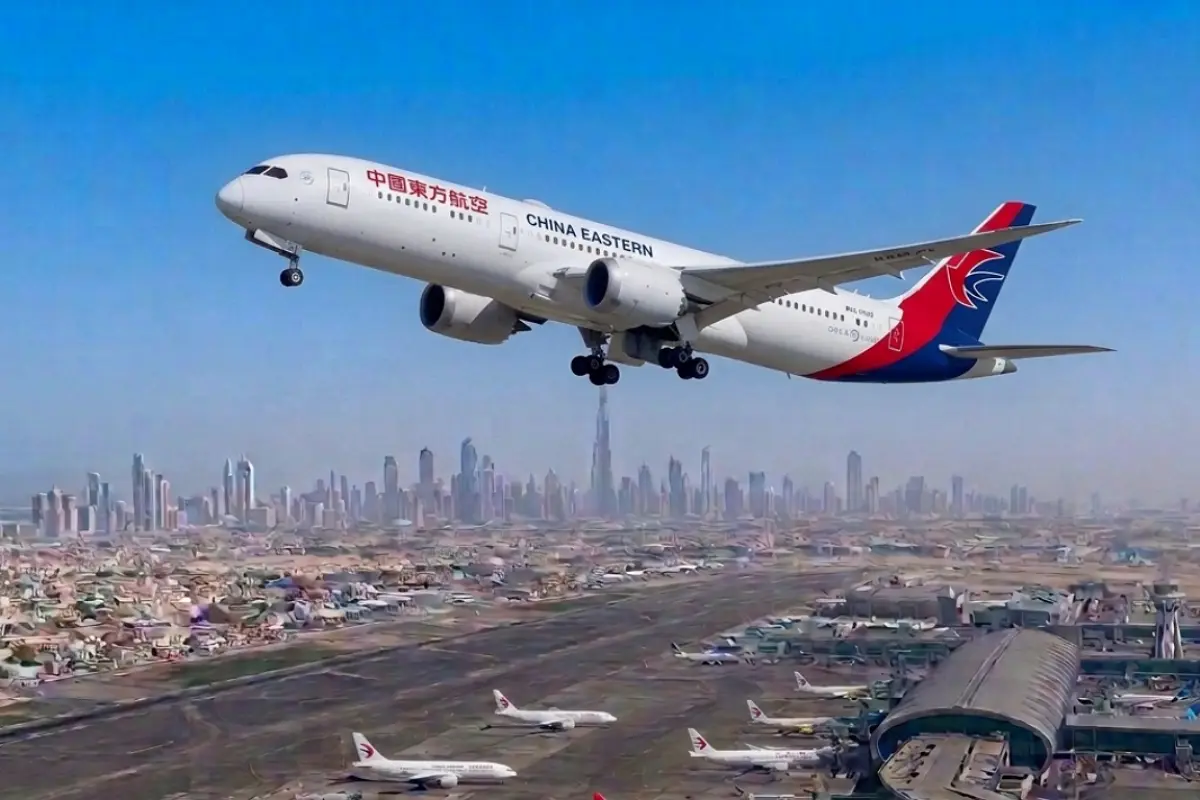
China Eastern Air Holding Just Spent $147 Million Buying Its Own Airline's Shares, And the Message Beijing Is Sending Through That Purchase Goes Far Beyond One Transaction
229.3 million shares. Nearly CNY 1 billion invested. A combined stake now sitting at 55.8 percent. This is not routine portfolio management. This is China's aviation establishment making a very deliberate statement about which direction it expects the sector to travel, and who is going to be driving.
Share purchases by parent companies in their listed subsidiaries happen regularly enough across global markets that individual transactions rarely warrant deep analysis. When China Eastern Airlines' parent company spends nearly $147 million acquiring 229.3 million A-shares between March and May 2026, methodically, across two months, in a market that has been watching Chinese aviation navigate years of financial difficulty, the transaction deserves to be read as something more than a routine investment decision.
It deserves to be read as policy.
The increase in combined stake to approximately 55.8 percent is the numerical outcome. The strategic signal, that the state-linked aviation establishment is prepared to deploy real capital to reinforce investor confidence in China Eastern specifically and Chinese aviation broadly, is the more consequential development for everyone trying to understand where the sector is heading.
Why the Timing of This Purchase Matters
The period between March and May 2026 is not an arbitrary window. It sits at a specific point in Chinese aviation's post-pandemic financial recovery, far enough from the worst of the loss-making period that the sector can claim recovery momentum, but close enough to the accumulated debt and balance sheet damage of that period that genuine investor confidence in the long-term thesis still requires active cultivation.
Chinese airlines, Air China, China Eastern, and China Southern among them, accumulated substantial losses and debt through the pandemic period in ways that their state backing allowed them to survive but did not immediately reverse. The financial repair process has been ongoing, involving a combination of revenue recovery, cost reduction, debt restructuring, and the kind of patient capital support that only state-linked ownership structures can provide through extended periods of operational and financial difficulty.
A parent company that purchases nearly $147 million of its listed airline subsidiary's shares across a two-month window is not doing so because it believes the shares are temporarily undervalued and expects a quick trading profit. It is doing so because it wants the market, domestic and international investors, lessors, creditors, corporate clients, and the broader ecosystem of relationships that an airline depends on, to see that commitment and update their assessment of China Eastern's trajectory accordingly.
The purchase is as much communication as it is investment. And the audience for that communication extends well beyond the stock exchange.
What 55.8 Percent Majority Control Actually Means Operationally
The increase in combined stake to 55.8 percent reinforces something that was already structurally true about China Eastern's position within China's aviation governance framework, but makes it more explicit and more visible to outside observers.
At 55.8 percent, the parent company has unambiguous majority control over strategic decisions, capital allocation, and the long-term direction of the carrier. Board composition, fleet strategy, route development, executive appointments, and the terms on which China Eastern engages with international partners and investors all ultimately flow through an ownership structure that is now even more firmly anchored to state-linked institutional control.
For international investors holding the remaining stake, the increased parent ownership provides a specific kind of reassurance, not about governance independence, which is limited in this structure, but about the implicit guarantee that comes with majority state-linked ownership of a nationally significant carrier. An airline whose parent has just demonstrated willingness to deploy $147 million in share purchases is an airline whose ownership has skin in the game in the most literal financial sense.
For China Eastern's commercial relationships, the lessors who finance its aircraft, the banks that provide its working capital, the corporate clients whose travel programs depend on its reliability, the reinforced parent commitment is a credit signal that reduces the perceived risk of doing business with the carrier in ways that eventually translate into better financing terms and stronger commercial partnerships.
Beijing's Broader Aviation Stabilisation Strategy For China Eastern Airlines
- China Eastern's parent share purchase is part of a wider pattern of state-backed support for China's aviation sector.
- Beijing views aviation as a strategically important industry and is working to ensure major airlines emerge from post-pandemic recovery in a strong financial position.
- Aviation connectivity plays a key role in supporting economic growth, tourism, and international trade.
- The sector is also linked to China's long-term aerospace ambitions, including the development of domestic aircraft manufacturing through COMAC.
- Strong Chinese airlines are considered important for competing with international carriers on global routes.
- Financially weak airlines would be less capable of supporting China's broader economic and strategic objectives.
What Fleet Modernisation Plans Require That Financial Stability Enables
One of the most practically important consequences of China Eastern's reinforced balance sheet, and one that the parent share purchase directly supports, is the carrier's ability to pursue fleet modernisation on the timeline that competitive and regulatory pressures require.
Chinese airlines are in the middle of a generational fleet transition that involves replacing older generation aircraft with more fuel-efficient models, absorbing COMAC C919 deliveries as part of Beijing's domestic aerospace development agenda, and maintaining widebody capacity for international routes that are recovering and expanding simultaneously.
Fleet modernisation at that scale requires the kind of financial credibility with lessors, manufacturers, and financing institutions that a carrier with an uncertain balance sheet and nervous parent ownership cannot easily achieve. Aircraft lessors pricing lease rates, banks structuring pre-delivery payment financing, and Airbus and Boeing assessing delivery priority all make assessments that are influenced by the financial strength of the airline and the commitment of its ultimate ownership.
A parent that just spent $147 million on share purchases is a parent that is demonstrating the financial commitment that those counterparties need to see. The fleet modernisation programme becomes more executable, at better terms, on a more reliable timeline, when the ownership structure has visibly reinforced its financial backing of the carrier.
The Signal to International Investors and Partners by China Eastern Air Holding
China Eastern is not just a domestic airline. It is one of the major carriers in one of the world's largest aviation markets, with international routes, global alliances, and commercial relationships that span the industry.
International investors holding positions in China Eastern's listed shares, international airlines that are codeshare and alliance partners, and international businesses whose travel programmes include China Eastern connectivity all have an interest in the carrier's financial trajectory that the parent share purchase speaks to directly.
The message being sent is not subtle. The state-linked ownership structure of Chinese aviation is not passive. It is engaged, financially committed, and prepared to deploy capital to ensure that the major carriers navigate the post-pandemic recovery period with the balance sheet strength that their strategic importance requires.
For international partners evaluating the depth of their China Eastern relationships, that message reduces the risk calculus in ways that have practical commercial consequences, more willingness to invest in joint products, stronger commitment to codeshare connectivity, and greater confidence in the carrier's operational and financial reliability on the routes that matter to global travellers.
What Comes Next for Chinese Airlines
The parent's share purchase establishes a financial baseline for China Eastern's next phase — one characterised by improving balance sheet strength, reinforced investor confidence, and the capital access that fleet modernisation and network expansion require.
What comes next depends on whether the operational recovery continues building the revenue and yield performance that justifies the capital investment the parent has made. The share purchase provides a foundation. The airline's commercial execution, on international route recovery, on domestic yield management, on the absorption of new fleet capacity, is what determines whether that foundation supports genuine competitive growth or simply stabilises a carrier that remains structurally challenged.
Beijing has made its position clear through capital rather than words. China Eastern's management now has the financial backing to execute on the recovery thesis that the share purchase was designed to signal.
Whether they deliver on it is the question that the next phase of Chinese aviation's story will answer.