EgyptAir Adds Second A320neo Simulator in Cairo
EgyptAir is adding a second A320neo simulator in Cairo as Acron Aviation's Commercial Training Solutions division moves toward FlightSafety International.
 Jishan Khan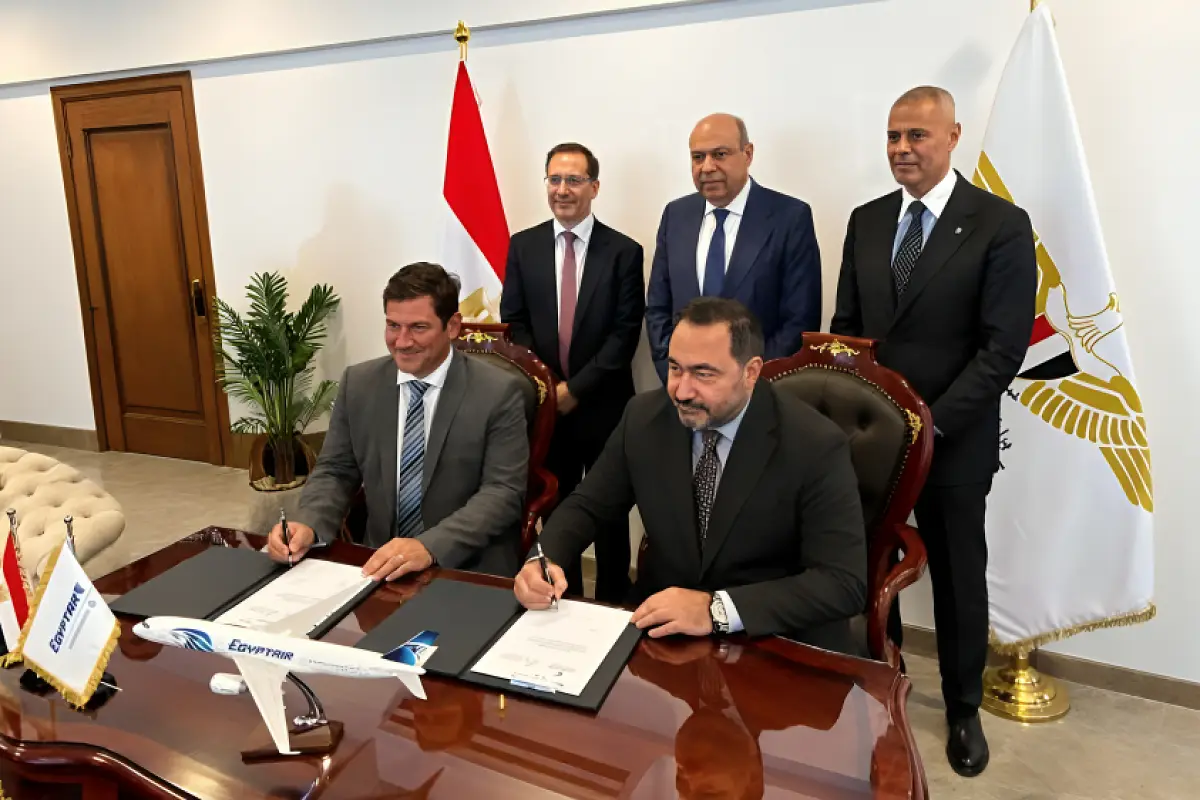
EgyptAir Just Signed a Long-Term Simulator Deal With a Division of Acron That Was Being Sold to FlightSafety International Two Weeks Earlier
Acron Aviation confirmed on September 9, 2026 that it will supply EGYPTAIR Training Academy with a Reality7e Airbus A320neo Full Flight Simulator for installation at Cairo, becoming the academy's second A320neo-capable device, the deal itself was actually signed back on July 24 at the Farnborough Airshow, with this week's announcement formalising the agreement publicly. Buried in Acron's own press timeline, immediately above the EgyptAir release, sits a detail that changes how this deal should be read: on August 26, 2026, "Acron Technologies to divest Commercial Training Solutions to FlightSafety International." The exact division that just signed a major long-term simulator supply agreement with Egypt's flag carrier was, weeks earlier, itself the subject of a corporate divestiture.
A Simulator Supplier That Has Changed Its Own Name Twice in Two Years
Acron Aviation's identity has been genuinely unstable even as its relationship with EgyptAir has stayed constant. The A320neo simulator EgyptAir has operated since December 2020 was originally built and delivered by L3Harris Commercial Aviation Solutions, a name that no longer exists. That division was rebranded Acron Aviation in 2025, and just this August, Acron Technologies confirmed plans to divest its Commercial Training Solutions arm, the exact unit responsible for building and delivering flight simulators, to FlightSafety International, one of the largest and most established names in global aviation training. That means the company signing this EgyptAir deal in July, announcing it in September, and installing the actual hardware sometime after, may not even be the same corporate entity by the time the simulator is delivered and commissioned.
For EgyptAir, that ownership churn is less alarming than it might first appear, precisely because FlightSafety International is not a downgrade, it is one of the most credible and long-established training equipment providers in the industry, originally founded in 1951 and long recognised as a benchmark for simulator quality and safety certification. If anything, EgyptAir's simulator fleet transitioning from L3Harris to Acron to eventually FlightSafety ownership over a five-year span represents a series of increasingly larger, more specialised training companies taking custody of the same physical hardware and support relationship, continuity of service through multiple changes of corporate parent, rather than genuine supplier risk.
Why EgyptAir Was First in the Region, and Why That Still Matters Five Years Later
Acron's own Chief Operating Officer Ben Swann made the historical claim explicit: "EGYPTAIR was the first operator in the Middle East and Africa to acquire a RealitySeven A320 simulator, which has been supporting pilot training in Cairo since 2020." That first-mover position, confirmed independently by EgyptAir's own training academy website describing itself as the first African airline to add an A320neo-capable simulator, gave Cairo a five-year head start over regional competitors in building institutional experience specifically with next-generation A320neo simulation technology, expertise in instructor training, maintenance procedures, courseware development and regulatory certification that a brand-new market entrant would need years to accumulate from scratch.
That head start is precisely what makes a second simulator a genuinely different proposition than a first one would be for a rival regional academy. EgyptAir is not starting a new capability, it is doubling proven capacity in a domain where it already holds a five-year technical and operational advantage over most other training providers in the Middle East and Africa.
The Existing Simulator Already Handles Three Different Aircraft Variants
A detail easy to overlook is that EgyptAir's current A320neo/ceo device is not a single-variant machine, it is qualified across the A320-214, A320-232 and A320-251N configurations, meaning it already supports both older ceo-generation aircraft and the newer neo variant on one physical simulator, certified to EASA Level D, the highest fidelity rating a full flight simulator can achieve. That multi-variant capability is directly relevant to why a second unit, rather than upgraded software on the first, is the right solution: as EgyptAir's own A320-family fleet has grown and diversified across ceo and neo generations, a single simulator running at full utilisation for type-rating, recurrent and command-upgrade training across three aircraft variants simultaneously eventually hits a genuine scheduling ceiling, pilots, instructors and training slots all competing for time on one physical device. A second Reality7e unit does not just add redundancy; it doubles the actual training throughput the academy can deliver in a given month.
Why This Deal Is a Government Relationship as Much as a Commercial One
The signing ceremony itself was notably heavy with official presence, EgyptAir Holding Chairman Ahmed Adel, Acron Aviation CEO David Coward, representatives of the British Embassy in Cairo, and separately, Egypt's Civil Aviation Minister Sameh El-Hefny meeting Acron's president Ron Nye directly at Farnborough to discuss simulation, training systems and "knowledge transfer for pilots, cabin crew and maintenance personnel." El-Hefny's own framing was explicit about strategic intent beyond a single simulator purchase: investing in human capital "remains a cornerstone of the Ministry of Civil Aviation's strategy," and he described EgyptAir Training Academy as "one of the region's leading aviation training centres," with the ministry "keen to expand partnerships."
That level of ministerial and diplomatic involvement in what is, functionally, a training-equipment procurement deal signals Egypt's government views EgyptAir Training Academy's capacity expansion as aligned with broader national aviation policy, not merely EgyptAir buying equipment for its own internal pilot pipeline, but Cairo positioning itself as regional training infrastructure that other countries' airlines and pilots might eventually pay to access, generating a genuinely different kind of aviation-sector revenue and strategic relevance than flying passengers alone provides.
A Twenty-Year Relationship That the British Ambassador Chose to Personally Endorse
This feed's research also surfaced a March 2026 visit by the British Ambassador to Egypt specifically to EgyptAir Training Academy, framed explicitly around highlighting "a two-decade partnership" between Acron (in its earlier corporate forms) and EgyptAir, with Acron's own statement describing pride in "supporting high-quality pilot training and strengthening global aviation standards." That twenty-year relationship, spanning multiple corporate name changes on the supplier side, gives this latest simulator deal a depth of institutional trust that a first-time buyer-supplier relationship simply could not replicate, EgyptAir is not evaluating a new vendor's reliability from scratch, it is extending a partnership whose track record it has already tested across two decades of prior equipment and training delivery.
Whether Cairo Actually Becomes a Regional Training Export Hub
The genuinely open strategic question, the one El-Hefny's comments gesture toward without fully answering, is whether EgyptAir Training Academy's expanded A320neo capacity eventually becomes a genuine commercial training destination for pilots and airlines beyond Egypt's own borders, in the way this feed has already documented flynas building a SAR 200 million training centre in Riyadh explicitly to reduce Saudi Arabia's dependence on external training providers, or ASL Australia locking in a multi-year Acron training agreement specifically because in-house capacity could not keep pace with fleet growth. Cairo's five-year head start on A320neo simulation, its now-doubled capacity, and its explicit government backing give it a genuine case to make toward regional airlines in Africa and the wider Middle East that currently send pilots elsewhere, Europe, the Gulf, or further afield, for type-rating and recurrent training.
Whether that theoretical advantage converts into actual third-party training contracts, rather than simply serving EgyptAir's own growing pilot workforce more efficiently, is not something a single simulator announcement can answer. It depends on pricing, scheduling availability once EgyptAir's own training demand is satisfied, and whether regional carriers currently training elsewhere see enough reason to switch. What is clear is that Cairo now has the physical infrastructure, two Level D-certified A320neo-capable simulators, backed by two decades of institutional relationship with one of the industry's most established simulator manufacturers, to make that pitch credibly, whenever EgyptAir's academy decides to make it.