FedEx Confirms India Is Becoming a Key Part of Its Global Network
FedEx is investing $150 million in a new Delhi cargo hub as India expands its air freight infrastructure and targets 10 million tonnes by 2030.
 Jishan Khan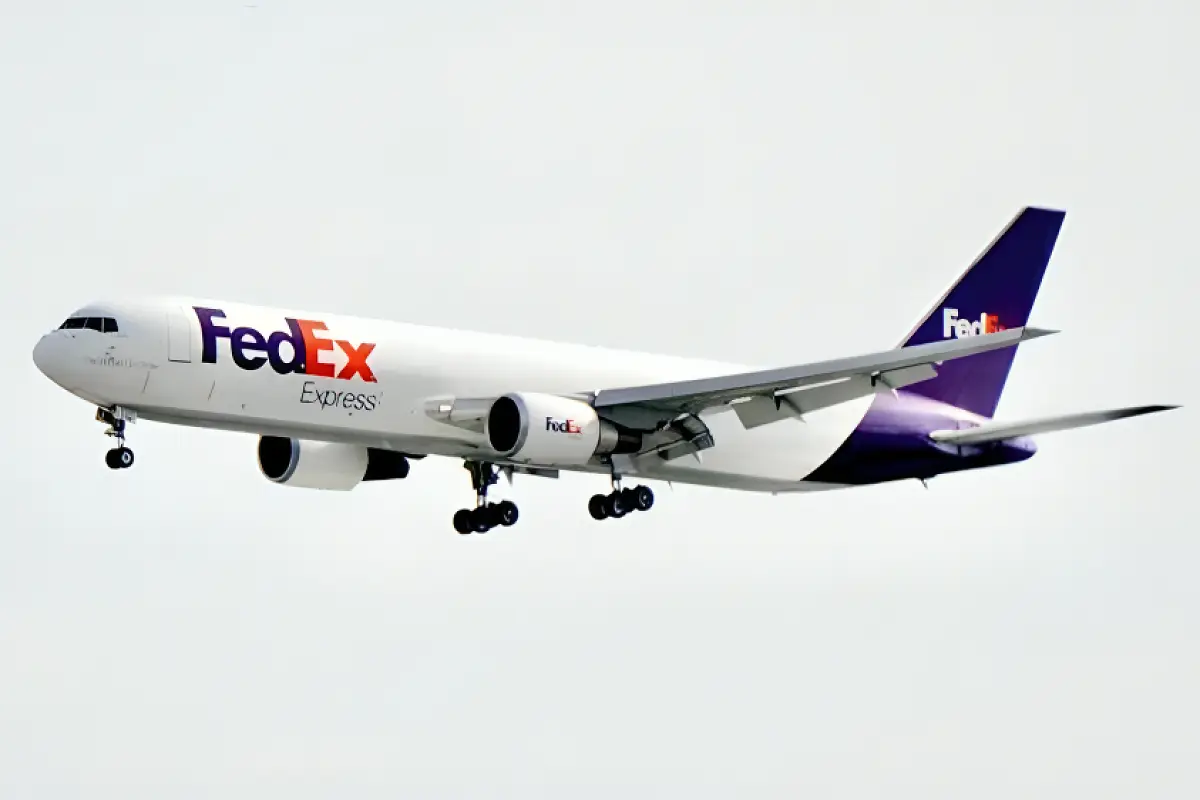
FedEx Just Confirmed India Is No Longer a Feeder Market, It's Becoming Part of the Network's Backbone
FedEx broke ground on a $150 million integrated air cargo hub at GMR Cargo City, Delhi's Indira Gandhi International Airport, on August 25, 2026, targeting an eight-fold jump in processing capacity from 600 to 5,000 packages per hour. Civil Aviation Minister Kinjarapu Ram Mohan Naidu attended the ceremony personally and used it to declare that India should become "the backbone for air cargo movements" globally, a framing that positions this single facility as one visible piece of a much larger national ambition this feed has already tracked extensively across Navi Mumbai's freighter launches, Saudia Cargo's Dhaka-Frankfurt route and China's own five-year aviation self-reliance plan.
Why "Under One Roof" Is the Actual Innovation, Not the Building Itself
The headline capacity jump, 600 to 5,000 packages per hour, is the number every outlet has led with, but the more structurally important detail is what makes that jump possible: combining international gateway operations with pickup-and-delivery activities in a single facility for the first time. Historically, express logistics operators like FedEx have run these as physically separate functions, an international gateway that receives and dispatches cross-border freighter cargo, and a distinct network of pickup-and-delivery depots that handle the last-mile movement of shipments to and from customers. Every time a package crossed between those two functions, it required a physical handoff, additional handling, and time.
Merging both under one 230,000-square-foot automated roof eliminates that handoff entirely for shipments moving through Delhi. A package arriving on an international freighter can move directly into the same automated sorting infrastructure that prepares it for last-mile delivery, without ever leaving the building or requiring a separate transport leg between two different FedEx facilities across the city. That is the real driver of the eight-fold capacity increase, not simply a bigger warehouse, but the removal of an entire structural inefficiency that has defined how express logistics operators have historically organized ground infrastructure.
The Technology Stack That Makes 5,000 Packages an Hour Achievable
FedEx has specified the facility will include an advanced automated sorting system, next-generation X-ray equipment, and what the company describes as intelligent package-handling technologies, details that matter because processing 5,000 packages hourly through manual or semi-automated sortation is not realistically achievable at the accuracy and security standards international customs and security regulations require. Modern automated sortation systems use barcode and RFID scanning combined with conveyor-based routing to direct packages to the correct onward destination, whether that is a specific international freighter, a domestic connecting flight, or a local delivery route, without manual intervention at each decision point.
The next-generation X-ray equipment specification is not incidental either. International air cargo security screening requirements have tightened globally over the past decade, and a facility processing this volume of shipments destined for international gateways needs screening infrastructure capable of matching that throughput without creating a security bottleneck that would otherwise negate the entire efficiency gain the automation is designed to deliver.
Why This Is FedEx's Third Major India Investment in Under Twelve Months, Not Its First
The Delhi hub does not exist in isolation, it is the latest instalment in a deliberate, sequenced India infrastructure programme FedEx has been executing since at least February 2026, when the company broke ground on a separate 300,000-square-foot fully automated facility at Navi Mumbai International Airport, backed by an investment exceeding ₹2,500 crore (approximately $300 million). FedEx has also previously expanded its Bengaluru operations and committed $100 million toward an Advanced Capability Community in Hyderabad focused specifically on technology, digital transformation and innovation, a facility distinct from physical cargo handling that suggests FedEx is simultaneously building both the ground infrastructure and the software/technology capability to run an increasingly India-centric segment of its global network.
Layer the Navi Mumbai hub, the Hyderabad technology centre, the earlier Bengaluru expansion and now the Delhi facility together, and the pattern is unambiguous: FedEx is not treating any single Indian city as its primary node the way a traditional single-hub model would operate. It is building a distributed, multi-city Indian cargo network, Delhi anchoring the North and East, Navi Mumbai anchoring the West, that mirrors the geographic logic of India's own aviation growth story, where this feed has repeatedly documented individual metros each building world-class infrastructure rather than one city dominating the entire country's air cargo flow.
Why GMR Wanted FedEx as Badly as FedEx Wanted Delhi
GMR Airports President and CEO Rajesh Arora's own comments reveal the reciprocal nature of this deal clearly, he described FedEx as becoming "one of our anchor tenants" at GMR Cargo City, a 50-acre integrated cargo and logistics development with total development potential of 1.5 to 2 million square feet, of which Phase 1 alone comprises roughly 1 million square feet across nearly 30 acres. An "anchor tenant" designation in commercial real estate terms means far more than simply the largest occupant, anchor tenants attract secondary businesses, service providers and complementary logistics operators specifically because their presence signals the location has been vetted and validated by a globally recognized operator.
Arora made that dynamic explicit, saying FedEx's presence would "create value beyond the facility itself by attracting customers, service partners and complementary logistics businesses", meaning GMR is betting that FedEx's commitment to Cargo City becomes a magnet that pulls freight forwarders, customs brokers, third-party logistics providers and even competing express carriers to co-locate nearby, accelerating the development of the entire 50-acre site well beyond what GMR's own direct marketing efforts could achieve alone.
The 10-Million-Tonne Target That Frames Every One of These Announcements
India's government has set an explicit national target of 10 million tonnes of annual air cargo capacity by 2030, a figure that contextualizes why Civil Aviation Secretary Samir Kumar Sinha used the Delhi groundbreaking specifically to note that "efforts are on to remove all bottlenecks for air cargo movements" nationally, rather than treating this as simply a private commercial investment unconnected to government policy. That target is the same underlying strategic driver behind Navi Mumbai's rapid international freighter onboarding, the aggressive regulatory approvals this feed documented allowing NMIA to serve 15 international cargo destinations within months of opening, and now FedEx's coordinated multi-city infrastructure buildout.
Minister Naidu's framing, that India should become "the backbone for air cargo movements", is not simply political rhetoric attached to a ribbon-cutting. It reflects a specific, quantified government target that private investment from operators like FedEx is directly helping fulfill, and every major cargo infrastructure announcement in India through 2026, from this Delhi facility to Navi Mumbai's freighter launches to the Saudia Cargo interline agreements this feed covered separately, is best read as one component of that same coordinated national push rather than a series of unconnected corporate decisions.
Why "Reducing Reliance on Foreign Hubs" Is the Question That Actually Matters Long-Term
The deeper strategic question this investment raises, one neither FedEx's press materials nor the government's public statements address directly, is whether facilities like this genuinely capture international air cargo volume that would otherwise transit through competing hubs in Dubai, Singapore or Hong Kong, or whether they simply process the same underlying India-origin and India-destination freight more efficiently without meaningfully redirecting cargo that was never going to route through a foreign hub in the first place. A shipment originating in North India bound for Europe has historically had genuine routing choices, direct or via a Gulf or Southeast Asian connecting hub, and the answer to whether Delhi's expanded capacity actually shifts that routing decision, rather than simply making India's own domestic and direct-international cargo flow faster, will only become clear once the facility is operational and India's actual share of regional and global air cargo volume can be measured against the 10-million-tonne target it is being built to help achieve.