GE Aerospace Power the Future of Aircraft Engines
GE Aerospace engineers in Bengaluru are advancing hybrid-electric propulsion, Open Fan technology and AI maintenance tools for the next generation of aircraft.
 Jishan Khan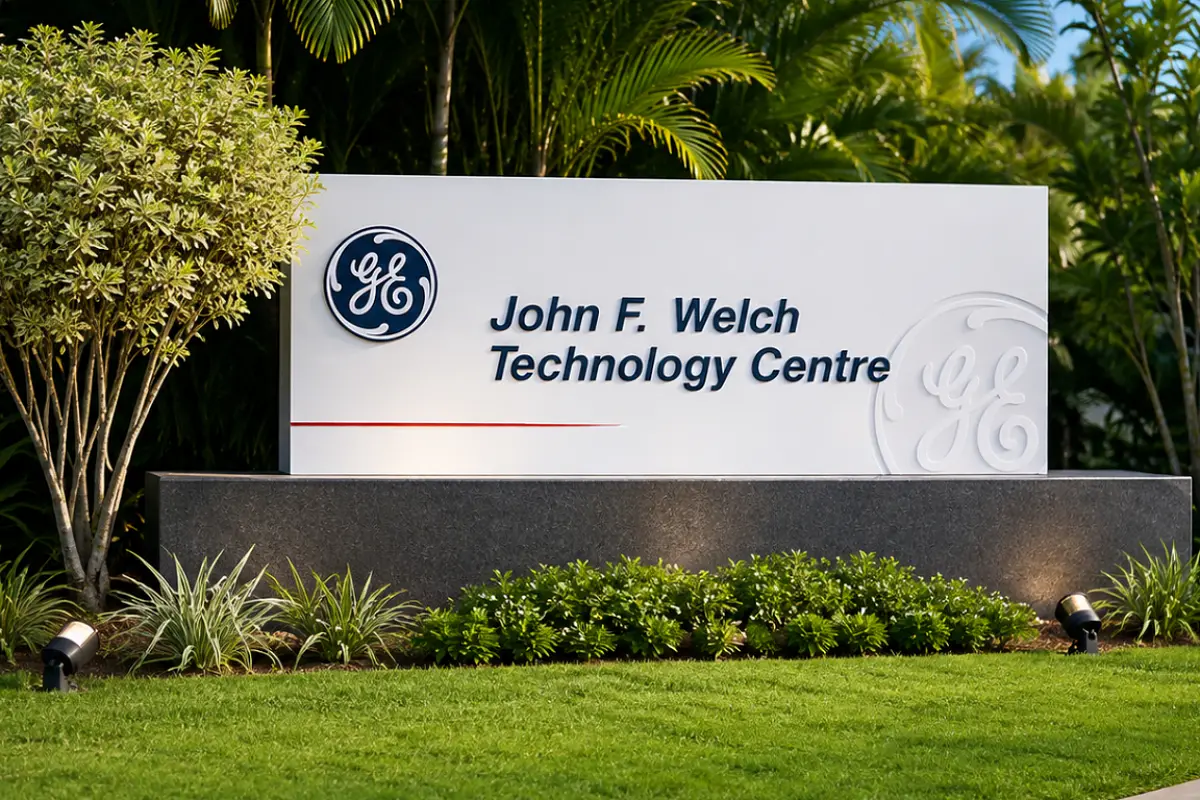
Bengaluru Engineers Just Helped Fly a Hybrid-Electric Aircraft Above 30,000 Feet, Now GE Wants Them to Cut Engine Inspection Time in Half
GE Aerospace confirmed on August 18, 2026 that engineers at its Bengaluru technology centre are simultaneously advancing two distinct fronts of aviation technology, scaling AI-enabled maintenance tools that improve engine durability and time on wing for today's fleet, and helping mature the CFM RISE programme's Open Fan, compact core and hybrid-electric systems for tomorrow's. The announcement followed a month after Bengaluru engineers contributed directly to the world's first hybrid-electric flight above 30,000 feet, a joint NASA-GE Aerospace demonstration that reached the same altitude commercial passenger jets cruise at.
An engineering centre built in 2000 to support GE's existing product lines is now doing foundational work on the two technologies that will define aircraft propulsion for the next three decades.
What "Time on Wing" Actually Means for an Airline's Bottom Line
The maintenance side of Bengaluru's work is less headline-grabbing than hybrid-electric flight, but it is the piece with the most immediate financial impact on airlines flying today. AI-driven tools developed at the centre have already cut aircraft engine turnaround time by approximately five days and halved inspection time for GEnx engine blades, reductions that translate directly into more revenue-generating flying hours per aircraft and lower maintenance costs per cycle. The Bengaluru team is also supporting global deployment of 360 Foam Wash, a proprietary engine-cleaning technology, across MRO shops worldwide, alongside continued durability testing for engines operating in harsh environments, sand, heat and dust conditions that accelerate wear in markets across the Middle East, North Africa and South Asia.
Every day an engine can fly before requiring a shop visit is a day an airline is not paying for teardown, inspection, part replacement and reassembly, costs that can run into millions of dollars per event for a widebody engine. Extending time on wing even modestly across a global in-service fleet compounds into substantial savings, which is precisely why GE frames this work as directly benefiting customers rather than as an internal engineering exercise.
The Open Fan Bet That Requires Bengaluru's Specific Expertise
CFM RISE, the joint GE Aerospace-Safran technology demonstration programme unveiled in 2021, is targeting more than 20% better fuel efficiency compared to today's most efficient commercial engines, roughly double the 10-15% improvement each previous engine generation delivered. Achieving that step change requires abandoning the traditional ducted fan architecture that has defined jet engines for decades in favour of Open Fan design, a larger, ductless fan that increases propulsive efficiency but introduces entirely new aerodynamic, structural and durability challenges that conventional engine engineering has never had to solve at this scale.
The India team's specific contribution sits in power electronics, high-power density converters and control systems, the electrical engineering discipline that hybrid-electric propulsion depends on entirely and that traditional mechanical engine design barely touched. That expertise did not exist by accident. GE has been building it deliberately, recruiting engineers into roles explicitly focused on power electronics and controls for hybrid and more-electric aircraft applications, treating it as a distinct engineering discipline worth building from scratch in Bengaluru rather than assuming existing turbine engineering talent could simply pivot into it.
From GE90 to RISE: What Twenty-Five Years of Institutional Memory Buys
Bengaluru's John F. Welch Technology Centre has contributed to every major GE commercial engine programme since the centre's founding, GE90, GEnx, GE9X and CFM LEAP, with each generation delivering 10-15% fuel efficiency gains. That is not a resume line. It is the accumulated engineering judgment now being applied to a target that is roughly double the historical improvement rate, on an architecture that removes the protective duct engineers have relied on for context in every previous design cycle.
The compact-core and Open Fan work Bengaluru contributes to is explicitly aimed at solving a problem that matters disproportionately to airlines in India and similar hot, dusty operating environments, durability and dust ingestion resistance, the specific failure mode that shortens engine life fastest in exactly the markets where Indian and Middle Eastern carriers operate. An engineering team based in Bengaluru, working on technology meant to perform reliably in harsh operating conditions, has a structural advantage in understanding that problem that a team based in a temperate climate simply does not.
Why This Matters Beyond GE's Balance Sheet
GE Aerospace has been a partner to India's aviation industry for over 40 years, with more than 1,300 GE Aerospace and partner commercial engines currently in service across the country and more than 3,000 engines on order, a figure that includes the landmark 2024 IndiGo-CFM deal for over 1,000 LEAP-1A engines, one of the largest single engine orders in commercial aviation history. That order book is not incidental to the Bengaluru story. It represents the demand base that justifies GE deepening its R&D investment in India rather than treating the country purely as a sales market for engines designed elsewhere.
The centre's more than 1,000 aviation patents accumulated since its founding, combined with its role in validating the world's first hybrid-electric flight above 30,000 feet, signal something structurally important about where global aerospace engineering talent is concentrating. Bengaluru is no longer a support function for engineering work happening in Cincinnati, Ohio or Villaroche, France. It is one of the sites where the foundational technology decisions for the next generation of aircraft propulsion, the engines that will power narrowbody aircraft from roughly the mid-2030s onward, are actually being made.