IndiGo Puts New Aircraft Orders on Hold Until 2030
IndiGo will not place new aircraft orders before 2030 despite having over 900 jets on order, as it waits for next-generation aircraft technology.
 Jishan Khan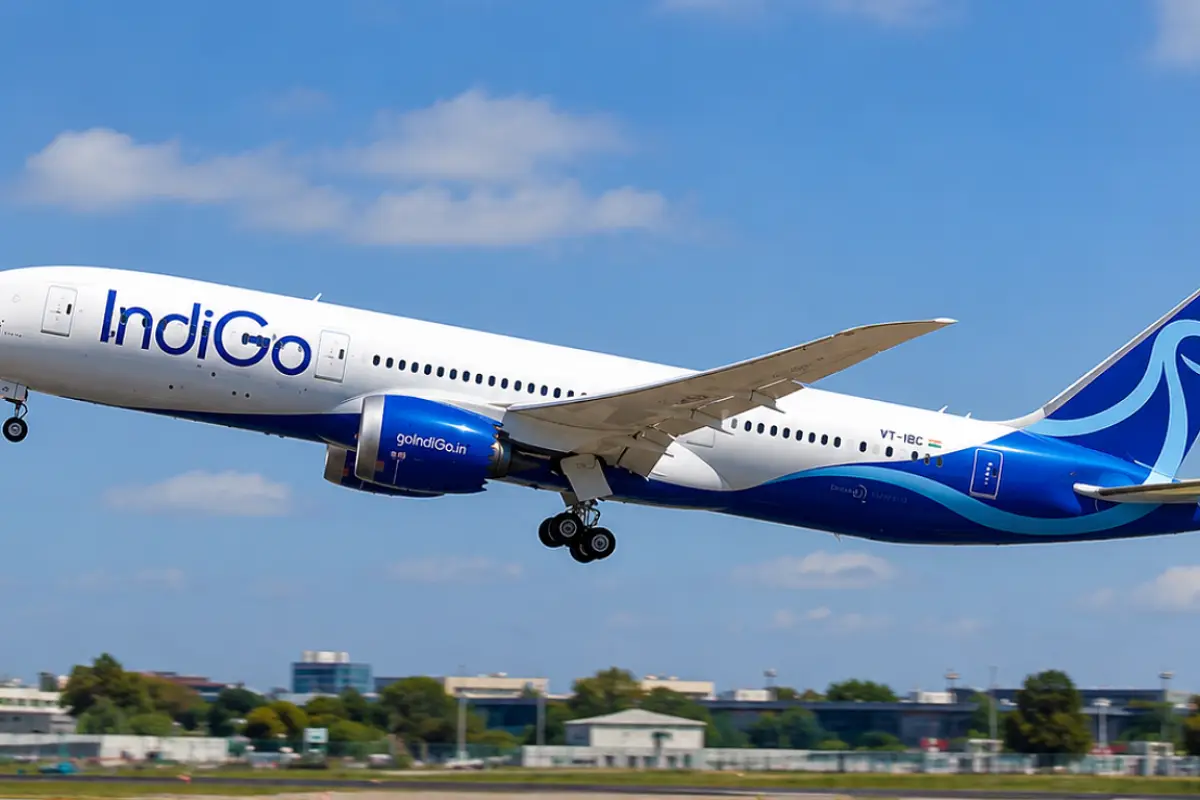
IndiGo Has 900 Aircraft on Order and Is Deliberately Not Buying Any More — the Strategy Behind That Decision Is Smarter Than It Sounds
IndiGo will make no new aircraft commitments until at least 2030, Managing Director Rahul Bhatia confirmed this week as the airline approaches its 20th anniversary. With more than 900 aircraft already on order including 60 firm Airbus A350-900s and options for 40 more, deliveries run through 2035, giving IndiGo the capacity pipeline it needs without committing a single additional rupee to current-generation technology.
An airline with 66% domestic market share and 900 jets on order just decided it does not need to buy anything else for four years. That is a position of strength, not caution.
The Technology Bet Underneath the Pause
Bhatia was direct about the reasoning: "The reason we have taken a pause right now is because we want to see what happens with the next-generation aircraft. Who will launch it and when? Whenever that new technology comes along, I think it will be our next bite of the cherry and decide the future of this company beyond the current generation of aircraft."
The next-generation narrowbody, currently being developed by both Airbus and Boeing under various programme names and expected to enter commercial service somewhere between 2035 and 2040, is projected to deliver 20-25% better fuel efficiency than the current A320neo family, along with lower maintenance costs and potentially hydrogen or hybrid propulsion options depending on the manufacturer's chosen technology path. Bhatia identified the core risk of ordering now rather than waiting: "What you don't want to do is as new technology comes along, you don't want to be saddled with a lot of older generation aircraft."
IndiGo has seen what that trap looks like up close. Its older A320ceo fleet has been systematically returned to lessors as neo-family deliveries arrive, a managed transition that works when you have the order pipeline to execute it cleanly. Committing to another round of current-generation orders in 2026 would push delivery tail dates into the mid-2030s, potentially landing aircraft into the fleet at exactly the moment next-generation competitors are entering service at rival carriers.
The Balance Sheet Move Nobody Is Talking About
Alongside the order pause, IndiGo is shifting from operating leases to finance leases for new aircraft deliveries. That structural change is as strategically significant as the order timing decision. Operating leases keep aircraft off the balance sheet and provide flexibility to return planes when demand softens, useful for managing capacity risk. Finance leases put aircraft on the balance sheet but fundamentally lower the cost per seat mile over the aircraft's useful life, because the airline is building equity in the asset rather than paying a lessor's margin on every cycle.
For an airline IndiGo's size, 440 aircraft operating today, 900 more coming, the cumulative cost difference between operating and finance leases across the delivery stream is enormous. The switch signals that IndiGo's new CFO Kiran Thadimarri, who took the role last week, is inheriting a treasury strategy already oriented toward long-term cost reduction rather than near-term balance sheet management.
What Comes After 2030
IndiGo holds options for 40 additional A350-900s that it could convert to firm orders if widebody market conditions require capacity before next-generation aircraft arrive. That optionality is the safety valve, if India's long-haul international market accelerates faster than the current 60-aircraft A350 order can serve, IndiGo has a pre-negotiated mechanism to add capacity without a full new procurement process.
For the narrowbody fleet beyond 2035, the decision will depend entirely on who launches the next-generation aircraft first and when. Airbus and Boeing are both in various stages of planning programmes to succeed the A320neo and 737 MAX families. IndiGo's 2030 review date is essentially a checkpoint, assess which programme is furthest along, which technology is most credible, and place the order that will define the airline's cost structure for the following two decades.
Bhatia said IndiGo wants to be an early adopter. Being an early adopter of a next-generation narrowbody gives you delivery positions ahead of competitors, negotiating leverage with manufacturers eager to build their launch customer list, and a cost advantage that compounds across every route you fly while competitors are still taking delivery of older technology. IndiGo has done this before, its early A320neo positions in 2011 gave it a fuel efficiency edge that competitors spent years trying to close.
The pause is not a retreat. It is IndiGo waiting at the front of the next queue.