Luis Felipe Oliveira Warns Airports on Technology Spending
Former ACI World chief Luis Felipe Oliveira says airports risk wasting money on technology because they fail to define clear requirements before procurement.
 Jishan Khan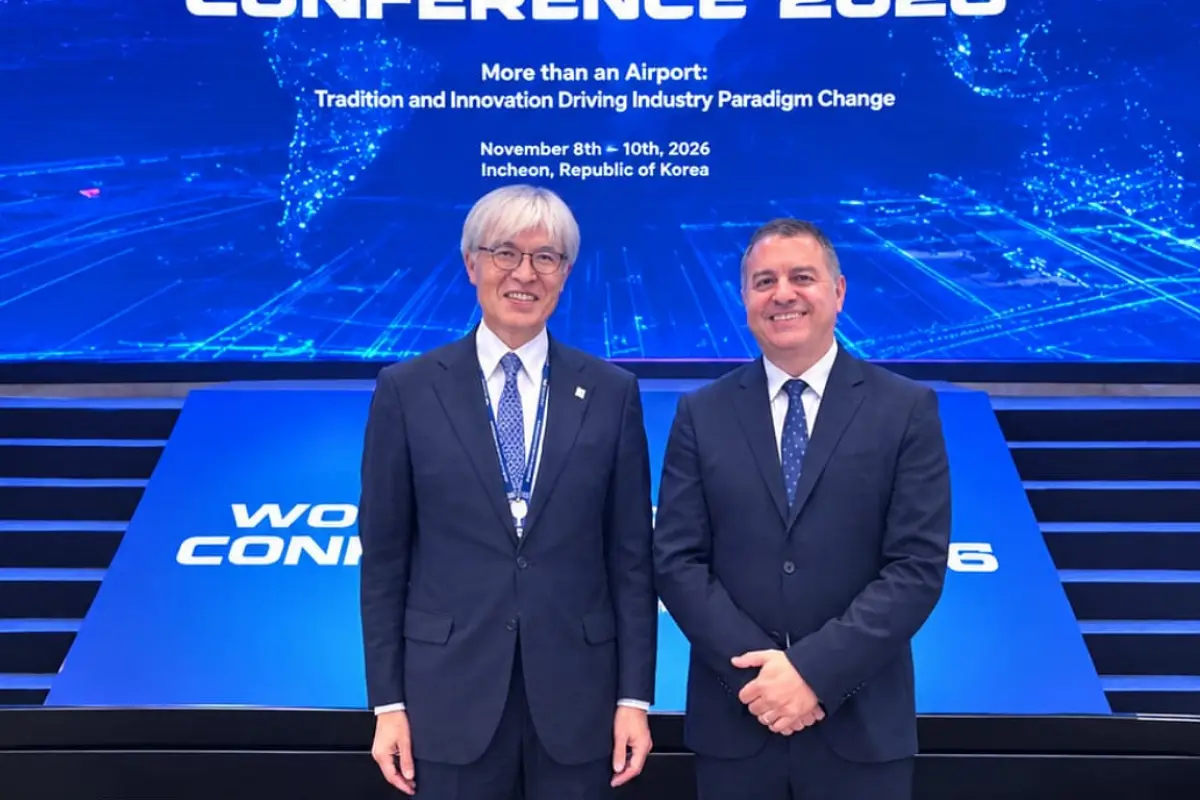
"You Get What You Ask For", Why the Man Who Ran the World's Airport Trade Body for Four Years Says Most of Them Are Buying Technology Wrong
Luis Felipe Oliveira, who led Airports Council International World as Director General from June 2020 to October 2024 and now runs his own Switzerland-based consultancy, told a World Aviation Festival webinar ahead of the event's Lisbon return in October that airports risk spending money on technology delivering only marginal improvements to passenger services and revenue, and traced the problem to a specific, unglamorous root cause: how airports write the documents that solicit bids in the first place. "In the end, you get what you ask for," Oliveira said. "Without clear requirements, airports risk investing money in things that won't provide a great improvement for the airport and for its guests."
That is a genuinely uncomfortable diagnosis for an industry currently deploying biometrics, AI and automation at a scale this feed has documented repeatedly throughout 2026, and it comes from Luis Felipe Oliveira, someone whose four years at ACI's helm put him in a position to watch hundreds of airports make exactly this procurement decision, well or badly, in real time.
Why the Airport RFP Is the Actual Point of Failure, Not the Airport Technology
Oliveira's argument locates the problem earlier in the process than most airport technology criticism typically does. It is not that biometric boarding gates or AI-powered baggage systems are inherently bad investments, it is that a poorly specified Request for Proposals produces exactly the outcome its own vagueness invites. A supplier responding to an airport RFP that does not clearly define the operational problem being solved, the measurable outcome expected, or the specific passenger journey stage targeted, will naturally propose whatever version of their product is easiest to sell and cheapest to deliver, not necessarily the configuration that actually moves the airport's own operational or commercial metrics. The airport ends up owning technology that technically satisfies the contract, while doing comparatively little to change how passengers actually move through the terminal or how much revenue the airport generates from them.
This reframes the entire "airports over-investing in flashy new tech" narrative that has circulated in aviation trade press for years. The failure mode Oliveira describes is not airports being seduced by shiny new AI systems against their better judgment, it is airports approaching procurement without having done the harder internal work first, defining precisely what operational or commercial problem the technology needs to solve, and what a measurable, verifiable improvement would actually look like once it is installed.
Why Bigger Is Not Automatically Better, and Basic Is Not Automatically Safe for Airport Biometrics
The framing in the original prompt captures a genuine tension in Oliveira's underlying argument, even though it is not fully spelled out in the available reporting: an over-specified RFP chasing the most technologically advanced system available can just as easily fail a smaller regional airport as an under-specified one can fail a major hub. A 2 million-passenger regional airport adopting the same biometric and AI infrastructure a 40 million-passenger international hub would deploy is not automatically making a smarter investment simply because the technology is more advanced, if that infrastructure exceeds what the airport's actual traffic volume, terminal layout and passenger mix can meaningfully use, the airport has paid for capability it will never fully activate. Equally, an RFP written so minimally that it only specifies the cheapest compliant system risks delivering technology that satisfies a checkbox without producing any measurable passenger experience or revenue improvement at all.
Both failure modes trace back to the same root cause Oliveira actually named: airports have not done the upfront work of matching technology ambition to their own specific scale, traffic profile and operational complexity before writing the requirements a supplier will bid against.
Why Oliveira's Own Career Makes Him a Credible Voice on This Specific Failure
Oliveira's background is unusually well suited to spotting exactly this gap between technology procurement and operational outcome. Before ACI, he spent a decade at IATA leading fuel, air traffic control and airport campaigns in direct collaboration with governments, oil companies, fuel suppliers and air traffic control providers, coalition-building work that required translating between multiple stakeholders with genuinely different technical priorities and commercial incentives, exactly the kind of interoperability challenge this feed's earlier coverage of biometric and digital-identity rollouts has flagged as a recurring weak point across airports, airlines, ground handlers and border agencies. He also served as World Fuel Services' Vice President of Supply Development for Latin America and the Caribbean, a genuinely commercial, revenue-and-margin-focused role, not a purely technical or regulatory one. That combination of technical aviation systems experience and commercial accountability is precisely the lens through which "technology should be linked to measurable improvements in operations, passenger experience and revenue" makes sense as a coherent standard, rather than a vague aspiration, Oliveira is applying the same rigour to Airport technology spending that a commercial fuel-supply executive would apply to any capital allocation decision.
Why "Human Support" Sits Alongside Airport Automation, Not in Opposition to It
The reporting also confirms Oliveira explicitly argued technology should support rather than replace the human service passengers receive today, a distinction that matters as airports increasingly deploy self-service kiosks, biometric gates and automated bag drop as headline features of modernisation programmes. His framing ties this directly to demographic reality, ageing populations and travellers with varying levels of comfort with digital self-service will remain a permanent feature of airport passenger flow, not a temporary transitional problem automation will eventually eliminate. An airport that designs its technology roadmap assuming automation can fully substitute for staffed service points risks building a passenger journey that works well for confident, tech-fluent travellers and badly for a meaningful share of everyone else, precisely the kind of "measurable improvement for some passengers, marginal or negative for others" outcome that undermines the credibility of an airport's entire technology investment.
Why This Argument Lands at a Specific, Expensive Moment for Global Airport Infrastructure
Oliveira's warning arrives directly alongside a separate, concurrent ACI initiative this feed's research also surfaced: ACI Asia-Pacific & Middle East launched a formal Request for Proposals in January 2026 for a comprehensive study of airport capital expenditure needs across the region through 2055, building on a preliminary 2025 assessment that had already identified over US$240 billion in planned airport investment by 2035 alone. That is the scale of capital currently being committed to airport infrastructure globally and Oliveira's specific argument is that a meaningful share of whatever portion of that $240-billion-plus figure gets allocated to technology, rather than runways, terminals or gates, risks being spent against poorly specified requirements that will not deliver the operational, passenger-experience or revenue outcomes airports are actually trying to achieve.
What Luis Felipe Oliveira Said at the World Aviation Festival Webinar About Airport Technology
The unstated but structurally central problem underneath Oliveira's critique is that airport technology decisions are rarely made by a single, unified decision-maker with full authority over the entire passenger journey. Airlines, ground handlers, border and customs agencies, security providers and the airport authority itself all operate overlapping technology systems that a passenger moves through sequentially, but that are frequently procured, specified and maintained by entirely separate organisations with different budgets, different timelines and different definitions of what "success" looks like. A biometric boarding system an airline procures independently of the airport's own border-control digital identity infrastructure risks creating exactly the fragmented, non-interoperable passenger experience Oliveira's broader "clear requirements" argument is trying to prevent, technology that works well in isolation but fails to connect into a coherent end-to-end journey because no single RFP process ever defined what that full journey needed to look like across every stakeholder involved. That is where airport biometrics become especially relevant, because the technology only creates its full value when it connects properly across the wider passenger journey.
The Bigger Question Oliveira Is Actually Asking Airports to Answer First
Strip away the specific vocabulary, RFPs, biometrics, interoperability, and Oliveira's underlying challenge to the industry is straightforward and uncomfortable in equal measure: are airports investing in AI, robotics and automation because a specific, defined operational or passenger problem genuinely requires that solution, or because the technology is available, competitors are adopting it, and procurement teams are writing requirements around what suppliers are currently selling rather than what the airport's own passengers and operations specifically need. Given that the industry is currently mid-way through committing hundreds of billions of dollars to exactly this kind of infrastructure over the coming decade, that is not a rhetorical question. It is, according to the person who spent four years watching this process play out across ACI's global membership, the single question most airports are still answering badly. Oliveira made that argument during a world aviation festival webinar, putting the focus back on the procurement decisions that happen long before passengers ever see the technology.