Serene Air Rejects Shutdown Claims Ahead of 2026 Relaunch
Serene Air denies shutdown reports and plans to resume flights by the end of 2026, but repeated suspensions raise doubts about its comeback.
 Jishan Khan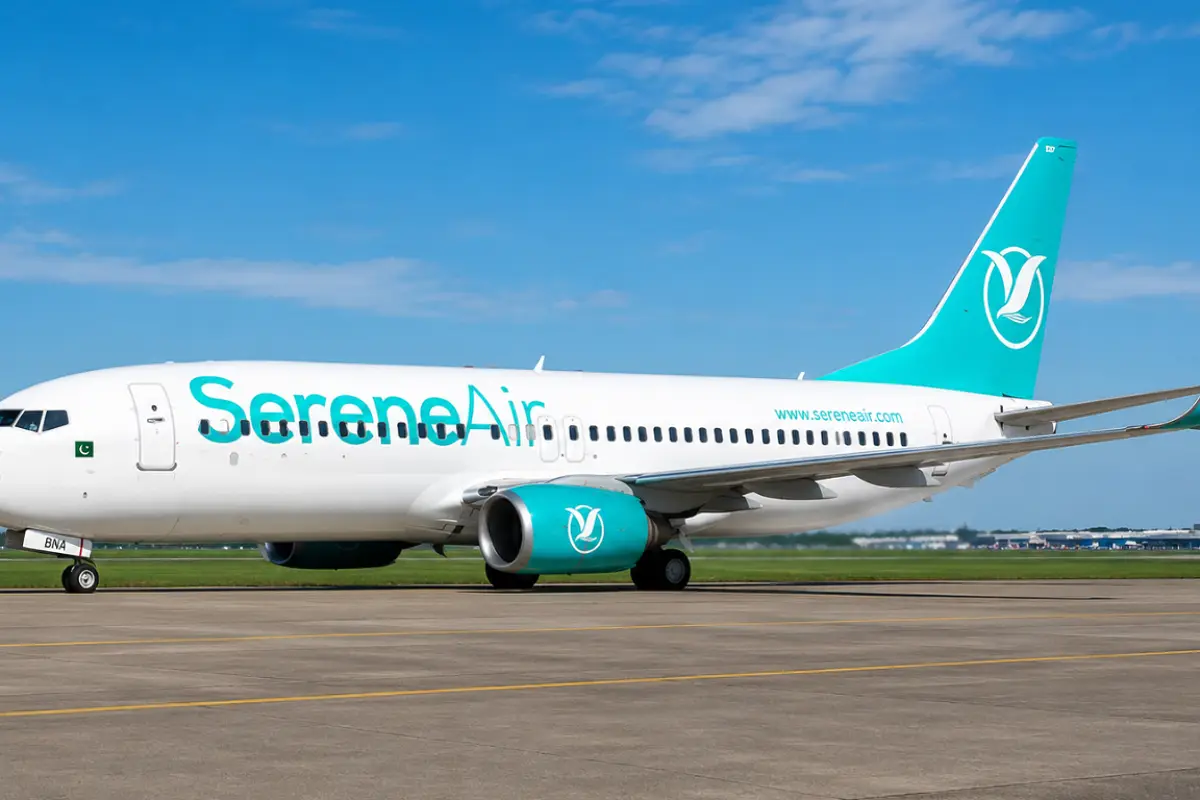
Serene Air Just Denied Shutting Down, But Its 2026 Comeback Is Already Facing Doubts
Pakistani carrier Serene Air issued a statement on August 17, 2026 rejecting reports that it had completed winding down its operations, selling assets and closing its offices across Pakistan. The airline says it is still restructuring and hopes to resume flights by the end of 2026. That statement had to be made at all tells you how close to actual closure this airline has come.
This is not a comeback story yet. It is a company publicly fighting the perception that it is already dead.
A Suspension That Has Already Failed Once
Serene Air's regulatory history over the past year is a cycle that has already completed once without producing a working airline. The Pakistan Civil Aviation Authority suspended the carrier's Air Operator Certificate on October 2, 2025, after finding that all seven aircraft in its fleet, three A330-200s and four 737-800s, were unserviceable. The PCAA restored the AOC in late November 2025, and Chief Operating Officer Abdul Basit said domestic flights would restart within two months and international within three. Serene Air also said salaries would resume and employee dues would be cleared.
None of that happened. Flight operations remained suspended despite the restored certificate. By May 2026, the PCAA suspended the airline again, this time describing it in terms closer to a collapse than a pause, noting that Pakistan's domestic market had gone from five active carriers to four overnight. That is two separate suspension cycles within eight months, the second one arriving after the airline had already publicly promised a two-month restart that never materialised.
Why "By End of 2026" Deserves Scepticism
Serene Air's own August 17 statement acknowledges it is "identifying and salvaging end-of-life assets and surplus facilities", language that describes exactly what a company preparing to downsize permanently would say, even while insisting the process is restructuring rather than closure. The airline says its shareholders are "considering" additional investment to clear outstanding liabilities. Considering is not committing.
Pakistan's broader aviation environment makes the recovery harder than fleet repair alone. Global jet fuel prices have surged since the Iran conflict began, a pressure that has already forced the shutdown of Spirit Airlines in the US, Magnicharters in Mexico and British Ascend Airways, among others. An airline that could not restore three serviceable aircraft during a period of comparatively stable fuel prices in late 2025 now needs to do so in a fuel cost environment that is measurably worse.
What Pakistan's Market Looks Like Without Serene Air
The domestic market has not stood still waiting for Serene Air to return. Pakistan International Airlines, Airblue, Air Sial and Fly Jinnah have absorbed the demand Serene Air left behind, while three entirely new entrants, South Air, Air Karachi and Air Punjab, have launched in 2026 under the PCAA's newer regional licensing frameworks. South Air alone has been operating ATR 72 turboprops across Sindh, Balochistan, South Punjab and Khyber Pakhtunkhwa since November 2025, filling exactly the kind of regional connectivity gap that a returning Serene Air would need to compete for.
Pakistani aviation has a documented pattern of carriers announcing resumption and never achieving it. Air Indus announced a restart in January 2016 after its 2015 suspension and never flew again, its last aircraft remains grounded in Karachi's airport graveyard to this day. Serene Air's own history now includes one broken restart promise. Whether "by the end of 2026" becomes a second is the question the airline's own credibility, not its regulatory paperwork, will have to answer.