TAROM Budget Draws Criticism for Unrealistic Projections
TAROM budget rejected by Romania as authorities call projections unrealistic, raising pressure on restructuring, privatisation, and airline survival strategy.
 Jishan Khan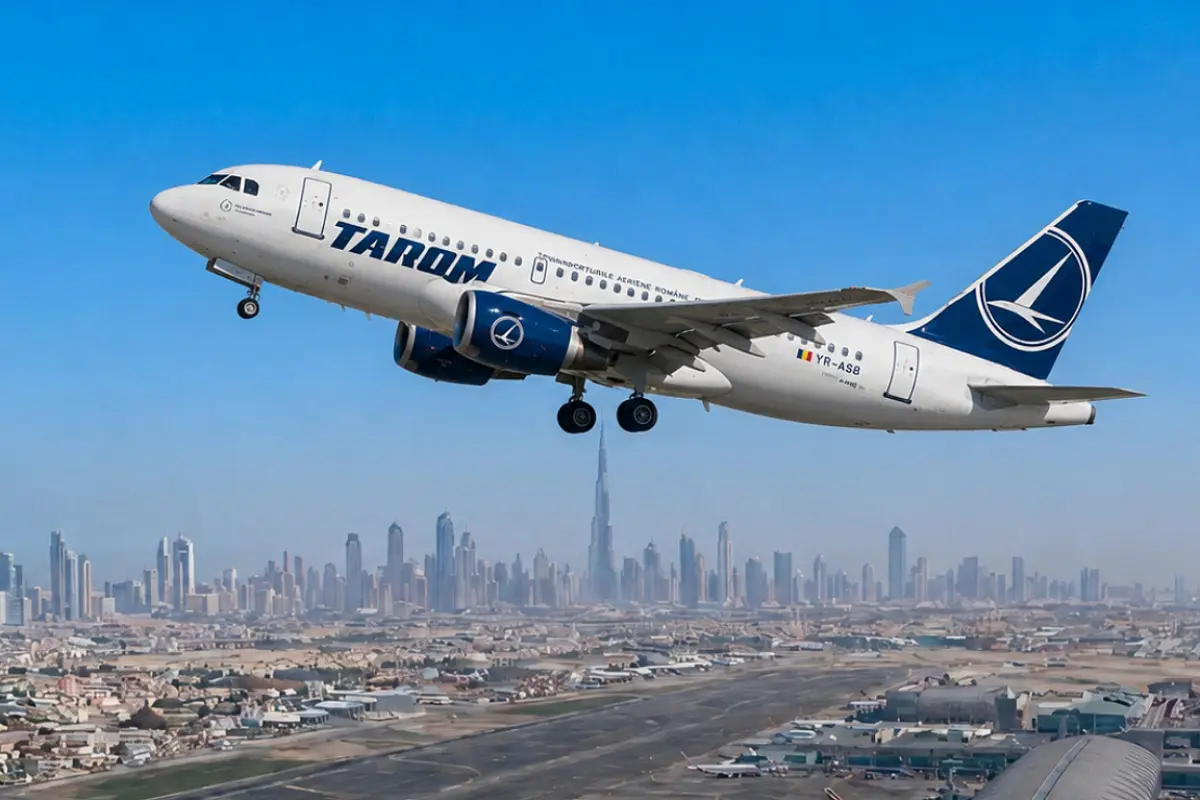
Romania Just Told Its Own Airline That Its Budget Is Unrealistic, And That Single Word Says Everything About Where TAROM Actually Stands
When your own government calls your financial projections unrealistic, you are not in a restructuring story anymore. You are in a survival story. And TAROM's 2026 budget rejection is the most honest signal yet about how difficult the road ahead actually is.
There is a specific kind of corporate moment that cuts through all the careful language of official statements and restructuring programs and reveals the true state of a struggling organisation. For TAROM, Romania's state-owned carrier, that moment arrived when the government that owns it looked at the airline's 2026 budget proposal and responded with a single devastating word.
Unrealistic.
Not ambitious. Not optimistic. Not requiring further review. Unrealistic, the word you use when the gap between what someone is projecting and what the evidence supports has moved beyond the range of reasonable disagreement into territory where the numbers simply do not reflect the world as it actually exists.
Romanian authorities have asked TAROM to revise its budget, describing the revenue and profitability expectations as overly optimistic given market conditions and the carrier's operational difficulties. That request, and the language attached to it, is a more honest assessment of TAROM's position than anything the airline has said publicly about its own restructuring progress.
What It Means When Your Shareholder Rejects Your Budget
The relationship between a state-owned airline and the government that owns it is structurally unusual in ways that make the budget rejection more significant than it might appear in a purely commercial context.
In a privately owned company, a board rejecting management's budget projections as unrealistic is a governance function, the oversight mechanism working as intended, preventing wishful thinking from becoming operational planning. It happens regularly in well-functioning organisations and does not necessarily signal crisis.
In a state-owned airline, the shareholder relationship carries additional weight because the government is simultaneously the owner, the ultimate guarantor of last resort, and the political entity that bears the reputational and fiscal consequences of the airline's failures. When that government calls the airline's own projections unrealistic, it is not just exercising commercial oversight. It is signalling that it no longer has confidence in the airline's management assessment of its own situation, a much more serious breakdown in the institutional relationship between carrier and owner.
It also signals that the government is preparing its own decision-making framework with more conservative financial assumptions than the airline has been working from. That matters enormously for what comes next. If TAROM's restructuring programme has been designed around revenue and profitability assumptions that the government now considers unrealistic, the entire restructuring plan needs to be reconceived around a financial baseline that the airline's own management did not voluntarily adopt.
That is not a minor adjustment. That is a fundamental reset.
TAROM's Structural Problems Have Not Changed Because the Restructuring Language Has
TAROM has been in various stages of restructuring discussion, efficiency programme development, and strategic review for long enough that the language of transformation has become somewhat detached from operational reality.
The carrier faces the combination of challenges that tends to be most difficult for state-owned airlines to resolve, a cost structure shaped by years of politically influenced hiring and operational decisions, a network that reflects historical geographic and diplomatic priorities rather than pure commercial logic, a fleet that requires modernisation investment that loss-making operations cannot self-fund, and a competitive environment in which Ryanair, Wizz Air, and other low-cost carriers have progressively taken the most commercially attractive routes in and out of Romania.
That last point deserves particular emphasis. TAROM is not competing in a market that low-cost carriers have not yet discovered. It is competing in a market where Ryanair and Wizz Air have spent years building dominant positions on exactly the routes that generate the highest passenger volumes and the most commercially attractive yields, leaving TAROM to compete either on price, where its cost structure puts it at a structural disadvantage, or on service differentiation, where its product has not historically been strong enough to command the premium that would make the economics work.
The revenue projections that the government is calling unrealistic are presumably built on assumptions about TAROM's ability to capture demand and maintain yields in this competitive environment. The government's rejection suggests it believes those assumptions overestimate what TAROM can actually achieve against the current competitive landscape without more fundamental changes than the existing restructuring programme has delivered.
Privatisation and Partnerships Are Now the Real Conversation
The mention of potential partnerships or privatisation measures as long-term strategic options being evaluated by the Romanian government is the most consequential part of this story, and it is the part that the budget rejection has pushed from background consideration to active agenda.
State-owned airlines in Europe that reach the point where their own government describes their financial projections as unrealistic have typically arrived at a fork in the road. One path leads toward a more fundamental restructuring, often involving significant workforce reductions, network rationalisation, and the kind of operational changes that state ownership has historically made politically difficult to implement. The other leads toward some form of ownership change, whether through privatisation, strategic partnership with another carrier, or a hybrid arrangement that brings in commercial management and capital while maintaining some state involvement.
Romania has seen other European countries navigate this fork with their state carriers. The outcomes have varied, some flag carriers found viable strategic partners and survived in changed form, others were effectively absorbed by larger European groups, and a few did not find a path that worked and ceased to exist as independent entities.
TAROM's position, loss-making, restructuring-resistant, operating in a market dominated by more efficient competitors, with a shareholder who has just publicly questioned its financial credibility, places it at exactly this fork. The government's evaluation of partnerships and privatisation is not speculative future planning. It is the active consideration that the budget rejection has accelerated into urgency.
What a Realistic TAROM Budget Actually Looks Like
The question the revised budget process will need to answer is what TAROM's financial projections look like when they are built on assumptions that the Romanian government considers credible rather than optimistic.
A realistic budget for an airline in TAROM's position probably involves lower revenue projections that reflect the competitive reality of its market position, higher cost assumptions that acknowledge the structural expense base that restructuring has not yet fundamentally altered, a longer timeline to any meaningful profitability than previous plans have projected, and a more explicit acknowledgment of the capital requirements that the gap between current performance and financial sustainability will require the government to fill.
That is not a comfortable document to produce or to present. It is, however, the document that any serious conversation about TAROM's future, whether that future involves continued state ownership, strategic partnership, or privatisation — needs to start from.
The government calling the current projections unrealistic is essentially demanding that document. Whether TAROM's management can produce it honestly, and whether the government can act on what it reveals without the political constraints that have historically slowed difficult decisions about state-owned carriers, will determine whether 2026 becomes a turning point for TAROM or another year of deferred reckoning.
What This Means for Romanian Passengers
For the passengers who fly TAROM, particularly those in smaller Romanian cities where the carrier's regional network provides connectivity that low-cost carriers do not offer at the same frequency or on the same routes — the uncertainty around the airline's future has practical implications that the budget dispute makes more immediate.
A TAROM that is restructured more aggressively, privatised, or absorbed into a partnership with a larger European carrier will look different from the current airline in ways that affect its network, its pricing, and its service model. Some of those changes would likely benefit passengers through better operations and more competitive fares. Others — particularly network changes that reduce service to less commercially attractive regional routes — could reduce connectivity for communities that depend on TAROM's current coverage.
The Romanian government's evaluation of strategic options will need to weigh those passenger and regional connectivity implications against the fiscal reality of continuing to fund an airline whose own budget projections it considers unrealistic.
That is not a simple calculation. But it is the calculation that the budget rejection has now made unavoidable.
TAROM's revised numbers are due. Romania's decision about what kind of airline it wants to own — or whether it wants to own one at all — may not be far behind.