TPConnects Adds AI Protocol to Iris, Integrates 60+ Airlines
TPConnects Technologies integrates Model Context Protocol into Iris, enabling AI-ready access to content from over 60 airlines via a single interface.
 Jishan Khan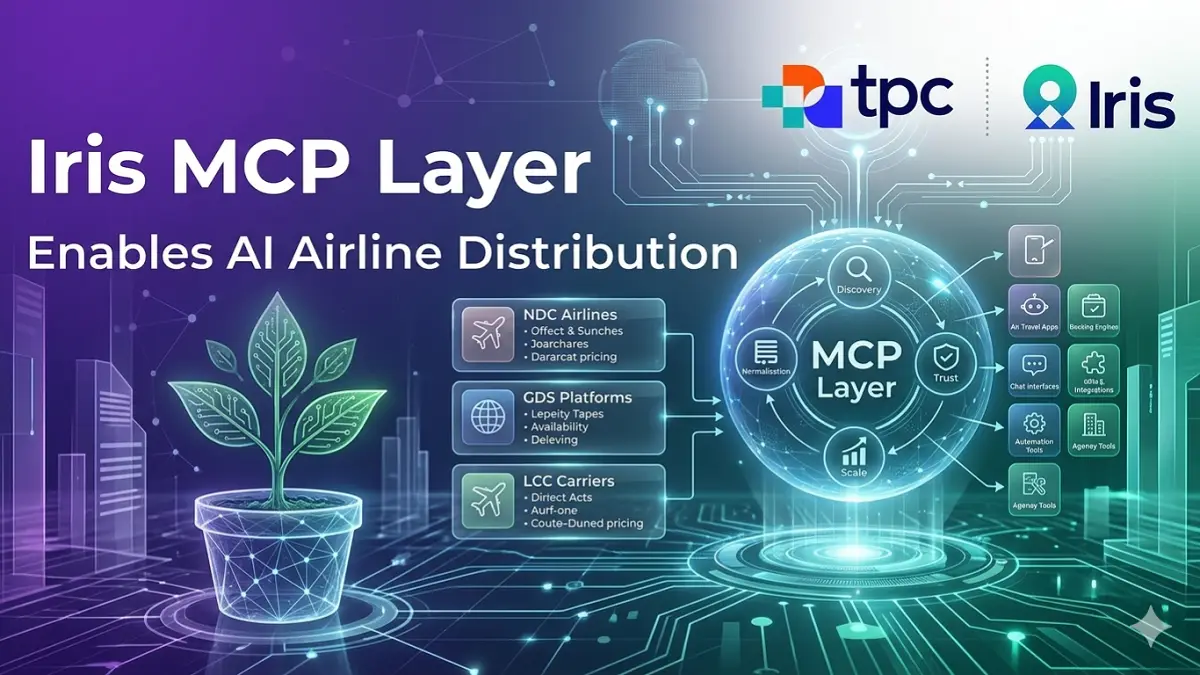
TPConnects has integrated the Model Context Protocol (MCP) into its Iris platform, enabling AI-ready access to content from more than 60 airlines through a single, standardised interface. The upgrade is designed to streamline airline distribution and automate onboarding across fragmented booking channels.
The development follows a successful proof of concept and allows online travel agencies (OTAs), travel management companies (TMCs), and other travel sellers to dynamically access airline capabilities using a unified protocol. The move directly addresses long-standing fragmentation across New Distribution Capability (NDC), Global Distribution Systems (GDS), and low-cost carrier content channels.
AI-Ready Integration Across 60+ Airlines
The MCP integration enables structured, machine-readable access to airline data aggregated within the Iris platform. By standardising content from over 60 carriers, the system allows travel sellers to interact with airline offerings through a single protocol rather than managing multiple integrations.
This approach simplifies access to fares, ancillaries, and airline services, reducing the complexity traditionally associated with multi-source distribution. The platform’s architecture supports both current airline partners and future additions without requiring separate onboarding processes.
The scale of integration positions Iris as a centralised interface for airline content, enabling broader adoption among travel sellers seeking unified access to multiple distribution channels.
Automation and Dynamic Onboarding
The MCP framework enables automation in airline onboarding, allowing travel platforms to connect with new carriers more efficiently. Instead of building custom integrations for each airline or distribution channel, users can rely on the protocol to standardise connectivity.
This reduces integration timelines and operational overhead for OTAs and TMCs, particularly as airlines continue expanding their use of NDC and direct distribution models. The automation capability is expected to improve scalability for travel sellers operating across diverse airline ecosystems.
By enabling dynamic discovery of airline capabilities, the platform allows systems to adapt automatically as new airlines or services are added, eliminating the need for manual updates or reconfiguration.
Addressing Distribution Fragmentation
The airline distribution landscape has become increasingly fragmented, with content spread across NDC APIs, legacy GDS platforms, and direct low-cost carrier channels. This has created challenges for travel sellers attempting to access complete and consistent airline data.
The MCP integration standardises these diverse content sources into a unified format, enabling consistent interpretation by booking systems and applications. This reduces discrepancies in data formats and improves interoperability across platforms.
The solution also aligns with broader industry efforts to modernise airline retailing, where structured data access is critical for enabling advanced booking functionalities and personalised offers.
Enabling AI-Driven Travel Commerce
The integration introduces capabilities designed for AI-driven applications, including chatbots, automated booking systems, and conversational commerce platforms. By providing machine-readable airline data, MCP allows these systems to interpret and utilise content without additional translation layers.
According to the company, the protocol supports the development of AI agents that can interact directly with airline content, enabling automated decision-making and real-time booking processes. This marks a shift from static integrations toward dynamic, protocol-based discovery of airline services.
The system is built on the existing aggregation infrastructure of Iris, extending its functionality to support emerging AI use cases in travel distribution.
Industry Context and Adoption
The adoption of AI technologies in travel distribution has accelerated, with airlines and intermediaries seeking more efficient ways to manage content and transactions. Structured data access is a key requirement for enabling automation and improving user experience in booking platforms.
By integrating MCP, TPConnects aims to position its platform within this transition toward AI-driven commerce. The approach supports both current distribution needs and future developments in automated travel retailing.
The company stated that the enhancement is intended to simplify content access, accelerate innovation, and support the evolving requirements of travel sellers operating in a multi-channel environment.
Current Status
The MCP integration is now live within the Iris platform following its proof-of-concept phase. Travel sellers connected to the platform can begin leveraging the AI-ready interface to access airline content and automate integration processes.
As the platform continues to expand its airline network beyond the current 60+ carriers, the protocol-based architecture is expected to support seamless scaling without additional integration complexity. The development reflects ongoing efforts within the aviation distribution sector to modernise systems and enable more efficient access to airline services.