Vista Global IPO Could Be Worth $10 Billion
Vista Global IPO could raise more than $1 billion and value the private aviation group above $10 billion, creating a major growth opportunity.
 Jishan Khan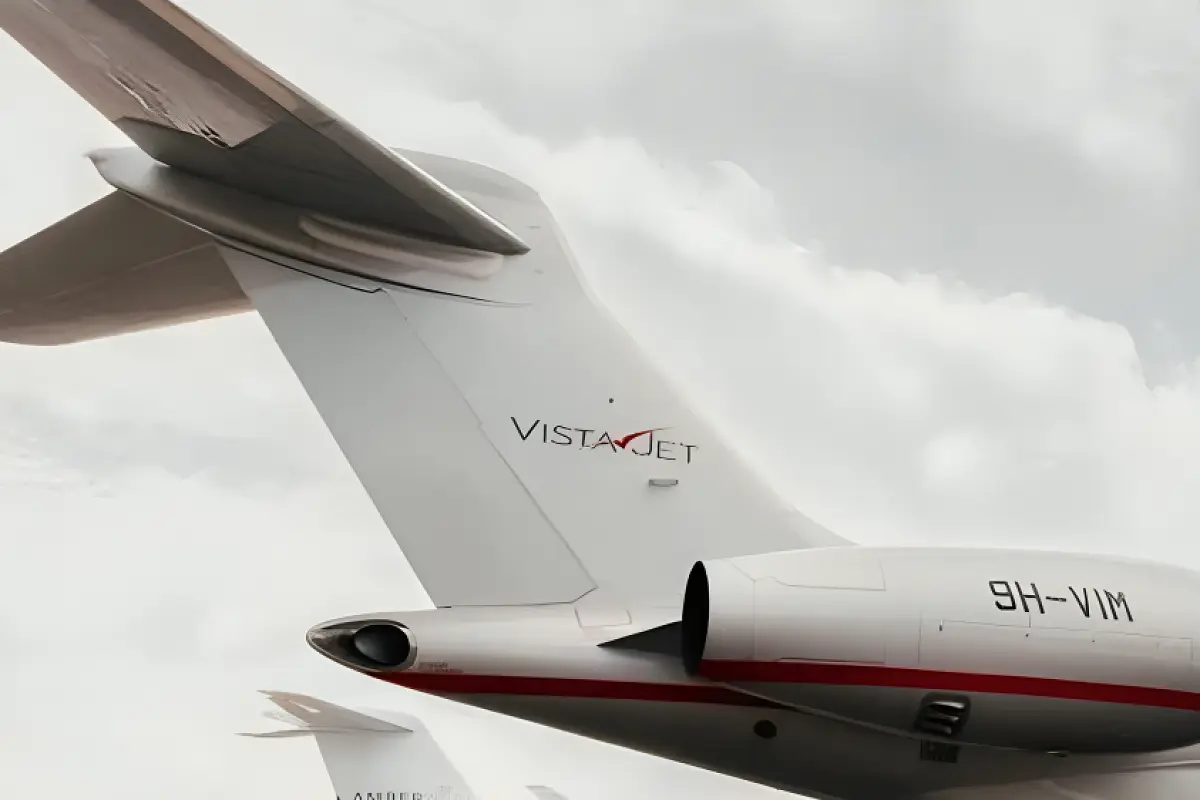
Thomas Flohr Owns 84% of a Company He Might Take Public, and the Timing Traces Back to a Debt Rally His Own Executives Triggered
Vista Global Holding, the Dubai-based parent of VistaJet and XO, is working with Bank of America, UBS and UniCredit on a potential European IPO that could raise more than $1 billion and value the private aviation group above $10 billion, according to Bloomberg reporting from August 27, 2026, with Milan and Zurich under consideration as listing venues and a possible flotation next year. Vista has confirmed only that it has "engaged a group of advisers" and is "assessing options, including a potential European listing." Founder and chairman Thomas Flohr owns 84% of the company. Nobody has said this is happening. Everybody involved is acting like it might.
Vista Global IPO: A Company That Has Cried IPO Before, Repeatedly
The most important context missing from this week's headlines is that Vista Global IPO has been here before, more than once, without ever actually going public. Bloomberg first reported Vista was considering an IPO in June 2021, floating the idea of a merger with a special purpose acquisition company, that deal never materialized. Bloomberg reported it again in early 2025, a claim Flohr personally denied shortly afterward. A 9fin report in April 2026 cited Vista executives telling lenders on an earnings call that the company was "working with bankers to explore the possibility of an IPO this year", a claim that helped drive a rally in VistaJet's own bonds, with its 6.375% notes due 2030 climbing roughly seven points from a recent low, before that timeline, too, quietly evaporated.
That pattern matters enormously for how skeptically this latest report should be read. A private company repeatedly signaling IPO intentions to bondholders and journalists, without ever filing, is not necessarily lying, but it is a company for which the signal of a potential IPO has demonstrated real, measurable financial value independent of whether the IPO ever happens. Every one of those previous reports moved Vista's debt pricing favorably. Whether this round of reporting produces an actual prospectus or simply another rally in Vista's bond spreads before the plan changes again is a genuinely open question given the company's own track record.
Why This Time Might Actually Be Different: The RRJ and Rhône Conversion Clause
What distinguishes the current reporting from previous cycles is a specific, binding financial mechanism already in place. In March 2025, Vista closed a $600 million equity investment led by Singapore-based RRJ Capital, structured as convertible preference shares, meaning RRJ's investment, along with existing minority stakes held by Rhône Group, was explicitly designed to convert into common equity upon a public listing. That structure is not typical of an investment made purely to reduce debt; it is the kind of instrument sophisticated private equity investors negotiate specifically because they expect, or at minimum want optionality toward, an eventual public exit within a defined timeframe.
A 2026 Private Equity Wire analysis of the current IPO exploration made this dynamic explicit in its own headline, describing the potential listing as "setting up equity conversion for RRJ and Rhône", meaning the IPO conversation is not purely about Vista's own capital needs, but about giving its existing minority institutional investors the liquidity event their 2025 investment terms were structured around. That gives this round of IPO exploration a contractual logic the 2021 SPAC talks and 2025 denial never had.
The Business Model an IPO Would Actually Be Valuing
VistaJet operates on a subscription membership structure that Flohr pioneered when he founded the company in 2004, clients purchase access to flight hours on Vista's own branded fleet of over 300 aircraft, rather than owning or fractionally owning a specific jet, with journeys ranging from 30-minute hops to genuinely long-haul 17-hour nonstop flights. That model is structurally distinct from the aircraft management and fractional ownership businesses this feed has covered extensively across 2026, Solairus Aviation's acquisition of Clay Lacy's management fleet, Priester Aviation's roll-up of regional operators, NetJets' fractional structure. Vista does not manage aircraft on behalf of individual owners; it owns the fleet outright and sells access to it, which means Vista itself carries the full capital burden and financing risk of every aircraft in its fleet, a meaningfully different balance sheet profile than a pure management or brokerage business.
VistaJet's US president Leona Qi framed the demand thesis behind that model in a recent Bloomberg Businessweek interview: "Demand for private aviation continues rising, with clients increasingly prioritizing productivity and mobility over exclusivity alone", a positioning that frames Vista's subscription model as answering a genuine operational need for frequent, unpredictable-schedule corporate travelers, rather than selling pure status-symbol exclusivity the way traditional single-aircraft ownership historically has.
Why the Fleet Order Behind This Matters as Much as the IPO Itself
The same April 2026 reporting window that carried Vista's most recent IPO signal also disclosed that VistaJet had placed a firm order for 40 Bombardier Challenger 3500s, with options for 120 more, a fleet commitment of potentially 160 aircraft from a single manufacturer, and directly connected to the Challenger 3500 production milestone this feed covered separately when Bombardier delivered its 200th unit of the type to Ferrari's Piero Ferrari. That order is significant context for evaluating any Vista Global valuation bankers eventually present to public market investors, a $10 billion-plus valuation target has to account for genuinely enormous forward capital expenditure commitments already locked in, aircraft that will need to be financed, delivered and integrated into Vista's operating fleet over a period likely extending years beyond any 2027 listing date.
That is precisely the tension a public listing would force into the open in a way private ownership never has. Vista's KBRA bond rating, a BB- issuer rating with stable outlook that the agency discontinued public coverage of this past February, sits in sub-investment-grade territory, reflecting the genuinely capital-intensive, debt-financed nature of owning and operating a 300-plus aircraft fleet outright rather than managing assets on behalf of clients. Public market investors evaluating a $10 billion valuation will be pricing not just Vista's subscription revenue and membership growth, but the ongoing capital burden of financing a fleet that is about to grow substantially larger through the Challenger 3500 order.
Why Milan and Zurich, Specifically, and What That Signals
The choice of potential venues is itself informative. Flohr is Swiss-born, and a Zurich listing would carry an obvious personal and reputational logic for a founder who has built a global luxury-adjacent brand while remaining closely associated with Switzerland throughout his career. Milan's inclusion is less personally connected to Flohr but reflects Italy's stock exchange actively courting large European listings in recent years as it competes with London, Frankfurt and Amsterdam for exactly this kind of headline-grabbing private-company IPO, a $10 billion-plus valuation listing would be a significant win for whichever exchange ultimately hosts it, well beyond the direct capital Vista itself would raise.
Neither venue is a traditional aviation-sector listing hub in the way, say, a US exchange might be for an airline, which suggests Vista and its bankers are optimizing more for favorable market conditions, valuation multiples and Flohr's own European base than for sector-specific investor familiarity, a calculated bet that private aviation IPO growth story can be sold to generalist European equity investors on its own merits.
The Question Nobody Involved Will Answer Directly
Every report on this story, across seven independent outlets, contains some version of the same caveat: deliberations remain at an early stage, the eventual size, valuation and timing could change, and Vista "has not made a final decision on whether to proceed with the offering." Given that Vista has now signaled IPO intent in 2021, 2025 and twice in 2026 without a single filing resulting from any of those signals, the most honest framing of this story is not "Vista Global is going public", it is "Vista Global's leadership has once again found it commercially useful to let the market believe it might," a pattern that has reliably tightened its bond spreads each time it has occurred, whether or not this particular iteration finally produces the prospectus that the previous three did not.