Asia’s Tourism Boom in 2026: Japan, India and Vietnam Lead Regional Travel Growth
Asia’s tourism industry is experiencing strong growth in 2026, with Japan, India and Vietnam emerging as key travel destinations driving regional tourism recovery and hospitality industry expansion.
 Pratyaksha Singh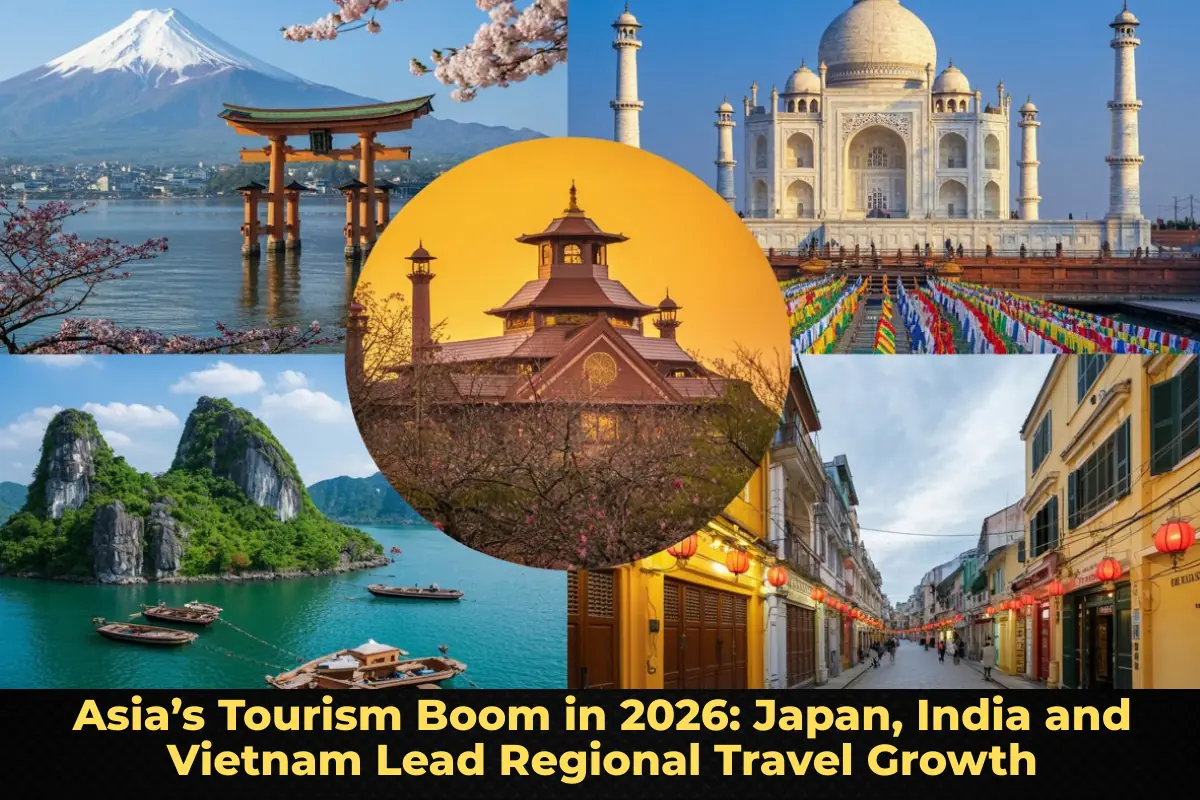
Asia’s Tourism Boom in 2026: Japan, India and Vietnam Lead Regional Travel Growth
The tourism industry across Asia is witnessing strong growth in 2026, with Japan, India and Vietnam emerging as key destinations driving the region’s travel recovery. Industry reports show that international arrivals, domestic tourism, and hospitality investments are increasing across several Asian markets.
These three countries are playing a central role in the region’s tourism expansion due to their diverse travel offerings, improving infrastructure, and rising global demand for Asian travel experiences. The growth is also supporting the hospitality industry, including hotel development, airline connectivity, and tourism services.
Tourism boards and hospitality companies across Asia are responding to this demand by expanding accommodation capacity, promoting new destinations, and strengthening tourism infrastructure.
Japan Sees Strong Tourism Demand
Japan continues to attract international travelers with its cultural heritage, modern cities, and seasonal tourism experiences. Major cities such as Tokyo, Osaka, and Kyoto remain popular destinations for global visitors.
The country has seen increasing demand for both leisure and business travel. Hotels across major cities are reporting strong occupancy levels as international tourism continues to recover.
Japan’s tourism strategy includes promoting regional destinations beyond major metropolitan areas. Local authorities are encouraging travelers to explore smaller cities and cultural regions across the country.
This approach aims to distribute tourism benefits more evenly while supporting local hospitality businesses.
India’s Tourism Industry Expanding
India is also experiencing significant growth in its tourism sector. The country’s large domestic travel market, combined with increasing international arrivals, is driving demand for hotels, resorts, and tourism services.
Major destinations such as Delhi, Mumbai, Goa, Rajasthan, and Kerala continue to attract visitors throughout the year. Religious tourism, cultural tourism, and business travel are important segments supporting the industry.
The Indian government and tourism authorities are investing in infrastructure improvements, airport expansion, and tourism promotion campaigns to support long-term industry growth.
The hospitality sector in India is responding with new hotel developments and brand expansions across both major cities and emerging destinations.
Vietnam Emerges as a Fast-Growing Tourism Market
Vietnam has rapidly become one of Asia’s fastest-growing tourism destinations. Cities such as Hanoi, Ho Chi Minh City, and Da Nang are attracting international visitors interested in cultural experiences, beaches, and culinary tourism.
The country has benefited from improved international flight connectivity and competitive travel costs. These factors have helped Vietnam attract travelers from both Western and Asian markets.
The hospitality industry in Vietnam has expanded significantly in recent years. International hotel brands are opening new properties while local developers continue to build resorts and boutique hotels.
Vietnam’s coastal destinations and cultural cities are now major contributors to regional tourism growth.
Hospitality Industry Benefits from Travel Growth
The tourism boom in Asia is supporting strong growth across the hospitality industry. Hotels, resorts, airlines, and tourism service providers are experiencing higher demand as travel activity increases.
International hotel brands are expanding their presence across the region through new property openings and partnerships with local developers. This expansion is helping meet rising accommodation demand in key tourism destinations.
Hospitality companies are also investing in technology, guest experience improvements, and sustainability initiatives to remain competitive in the global travel market.
Industry experts note that Asia’s diverse tourism offerings continue to attract travelers seeking cultural, natural, and urban experiences.
Infrastructure and Connectivity Driving Tourism
Improved infrastructure and transportation connectivity are important factors supporting tourism growth in Asia. Several countries are investing in airport expansions, high-speed rail networks, and tourism facilities.
Better connectivity allows travelers to access new destinations more easily and encourages longer travel itineraries within the region.
Tourism authorities are also focusing on digital marketing and international partnerships to promote travel experiences across Asian destinations.
These efforts are helping attract visitors from Europe, North America, and other parts of Asia.
Rise of Regional and Domestic Travel
Domestic tourism and regional travel within Asia have become key drivers of the travel industry. Many travelers are choosing destinations within the region due to shorter travel times and improved connectivity.
Regional airlines and low-cost carriers are expanding routes between major Asian cities, making cross-border travel more accessible.
This trend is supporting hotel occupancy rates and tourism activity across several markets.
Countries such as Japan, India, and Vietnam are benefiting from both domestic tourism and international travel demand.
Future Outlook for Asia’s Tourism Sector
The tourism outlook for Asia remains positive as global travel demand continues to grow. Industry analysts expect the region to remain one of the fastest-growing travel markets in the world.
Governments and tourism authorities are continuing to invest in destination development and hospitality infrastructure to support long-term industry expansion.
Hotels, airlines, and tourism operators are also adapting their strategies to meet changing traveler expectations, including sustainability, digital booking experiences, and personalized services.
With strong tourism demand and ongoing investment, Asia’s hospitality industry is expected to continue expanding in the coming years.
The growth led by Japan, India, and Vietnam highlights the region’s importance in the global tourism market and reflects the increasing demand for travel experiences across Asia.