Asia Tourism Regulations 2026: How the Continent Is Responding
Asia tourism regulations 2026 span Japan, Thailand, Bhutan, and the Philippines as destinations implement caps, fees, and closures to manage overtourism.
 RUKAIYA KADIWAL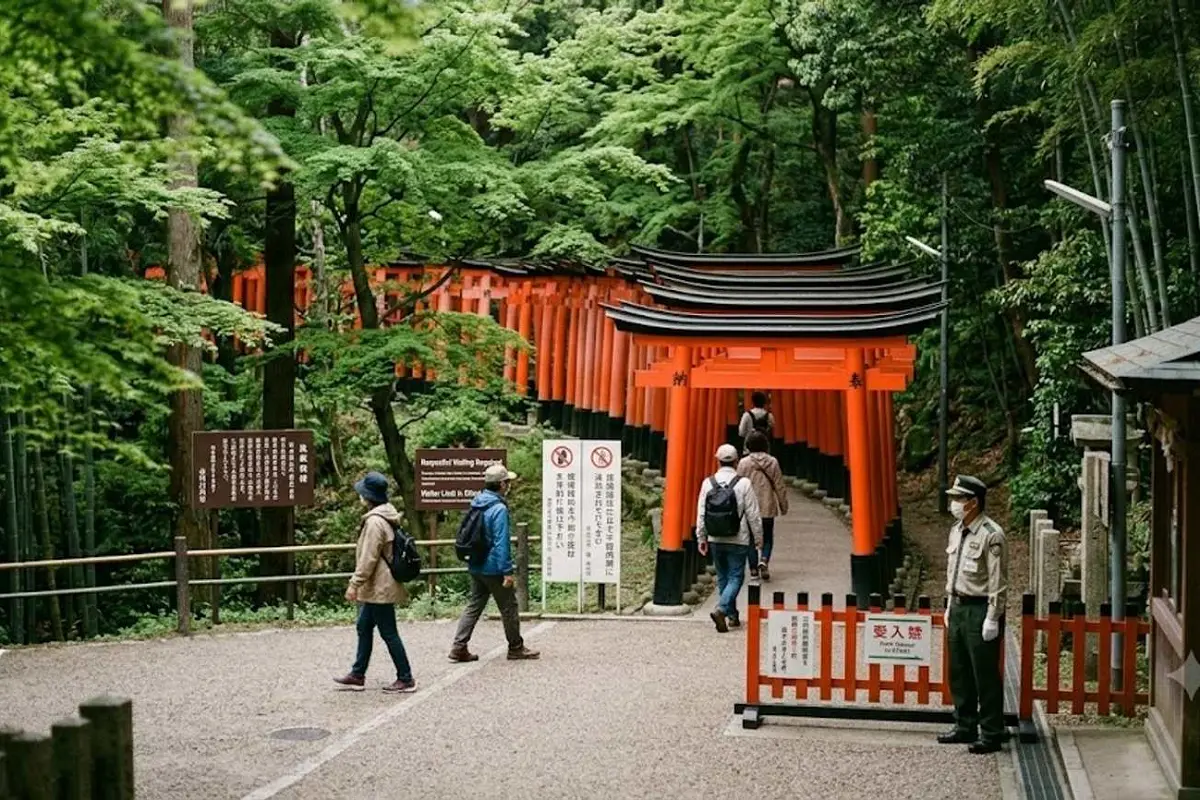
A guard in a white uniform stands at the entrance to the upper trails of Fushimi Inari in Kyoto, watching visitors pass through the first torii gates toward the densely photographed path beyond. A sign asks for respectful visiting. Another prohibits photography in certain areas. The path that once held ten thousand visitors in a single morning now holds fewer, because the shrine, the city, and increasingly the national government have decided that fewer is enough. This is the texture of Asia tourism regulations 2026: not a blanket closure but a managed threshold, a guard at a gate, a sign asking for something that could not previously be enforced.
Across Asia, from Kyoto to Ko Phi Phi to the Himalayas, the tourism regulation conversation has moved from principle to implementation. Countries and localities that spent decades building visitor infrastructure and marketing destinations to a global audience are now actively limiting, redirecting, and in some cases closing access to the places that attracted visitors in the first place. The reasons are ecological, cultural, and occasionally economic. The mechanisms vary widely. The underlying shift is consistent.
Asia Tourism Regulations 2026: Japan and the Overtourism Response
Japan has implemented some of the most visible and discussed tourism restriction measures of any destination in the current cycle. Kyoto's Gion district introduced measures prohibiting visitors from entering certain private alleys following years of documented harassment of geiko and maiko by tourists with cameras. Fujikawaguchiko, a town with views of Mount Fuji that became a target for a particular social media photograph, erected a barrier across the street where the image was typically taken and introduced measures to manage the crowds that had been gathering since before dawn on clear mornings.
The Japanese Tourism Agency has also developed pricing and access frameworks for individual prefectures to limit visitor numbers to specific sites. Mount Fuji's Yoshida trail introduced a gate that closes the path above a certain altitude during specific hours and charges a fee for climbers who wish to proceed. The gate and the fee together function as a soft cap on the number of people reaching the summit zone at any given time, without prohibiting access entirely.
Visitor Limits Asia: Thailand's Approach to Maya Bay
Maya Bay on Ko Phi Phi Leh in Thailand became one of Southeast Asia's most instructive examples of what happens when a natural site receives more visitors than its ecology can absorb. The bay was closed entirely for rehabilitation in 2018 after coral damage, waste accumulation, and the destruction of the beach's natural vegetation had reached a level that required complete recovery time. It reopened in 2022 under a strict daily visitor limit, with boats prohibited from anchoring in the bay and access restricted to organized entry points.
The results have been documented and are largely positive in ecological terms. The coral has partially recovered. The vegetation has regenerated. The black-tip reef sharks that had disappeared from the bay during its busiest years have returned. What has also changed is the experience of visiting. Maya Bay with a managed entry system and a daily cap is a different place from the one that appeared in the 2000 film that made it globally famous. Whether that difference represents an improvement or a loss depends entirely on what a visitor came to experience and what they believe the site owes to the ecosystem that makes it worth visiting.
Sustainable Tourism Asia: Bhutan's High-Value Low-Impact Model
Bhutan has operated under the longest-running sustainable tourism framework in Asia, built around the principle that the country would accept fewer visitors paying more per day rather than maximising arrivals. The Sustainable Development Fee, which applies to all visitors from countries outside India, Bangladesh, and the Maldives, was raised significantly in 2022, effectively pricing out the budget traveler category entirely and positioning Bhutan as a destination where the economics of visiting require a genuine commitment of resources.
The policy generates significant debate within the tourism industry. Critics argue it limits access to an extraordinary destination to wealthy travelers alone. Proponents argue it funds the conservation and community infrastructure that makes Bhutan worth visiting and prevents the ecological degradation that unrestricted access has produced elsewhere. Bhutan's own tourism authorities have framed the fee not as an exclusion mechanism but as a sustainability contribution, a distinction that is philosophically meaningful even if its practical effect is the same.
Overtourism Restrictions: Boracay and the Philippine Rehabilitation Approach
Boracay in the Philippines was closed for six months in 2018 following a government decision that the island's water and waste systems had been overwhelmed by unregulated development and a visitor volume that local infrastructure could not process. The closure was total, affecting all tourist accommodation, restaurants, and commercial operations on the island during the rehabilitation period.
The reopening introduced new zoning regulations, environmental compliance requirements, and business operating standards that had not been enforced during the island's rapid commercial development phase. The number of accredited establishments dropped, reflecting the withdrawal of businesses that could not meet the new standards. Visitor numbers recovered over subsequent years but under a framework that was materially different from the one that had preceded the crisis. Boracay's rehabilitation has since been cited by other Asian destinations as a model for what post-crisis management can look like, though the willingness to close an entire island for six months represents a degree of political commitment that few destination governments have demonstrated elsewhere.
Tourism Conservation and the Hospitality Sector's Response
Hotels, tour operators, and hospitality businesses operating within regulated destinations have had to adapt their business models to function within visitor caps and access restrictions. A resort in a destination where daily arrivals are limited cannot simply rely on growing its volume as the market recovers. It must focus on revenue per guest, on the quality and distinctiveness of the experience it offers, and on the relationships it builds with guests who are choosing among a constrained set of available accommodations in a destination where the scarcity of access has become part of the appeal.
Technology is entering this space alongside regulation. The same hotel automation tools that manage check-in efficiency in urban properties are being deployed to manage timed entry systems, booking slot allocation, and visitor tracking at heritage sites across Asia. The Straiv Kiosk PULSE system highlighted in coverage of how Straiv has launched a modular hotel kiosk for automated check-in reflects the same underlying logic that visitor management systems at restricted Asian destinations apply: automation that handles transaction and access management so that human attention can focus on experience and quality.
Asia Tourism Regulations 2026: What the Broader Trend Reveals
The acceleration of tourism regulation across Asia is not simply a reaction to the post-pandemic recovery in visitor numbers. It reflects a longer-term recognition that the tourism model of the previous three decades, which measured success primarily in arrival volume and treated environmental and cultural impact as acceptable externalities, has reached its limits in destinations where the damage is now visible and documented.
The regulations that have emerged are imperfect. Visitor caps work better for contained natural sites than for cities or cultural regions where visitors disperse across a wide geography. Fees that price out budget travelers raise legitimate questions about equitable access to cultural heritage. Closures impose severe short-term costs on local businesses and workers who depend on tourism income. None of these mechanisms is without a cost that falls on someone, and the distribution of those costs matters as much as the ecological or cultural outcomes the regulations are designed to achieve.
What Comes After Regulation
Asia tourism regulations 2026 represent a generation of tourism governance learning from its own mistakes in real time. Maya Bay's sharks have returned. Bhutan's forests remain intact. Kyoto's alleys are quieter at dawn. These outcomes are real, and they required intervention to produce. The harder question, which these regulations do not yet fully answer, is what model of tourism the continent will operate under for the next generation: one where access is managed well enough to be genuinely sustainable, or one where management is reactive enough to require another crisis before the next intervention arrives.
The guard at the torii gate in Kyoto will be there again tomorrow morning. He does not resolve the question. He represents the point at which a destination has decided that doing something is better than doing nothing, which is a more modest claim than a complete solution but an honest one.
Learn more at Nomad Lawyer's official website.