Straiv Kiosk for Hotels Launches PULSE Self-Check-In System
Straiv Kiosk for hotels launches the PULSE, a modular self-check-in kiosk built with Pyramid Computer to automate hotel arrivals amid Europe's staffing shortage.
 RUKAIYA KADIWAL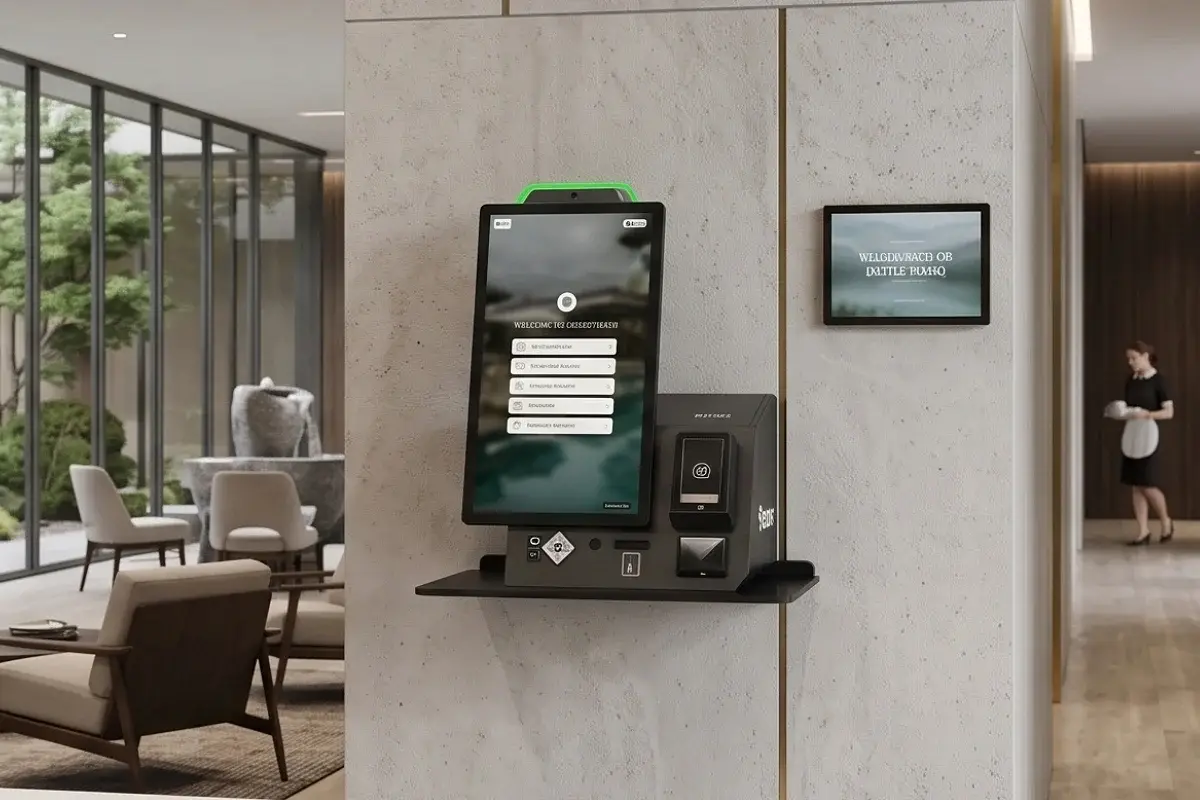
A guest arrives at 11:30 at night. The flight was delayed. The hotel lobby is quiet. One staff member is on duty, managing a phone call at the desk, and the guest stands in the entrance with a suitcase, a booking confirmation, and the specific tiredness that comes from a journey that took three hours longer than it should have. In a lobby equipped with the new Straiv Kiosk for hotels, the check-in takes two minutes. The card is issued. The room key works. The guest is in the lift before the staff member finishes the call.
Straiv, a German hotel technology company, unveiled its Straiv Kiosk | PULSE on 17 September 2026 at the International Hotel Management Trade Show in Munich. The product was developed in collaboration with Pyramid Computer, a German manufacturer of industrial hardware. Pre-orders opened on 15 September, with a 10 percent hardware discount available for orders placed before 31 October 2026.
Straiv Kiosk PULSE: What the Product Actually Does
The Straiv Kiosk PULSE is a modular indoor self-check-in kiosk that integrates Straiv's software with Pyramid Computer's hardware into a single system. The kiosk handles data collection, check-in and check-out processing, payment, and key card issuance. It includes a passport scanner, motion sensors, an RFID card dispenser described as low-maintenance, and physical keypads that ensure accessibility alongside digital inputs. Privacy films are built in, addressing data protection requirements that have become more stringent across European markets in recent years.
The modular design allows flexible installation. A hotel that needs a kiosk in a specific location within its lobby can position and configure the unit without the building works that fixed reception infrastructure typically requires. That flexibility matters for the hotels most likely to adopt the technology: independents and mid-scale properties whose lobbies were designed around a staffed reception desk that they can no longer fully staff.
Hotel Self-Check-In Kiosk and the Staffing Problem Behind It
Alexander Haußmann, Straiv's founder and managing director, was direct about what the kiosk is responding to. "The Straiv Kiosk | PULSE represents a key milestone in our growth strategy and is the logical response to a market in urgent need of reliable automation," he said. The phrase "urgent need" is not rhetorical. Hotel staffing shortages across Europe have worsened since 2022, and the hospitality sector has consistently been unable to fill front-of-house positions at the rate turnover demands.
A hotel that cannot staff its reception desk through every shift faces a specific operational risk: the late-night arrival who cannot check in, the early-morning departure that requires a card return, the midday rush that exceeds the capacity of the person on duty. A kiosk does not replace the staff member at the desk. It handles the transactional portions of the arrival experience so that the staff member who is there can focus on the conversations, the recommendations, and the interventions that require human judgment rather than process execution.
Hotel Automation Technology and the Guest Experience Question
The hospitality industry's relationship with automation is more complicated than the technology sector tends to acknowledge. Hotels sell an experience that is fundamentally human: the welcome, the sense of being expected and cared for, the impression that someone has thought about the guest's arrival before it happened. Automating the check-in moment risks removing the human contact that some guests value precisely because it is human.
Haußmann's framing addresses this directly, positioning the kiosk as a tool that frees staff to deliver personalised service and upselling rather than processing arrivals. The logic holds if hotels use the time freed by automation to invest in service quality rather than simply reducing headcount. Whether that happens in practice depends on ownership and management decisions that no kiosk manufacturer can control, which is the honest complication behind every hospitality automation pitch.
Pyramid Computer and the German Industrial Hardware Standard
The partnership with Pyramid Computer gives the Straiv Kiosk PULSE a manufacturing pedigree that matters for hotels evaluating reliability over the medium term. A self-check-in kiosk that malfunctions at midnight creates exactly the problem it was installed to prevent. Pyramid Computer is a Freiburg-based manufacturer with a track record in industrial hardware for retail and hospitality applications, and its involvement in the PULSE signals a product built for continuous operational use rather than demonstration purposes.
The kiosk's durability specification, described in Straiv's launch materials as high durability and operational reliability, reflects the same requirement. A hotel lobby kiosk runs around the clock, handles guests with varying levels of technology familiarity, and sits in a public space where it will encounter conditions that a controlled office environment never produces. The hardware needs to be genuinely robust rather than consumer-grade equipment deployed in a professional context.
Hotel Technology Germany and What Comes Next for Straiv
Straiv has announced plans to expand its hardware portfolio beyond the PULSE, with a full-outdoor kiosk solution expected in the first quarter of 2027. An outdoor kiosk addresses a different use case from the lobby unit: the drive-in property, the extended-stay hotel with a car park entrance, and the serviced apartment building where guests may arrive at any hour through an external entrance rather than a staffed lobby. The outdoor model will require a different hardware specification for weatherproofing and a different installation logic, and its timeline suggests Straiv is building a product range rather than a single-unit response to a market gap.
The hotel technology sector is developing rapidly across multiple dimensions simultaneously. Financial tools addressing the workforce that runs hotels are evolving alongside the operational tools that manage how those hotels function, including coverage of how Spain's Second Chance Law is providing debt relief for hospitality workers in Gran Canaria. The human conditions of hospitality employment and the technology conditions of hospitality operations are two sides of the same industry, and the decisions made in both areas shape what the guest experience eventually becomes.
What the Straiv Kiosk for Hotels Changes
The late-night guest who checks in through a PULSE kiosk may not know or care what software is running behind the screen. The card works. The room is ready. The experience of arrival was frictionless. Whether a human was present for that moment or not is less important to most travelers at 11:30 at night than whether the process was quick and the key functioned.
What the Straiv Kiosk for hotels changes is not the guest's expectation of hospitality but the hotel's ability to meet it consistently across every hour of the day without depending on a staffing level that the current labor market cannot reliably supply. That is the problem the kiosk was built to solve, and whether it solves it well will be visible in the operational data of the hotels that deploy it across the next twelve months.
Learn more at Travel Daily Media's official website.