Low Occupancy and Declining Foreign Guests Put Pressure on Dhaka’s Luxury Hotel Industry
Luxury hotels in Dhaka are facing operational challenges as declining foreign tourist arrivals and reduced business travel result in lower occupancy rates, creating financial pressure for the city’s high-end hospitality sector.
 Pratyaksha Singh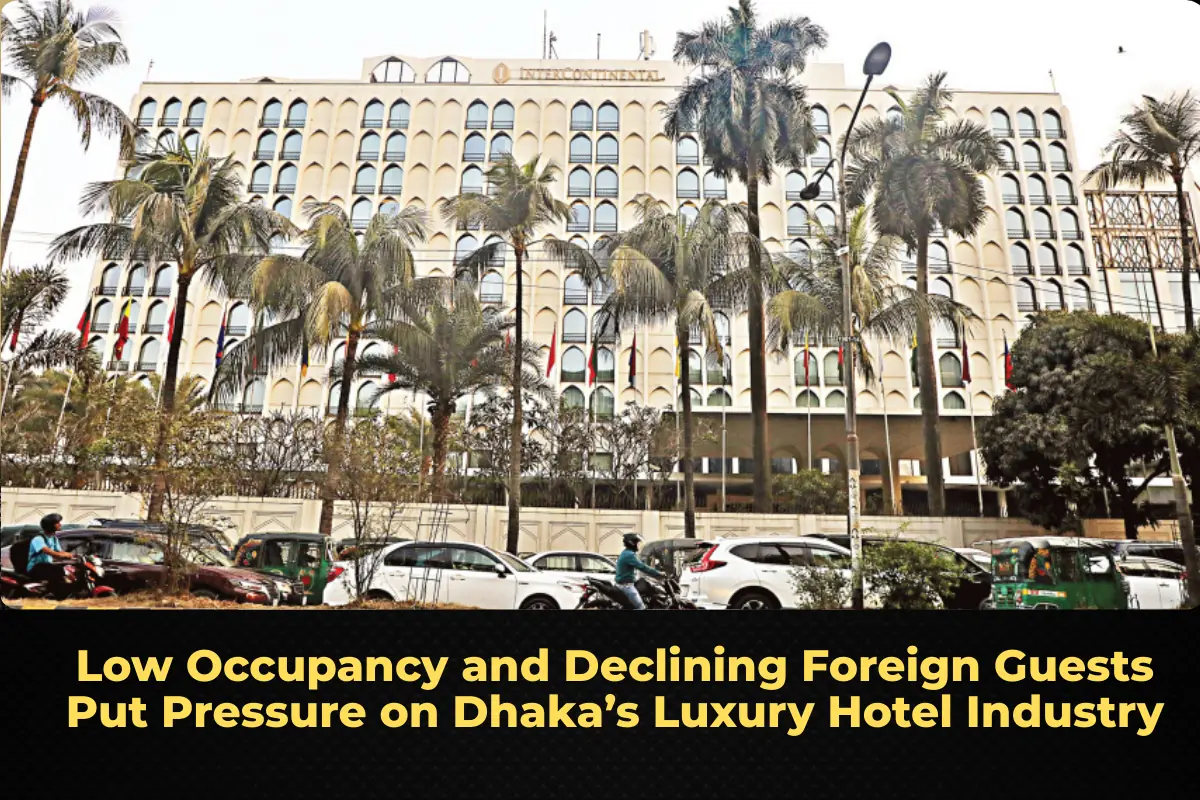
Low Occupancy and Declining Foreign Guests Put Pressure on Dhaka’s Luxury Hotel Industry
The hospitality sector in Dhaka is facing a challenging period as luxury hotels across the Bangladeshi capital report declining occupancy rates and a noticeable drop in foreign guests. For many high-end properties that traditionally rely on international business travelers, diplomats, and expatriates, the slowdown in overseas arrivals has created significant operational and financial pressures.
Dhaka, known as the commercial and administrative hub of Bangladesh, has long been home to a number of premium international hotel brands catering primarily to corporate travelers and international visitors. However, recent developments affecting global travel patterns, regional economic activity, and foreign business visits have led to reduced demand for luxury accommodations in the city.
Industry stakeholders say the drop in foreign guest arrivals has directly affected hotel occupancy levels, forcing many properties to rethink their operational strategies while exploring new ways to attract domestic travelers and diversify revenue streams.
Dhaka’s Hospitality Landscape
Over the past two decades, Dhaka has witnessed significant growth in its hospitality infrastructure. International hotel chains and upscale local properties have established a strong presence in the city, offering premium accommodations, conference facilities, and fine dining experiences.
These luxury hotels were developed primarily to serve international business travelers, multinational corporations, development organizations, and diplomatic communities operating in Bangladesh. As the country’s economy expanded and global business ties strengthened, the demand for high-quality hospitality services increased steadily.
However, the current slowdown in international visitor arrivals has disrupted this demand cycle, leaving many hotels operating below their expected occupancy levels.
Decline in Foreign Guests
Foreign travelers have traditionally been the backbone of Dhaka’s luxury hospitality sector. Corporate executives, international consultants, diplomats, and development professionals frequently visited the city for business meetings, conferences, and project activities.
In recent months, however, the number of foreign guests staying in Dhaka’s luxury hotels has declined noticeably. Several factors have contributed to this trend, including reduced international travel, shifts in business travel patterns, and cautious spending by multinational organizations.
When international visitor numbers fall, the impact on luxury hotels can be immediate and substantial. Premium properties depend heavily on corporate travel and international guests who typically stay longer and spend more on hotel services.
Without consistent inflows of these high-value visitors, maintaining stable occupancy levels becomes increasingly difficult.
Impact on Hotel Occupancy Rates
Occupancy rates are one of the most critical performance indicators in the hotel industry. When rooms remain unoccupied for extended periods, revenue declines while operational costs remain largely unchanged.
In Dhaka, several luxury hotels are currently experiencing lower occupancy rates compared to previous years. While some properties have managed to maintain moderate occupancy through domestic events and local business activities, the absence of international travelers continues to be felt across the sector.
Lower occupancy not only affects room revenue but also reduces income from other hotel services such as restaurants, event venues, meeting facilities, and spa services. These additional revenue streams play an essential role in supporting the overall financial performance of upscale hotels.
As a result, hotels are closely monitoring market conditions while implementing strategies to attract new segments of guests.
Challenges for Luxury Hospitality Businesses
Operating a luxury hotel involves significant financial commitments. These properties typically maintain large staff teams, high maintenance standards, and extensive guest facilities such as banquet halls, conference centers, wellness spas, and multiple dining venues.
When guest demand decreases, maintaining these facilities while controlling operational costs becomes a major challenge. Hotel management teams must carefully balance service quality with cost efficiency to ensure long-term sustainability.
Some hotels may also delay expansion plans or renovation projects until market conditions improve. Strategic adjustments often become necessary during periods of reduced demand.
At the same time, maintaining brand reputation and service standards remains a top priority, particularly for internationally recognized hospitality brands operating in the city.
Shifting Focus Toward Domestic Travelers
In response to the decline in international guests, many luxury hotels in Dhaka are increasing their focus on domestic travelers. Local tourism and domestic corporate events have become increasingly important sources of business for the hospitality industry.
Hotels are promoting staycation packages, weekend offers, and family dining experiences to attract local residents who may be interested in short leisure breaks within the city.
Domestic weddings, corporate meetings, and social gatherings are also helping hotels generate additional revenue. Banquet facilities and event spaces have become valuable assets in maintaining occupancy and activity levels during slower tourism periods.
While domestic demand may not fully replace international business travel, it provides an important buffer that helps hotels maintain operations and employment.
Business Travel Patterns Are Changing
Another factor affecting hotel demand in Dhaka is the evolving nature of global business travel. Many organizations have adopted hybrid work models and digital communication tools that reduce the need for frequent international travel.
Virtual meetings and remote collaboration platforms have become widely accepted alternatives to traditional face-to-face business engagements. This shift has had a noticeable impact on hotel demand in cities that rely heavily on corporate travel.
While in-person meetings and conferences remain important, companies are increasingly selective about international trips, prioritizing only essential travel.
This trend has forced hotels worldwide to reconsider their long-term market strategies and explore new sources of demand.
The Importance of International Tourism Recovery
For Dhaka’s luxury hospitality sector, a strong recovery in international tourism will be essential for restoring occupancy levels and financial stability. Global travel trends play a significant role in determining the performance of urban hotel markets that rely heavily on foreign visitors.
Efforts to promote Bangladesh as an international business and tourism destination could help stimulate visitor interest in the future. Improved air connectivity, simplified visa processes, and international marketing campaigns may also contribute to increasing tourist arrivals.
Many hospitality professionals remain optimistic that international travel will gradually rebound as global economic conditions stabilize and business activities expand.
In the meantime, hotels continue to adapt their strategies in order to remain competitive and financially resilient.
Maintaining Service Excellence During Difficult Times
Despite the challenges associated with reduced demand, luxury hotels in Dhaka remain committed to maintaining high service standards. Guest satisfaction continues to be a top priority, as positive experiences play a crucial role in building brand loyalty and attracting repeat visitors.
Hospitality organizations understand that maintaining service quality during difficult periods is essential for protecting their reputation in the global marketplace.
Hotel teams are focusing on personalized guest experiences, enhanced safety standards, and improved digital services to ensure that visitors receive exceptional hospitality.
These efforts are designed not only to satisfy current guests but also to position hotels strongly when international tourism demand eventually recovers.
Opportunities Through Events and Conferences
One potential growth area for Dhaka’s hospitality sector lies in the expansion of conferences, exhibitions, and corporate events. Large meeting spaces and convention facilities offered by luxury hotels provide opportunities to host regional business gatherings and professional events.
By attracting conferences and corporate programs, hotels can generate additional demand for rooms, dining services, and event management.
Event-driven tourism has the potential to support occupancy levels while also enhancing the city’s reputation as a regional business destination.
Industry experts believe that strengthening Dhaka’s position as a conference and business events hub could provide new opportunities for the hospitality sector.
Looking Ahead for Dhaka’s Hotel Industry
The challenges currently facing Dhaka’s luxury hotels reflect broader changes occurring across the global hospitality landscape. As travel patterns evolve and economic conditions fluctuate, hotels must remain flexible and adaptive in their business strategies.
Industry leaders believe that innovation, diversification, and strong customer engagement will be key factors in navigating the current market environment.
By focusing on domestic tourism, corporate events, and enhanced guest experiences, hotels can maintain resilience while waiting for international travel demand to recover.
At the same time, continued investment in service quality and hospitality training will ensure that the industry remains prepared for future growth.
Conclusion
Dhaka’s luxury hotel sector is currently navigating a period of reduced occupancy driven largely by a decline in foreign guest arrivals and shifting global travel patterns. While the situation presents significant challenges, the hospitality industry continues to explore new opportunities to sustain operations.
Through strategic adaptation, stronger engagement with domestic travelers, and ongoing commitment to service excellence, hotels are working to overcome the current slowdown. The future recovery of international travel and business activity will play a crucial role in revitalizing the city’s premium hospitality market.
For now, Dhaka’s luxury hotels remain focused on resilience, innovation, and maintaining the high standards of hospitality that have defined the city’s hotel industry for many years.