H World Hotel Portfolio Drives Global Expansion and Outlook
H World hotel portfolio raises its outlook and approves a 2.5 billion dollar shareholder return as its international brands including Steigenberger lead global growth.
 RUKAIYA KADIWAL
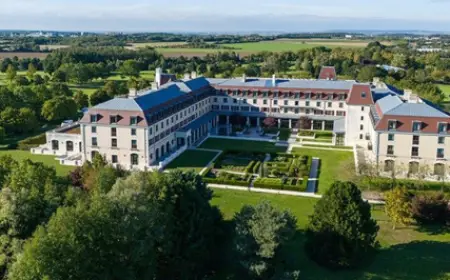
Along the Spree in central Berlin, where the federal government quarter meets the glass and stone geometry of the reunified city's newer districts, the Steigenberger Hotel Am Kanzleramt occupies its block with the particular confidence of a building that was designed to belong exactly where it stands. Three hundred and thirty nine rooms. A name that has meant something in German hospitality for decades. And, since a Chinese company named H World acquired the group that operates it, a quiet symbol of something that was once considered improbable, a hospitality brand with deep European roots and a Chinese parent company raising its global outlook on the same earnings call.
H World Hotel Portfolio Lifts Outlook on International Strength
According to CoStar News, H World hotel portfolio performance drove the Chinese hotel company to raise its outlook and approve a $2.5 billion shareholder return, with its international holdings, led by brands including Steigenberger Hotels and Resorts, contributing to a growth story that positions the group as one of the more consequential forces in global hospitality in 2026. The announcement topped CoStar Hotels' most-read articles for August, a measure of how closely the industry has been watching a Chinese company's international ambitions produce tangible financial results.
H World's international portfolio, assembled through acquisitions that brought established European hotel brands under Chinese ownership, represents a model of global hospitality expansion that moves in the opposite direction from the one that dominated the industry's previous era. Rather than exporting a Chinese brand to international markets, H World acquired brands already embedded in those markets and has been growing them from within.
Steigenberger and What a European Name Carries
Steigenberger Hotels and Resorts is among the most recognizable names in German and broader European hospitality. Its properties, including the Am Kanzleramt hotel in Berlin, carry a weight of institutional reputation that took decades to establish. The Am Kanzleramt property's location in the government quarter is not incidental. It reflects the kind of positioning that a hotel brand earns through years of operating at the level that business travelers, dignitaries, and corporate clients require.
For H World, inheriting that positioning through acquisition meant inheriting both the reputation and the responsibility of maintaining what made it credible. A brand with Steigenberger's history cannot simply be rebranded or repositioned without consequence. It must be grown on its own terms, in the markets where it already means something, by the teams that already know how to deliver what its guests expect. That constraint is also, for a parent company with the right strategy, an advantage.
What the August Earnings Story Actually Revealed
The combination of a raised outlook and a $2.5 billion shareholder return is a signal that deserves careful reading. A raised outlook in the hotel industry reflects management confidence in the demand environment, in the company's ability to capture that demand, and in the financial trajectory of its portfolio across both its domestic Chinese operations and its international holdings. A shareholder return of that scale reflects a balance sheet strong enough to reward investors while continuing to invest in operations and development.
That both signals arrived together, in an August earnings announcement during a period when parts of the global hospitality industry were navigating geopolitical disruption and mixed demand across key markets, makes the performance more notable rather than less. H World's international portfolio appears to have contributed meaningfully to the confidence behind both announcements, a validation of the acquisition strategy that brought Steigenberger and related brands into the group's orbit.
What CoStar's August Roundup Revealed About the Industry More Broadly
H World's earnings were the most-read story of CoStar Hotels' August coverage, but they arrived alongside a set of other stories that together mapped the pressures and opportunities defining global hospitality at this particular moment. Gencom restructured itself to increase its capacity for deals, creating two new focused divisions following its acquisition of the Ritz-Carlton New York Central Park earlier in the year. Lopesan, the Canary Islands-based hotel firm, was awarded 300 million euros in government compensation. A proposed hotel tower in the City of London hit an environmental planning hurdle. The Fitzwilliam Hotel Belfast reached the market with a guide price above 32 million pounds.
Each of those stories describes a different kind of pressure or opportunity. Gencom's restructuring reflects the organizational complexity that serious deal volume demands. Lopesan's compensation award reflects the legal and regulatory risks that hotel development in regulated tourism markets carries. The City of London tower's planning hurdle reflects how environmental considerations are increasingly shaping what can be built and where. The Belfast hotel's market listing reflects an active transaction environment in which established urban properties are being valued and sold at prices that signal continued investor confidence in the sector.
The Broader Themes Behind August's Headlines
CoStar's editorial team identified several themes running beneath August's individual stories. Hotel rate growth in 2026 was described as the year's defining trend, with the World Cup cited as a contributing factor but not the whole story. Distress was noted as a driver of hotel deal activity in California. Shorter booking windows and experience-driven demand were identified as shifting how hoteliers approach leisure revenue. The question of visibility on AI travel platforms was raised as an emerging strategic challenge for operators. And the observation that not all events generate equal hotel demand or guest spending was identified as a nuance the industry is still learning to navigate operationally.
Together, these themes describe an industry that is performing well by most headline measures while managing a set of structural shifts that require adaptation at the operational level. Rate growth without demand certainty. Deal activity driven partly by distress. Booking windows compressing. AI reshaping how travelers discover and select hotels. These are not temporary conditions. They are the new operating environment, and the companies best positioned within it are those that identified the shifts early and built the organizational capacity to respond.
H World and the Question of What Global Means Now
H World's August earnings story sits at the center of a larger question the global hotel industry has been circling for several years: what does it mean for a Chinese company to own and grow a European hotel brand, and how does that ownership model produce results that benefit both the brand and the parent's balance sheet. The answer, as August's most-read story suggested, appears to involve maintaining the brand's local identity and operational credibility while providing the capital and distribution scale that the parent company can offer.
That is a model that requires restraint as much as ambition. It means not imposing a Chinese operational template onto a German hotel culture that has its own ways of doing things. It means investing in the brand's existing strengths rather than replacing them. It means measuring success not by how Chinese the international portfolio feels but by how well Steigenberger continues to perform as Steigenberger. The $2.5 billion shareholder return suggests that restraint has been rewarded.
A Portfolio Telling Its Story One Outlook Upgrade at a Time
The Steigenberger on the Spree will still be there when the next earnings call comes. Its lobby will still fill with the particular mix of travelers that a hotel in the German government quarter attracts. The brand on the building will still carry the weight of the reputation it spent decades building. What has changed is who sits above it in the corporate structure, and what that company's raised outlook says about the direction the whole enterprise is heading. H World's August story is, in the end, a story about patience, about acquiring something with genuine value and letting it continue being what it already was, while making the financial decisions at the top of the structure that allow the whole thing to keep growing.
Related reading: Hotel extension projects: 4 major expansions around the world