IHIF Berlin 2026 Highlights Hospitality Investment Trends Amid Global Uncertainty and Iran Crisis Concerns
IHIF Berlin 2026 focuses on hospitality investment trends as global uncertainty and the Iran crisis raise concerns for tourism and hotel growth worldwide.
 Pratyaksha Singh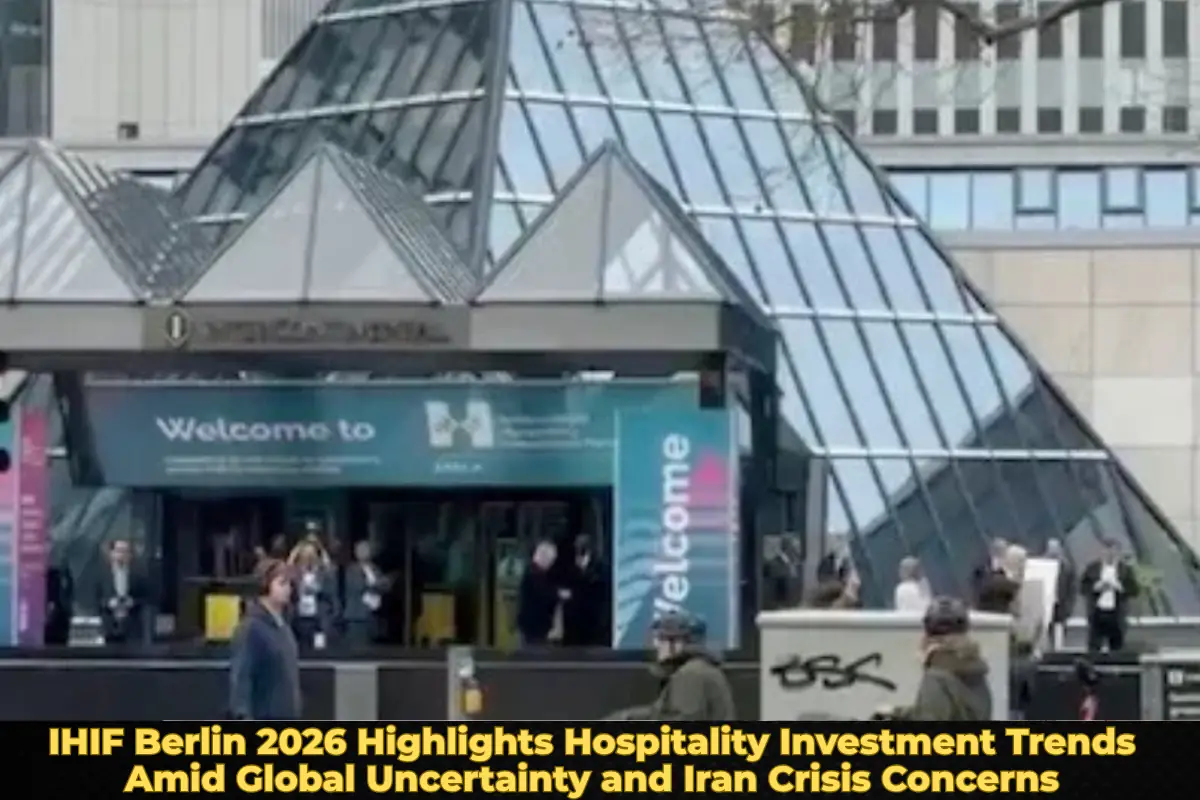
IHIF Berlin 2026 Highlights Hospitality Investment Trends Amid Global Uncertainty and Iran Crisis Concerns
The International Hospitality Investment Forum (IHIF) Berlin 2026 brought together global industry leaders to discuss investment trends, geopolitical challenges, and the future of hospitality, with a particular focus on the impact of rising global uncertainty and tensions linked to the Iran crisis on tourism and hotel growth worldwide.
Held in Berlin in March 2026, the event gathered investors, hotel operators, policymakers, and tourism stakeholders to assess the current state of the industry and explore opportunities in an increasingly complex global environment. Discussions centered on balancing growth ambitions with risk management as geopolitical developments continue to influence travel patterns and investor sentiment.
Global Uncertainty Shapes Investment Strategies
One of the key themes at IHIF Berlin 2026 was the growing influence of geopolitical uncertainty on hospitality investments. Industry experts highlighted that conflicts, economic volatility, and shifting global alliances are reshaping travel demand and influencing decision-making among investors.
Participants noted that while long-term fundamentals of the hospitality sector remain strong, short-term uncertainties are prompting more cautious investment approaches. Investors are increasingly prioritizing stability, diversification, and resilience when evaluating new opportunities.
This shift reflects a broader trend of risk-aware investment strategies across global markets.
Iran Crisis Raises Tourism Concerns
Discussions at the forum also անդրlined concerns over the potential impact of the Iran crisis on global tourism flows. Rising tensions in the region have created uncertainty in international travel markets, particularly affecting long-haul travel and destinations dependent on international arrivals.
Industry stakeholders expressed concern that prolonged geopolitical instability could disrupt travel corridors, increase operational costs, and dampen investor confidence. The situation has reinforced the need for contingency planning and flexible business models within the hospitality sector.
While the full impact remains uncertain, the issue remains a key focus for global tourism stakeholders.
Resilience of the Hospitality Sector
Despite geopolitical challenges, speakers at IHIF Berlin emphasized the resilience of the hospitality industry. Strong domestic travel demand in several markets, along with a gradual recovery in business and leisure travel, continues to support sector growth.
Experts highlighted that diversification across markets and segments has helped many hotel operators mitigate risks associated with international travel disruptions. Properties catering to domestic and regional travelers have shown particularly strong performance.
This resilience is expected to play a critical role in sustaining industry momentum.
Focus on Asset-Light and Flexible Models
Investment strategies discussed at the forum indicated a growing preference for asset-light models, including management contracts and franchise agreements. These approaches allow operators to expand their footprint while minimizing capital expenditure and exposure to market volatility.
Flexibility in operations and investment structures is becoming increasingly important as the industry navigates uncertain conditions. Investors are seeking opportunities that offer scalability and adaptability in changing market environments.
This trend is likely to continue shaping the industry’s growth trajectory.
Emerging Markets Attract Attention
Emerging markets, particularly in Asia and parts of the Middle East, were identified as key growth areas for hospitality investment. Rising middle-class populations, increasing travel demand, and improving infrastructure are driving interest in these regions.
However, participants cautioned that geopolitical risks and regulatory challenges must be carefully evaluated when entering new markets. Strategic partnerships and local expertise are seen as critical to navigating these complexities.
Investors are balancing growth potential with risk considerations in these markets.
Technology and Sustainability in Focus
Technology and sustainability were also prominent topics at IHIF Berlin 2026. Industry leaders emphasized the importance of digital transformation in enhancing guest experiences and improving operational efficiency.
Sustainability initiatives, including energy efficiency and carbon reduction strategies, are increasingly influencing investment decisions. Investors and operators are prioritizing environmentally responsible practices to align with global standards and consumer expectations.
These factors are becoming integral to long-term value creation in the hospitality sector.
WTTC Insights on Global Travel Trends
Insights shared at the forum highlighted the role of global travel organizations in shaping industry perspectives. Trends such as the recovery of business travel, growth in experiential tourism, and evolving consumer preferences were identified as key drivers of future demand.
However, geopolitical developments remain a significant variable that could influence the pace and direction of recovery. Industry leaders stressed the importance of collaboration between governments and private sector stakeholders to address these challenges.
Coordinated efforts are seen as essential for sustaining growth.
Challenges Facing Investors
Investors face several challenges in the current environment, including rising interest rates, inflationary pressures, and supply chain disruptions. These factors, combined with geopolitical risks, are affecting project timelines and financial projections.
Participants emphasized the need for careful due diligence and strategic planning when pursuing new investments. Balancing risk and return remains a key consideration in decision-making processes.
Adaptability and foresight are critical in navigating these challenges.
Outlook for Hospitality Investment
The overall outlook for hospitality investment remains cautiously optimistic, with strong underlying demand supporting long-term growth prospects. While short-term uncertainties persist, the sector’s ability to adapt and innovate continues to attract investor interest.
Industry leaders expect that as geopolitical conditions stabilize, investment activity will gain momentum, supported by improving travel demand and economic recovery. Strategic investments in key markets are likely to drive the next phase of growth.
The focus will remain on resilience, diversification, and sustainable development.
Conclusion
IHIF Berlin 2026 underscored the hospitality sector’s resilience amid global uncertainty, with industry leaders highlighting the need for adaptable investment strategies as geopolitical challenges, including the Iran crisis, continue to shape the future of tourism and hotel development.