Navi Mumbai Airport Expands Landing Fee Waivers
Navi Mumbai Airport is changing its landing-fee incentives to attract new international routes by making more airlines eligible for major fee waivers.
 Jishan Khan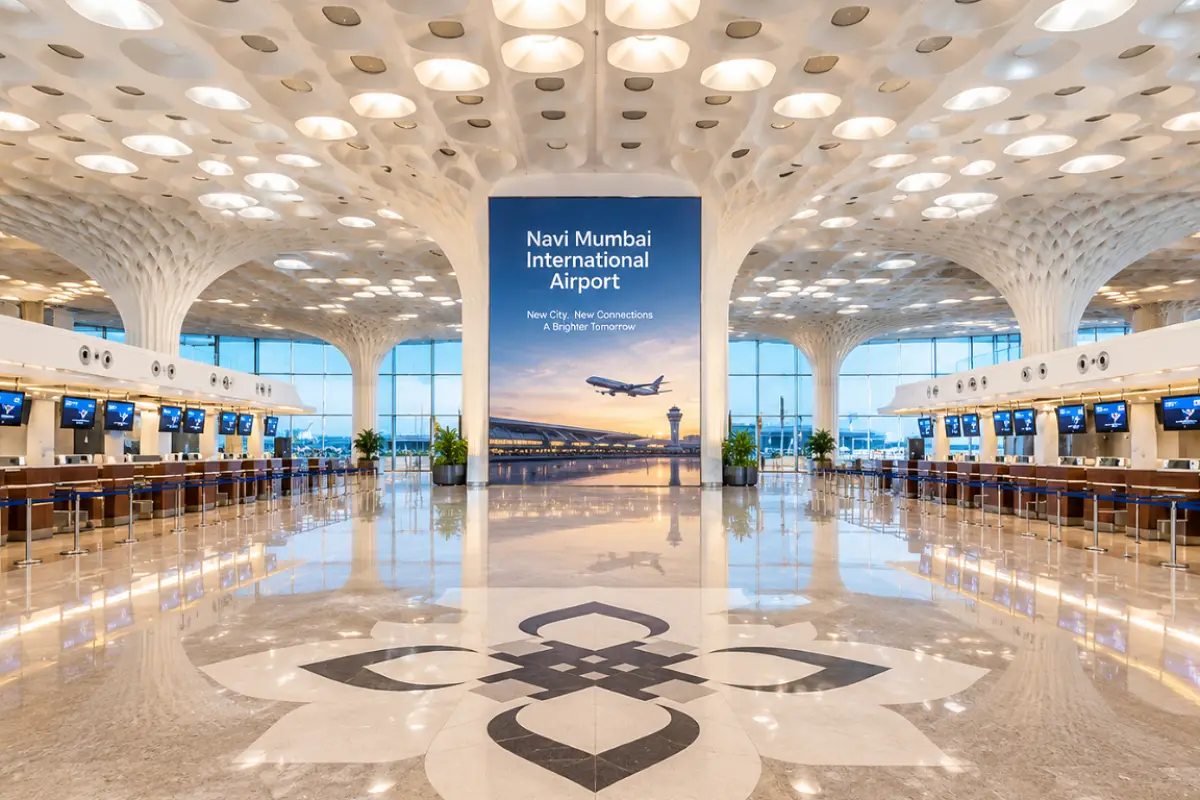
The Real Story Isn't the Free Landing Fees, It's the One-Sentence Rule Change That Makes Them Actually Work
India's Airports Economic Regulatory Authority approved a revised landing-charge structure for Navi Mumbai International Airport on September 8, 2026, giving international passenger airlines a complete first-year waiver on landing fees for new routes, tapering to a 50% discount in year two and, for long-haul services beyond 5,000km, a further 25% discount in year three. International freighter operators get a 90% first-year waiver. But the detail that actually determines whether any of this changes airline behaviour is buried in AERA's own regulatory language, not in the headline discount figures: the eligibility test shifted from a "new route in the Mumbai Metropolitan Region" to a new route specifically from Navi Mumbai itself.
That single redefinition is the entire mechanism. Everything else is packaging.
Why the Old Rule Made the Incentive Worthless in Practice
Under NMIA's original tariff structure, a landing-fee waiver applied only if a route counted as genuinely new to the wider Mumbai Metropolitan Region, meaning an airline already flying, say, London to Mumbai's existing Chhatrapati Shivaji Maharaj International Airport gained nothing by adding the same city pair from Navi Mumbai instead, because London-Mumbai was not a "new" MMR route in any meaningful regulatory sense. Given that CSMIA already operates one of India's largest and most established international networks, spanning dozens of long-haul destinations built up over decades, the overwhelming majority of routes any international carrier would realistically want to fly into the Mumbai region already exist from the older airport. The original incentive, on paper generous, was in practice almost impossible for most airlines to actually qualify for, because nearly every plausible route had technically already been "claimed" by CSMIA's existing network.
AERA's own justification for the change, cited directly in its order, states plainly that the prior structure "may not provide a sufficiently targeted incentive for airlines to utilise the airport infrastructure created for the purpose at NMIAL and therefore may not achieve the intended objective." That is regulatory language for admitting the original policy had a design flaw serious enough to make the entire scheme ineffective. By narrowing the eligibility test specifically to NMIA rather than the whole metropolitan region, AERA converted a nearly unusable incentive into one every genuinely new NMIA route can actually claim, regardless of whether the same city pair already exists from CSMIA across the runway.
A Fee Structure That Reveals Exactly How Underused the Airport Actually Is
NMIAL's own request to AERA cited "underutilisation" of infrastructure that is already fully built and operational, a genuinely candid admission from an airport operator barely nine months into commercial service. NMIA opened December 25, 2025, developed jointly by Adani Airports Holdings (74%) and Maharashtra's CIDCO land development authority (26%) at a cost of ₹196.5 billion (roughly $2.22 billion), with a single 3,700-metre runway and terminal capacity for 20 million passengers annually in its first phase, physical capacity, in other words, that dwarfs what the airport's actual traffic has come close to using so far.
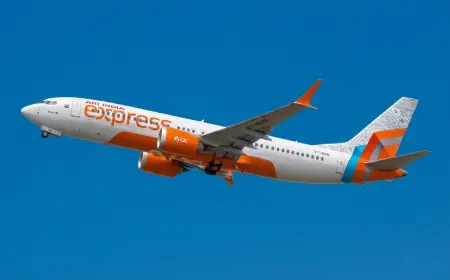
Air India Express launched NMIA's very first international route, to Abu Dhabi, on July 15, 2026, meaning the airport operated for nearly seven months as a purely domestic facility, served only by IndiGo, Air India Express and Akasa Air on routes to 16 domestic cities, before a single international service existed at all. That timeline context matters enormously for reading this incentive scheme correctly: NMIA is not tweaking pricing at an airport struggling to grow its international network. It is trying to create an international network that, prior to this July, essentially did not exist.
Why the Numbers Behind "Free Landing" Are Genuinely Consequential for a Widebody Operator
The concrete figures underneath the percentage discounts illustrate why this incentive is not merely symbolic. India's standard international landing fee runs approximately ₹1,850 per tonne, meaning an 80-tonne widebody aircraft, a typical long-haul configuration, would otherwise pay roughly ₹1.48 lakh (around $1,780) every single time it lands. Multiply that across a daily or near-daily widebody service over a full year, and the total landing-fee liability an airline avoids during a genuine first-year waiver runs into real money, not a rounding error in a route's overall economics, but a meaningful reduction in the fixed costs an airline has to recover before a genuinely new, unproven route becomes profitable.
That is precisely the risk category this incentive targets. Launching a new long-haul international route from an unproven airport carries genuine commercial risk, uncertain demand, an unfamiliar terminal for connecting passengers, and no established brand recognition for international travellers choosing between NMIA and the well-known CSMIA across the metropolitan region. Removing landing charges entirely for the first year directly subsidises exactly that highest-risk period, when an airline has the least data about whether a route will actually generate sustainable demand, and needs the lowest possible fixed-cost burden while it finds out.
The Additional Lever Most Coverage of This Story Missed
Beyond the headline new-route waivers, AERA's revised structure also includes up to 75% landing-charge discounts for airlines simply increasing frequency on routes they already fly from NMIA, a distinct incentive from the new-route waiver, aimed at a different behaviour entirely. New-route waivers solve the problem of getting an airline to try Navi Mumbai for the first time. Frequency discounts solve the separate, arguably harder problem of getting an airline that has already launched a route to actually scale it up once initial demand is proven, rather than settling into a thin, marginal schedule that never grows past the minimum viable frequency. Both incentives working together suggest AERA and NMIAL are thinking about the full lifecycle of how an airline relationship with a new airport actually develops, first entry, then expansion, rather than simply front-loading a one-time discount and hoping growth follows on its own.
Why NMIA Is Not the Only Indian Airport Running This Exact Playbook
The same retail intelligence reporting on this NMIA order notes that comparable incentives apply to Bhogapuram, Andhra Pradesh's own new greenfield airport, for operations beginning after March 2026, suggesting AERA is applying a standardised template for stimulating international traffic at multiple newly built Indian airports simultaneously, rather than treating NMIA's underutilisation as a one-off problem requiring a bespoke fix. That pattern matters for the bigger picture: India is in the middle of a genuinely unprecedented wave of new airport capacity coming online, this feed has covered NMIA's cargo ramp-up with Hong Kong Air Cargo and IndiGo Cargo, FedEx's parallel infrastructure investment, and the broader national 10-million-tonne cargo capacity target extensively throughout 2026, and landing-fee incentive schemes of this kind appear to be becoming the standard regulatory tool for solving the specific problem every one of these new facilities shares: world-class infrastructure sitting comparatively empty because airlines, operating on thin margins and cautious risk tolerance, default to established airports unless given a genuinely compelling financial reason not to.
What October 26 Actually Has to Prove
India's winter 2026 schedule begins October 26, the first full scheduling season during which international carriers can plan routes around the newly corrected incentive structure from the outset, rather than discovering the eligibility change partway through an already-committed summer season. That timing makes the winter schedule a genuinely clean test of whether the redefined incentive actually changes airline decision-making, in a way the July-to-October window since the rule change could not fully demonstrate, given how far in advance international route launches typically require planning, aircraft allocation and regulatory slot coordination.
If NMIA's international route count and freighter operations grow meaningfully through the winter season, it will suggest the specific regulatory fix, narrowing eligibility to genuinely new NMIA routes rather than requiring novelty across the whole metropolitan region, was the correct diagnosis of why the original incentive failed to generate traffic. If international growth remains sluggish even with landing fees at zero, it will suggest the airport's underutilisation problem runs deeper than pricing alone, toward factors like connecting infrastructure, ground transport links to the Mumbai metropolitan core, brand unfamiliarity among international travellers, or simple inertia among airlines reluctant to split network capacity across two airports serving the same metropolitan region regardless of what NMIA charges them to land there. Either outcome will tell India's aviation regulators something valuable about how much a fee waiver alone can actually accomplish, and how much of NMIA's early struggle has been about price, versus everything else that goes into an airline's decision about where to fly.