India's Five Star Hotels Impress British Travel Vlogger
British travel vlogger Harry Jaggard says India's five star hotels like the Taj Mahal Palace Mumbai match global standards after visiting Karachi's Pearl Continental.
 RUKAIYA KADIWAL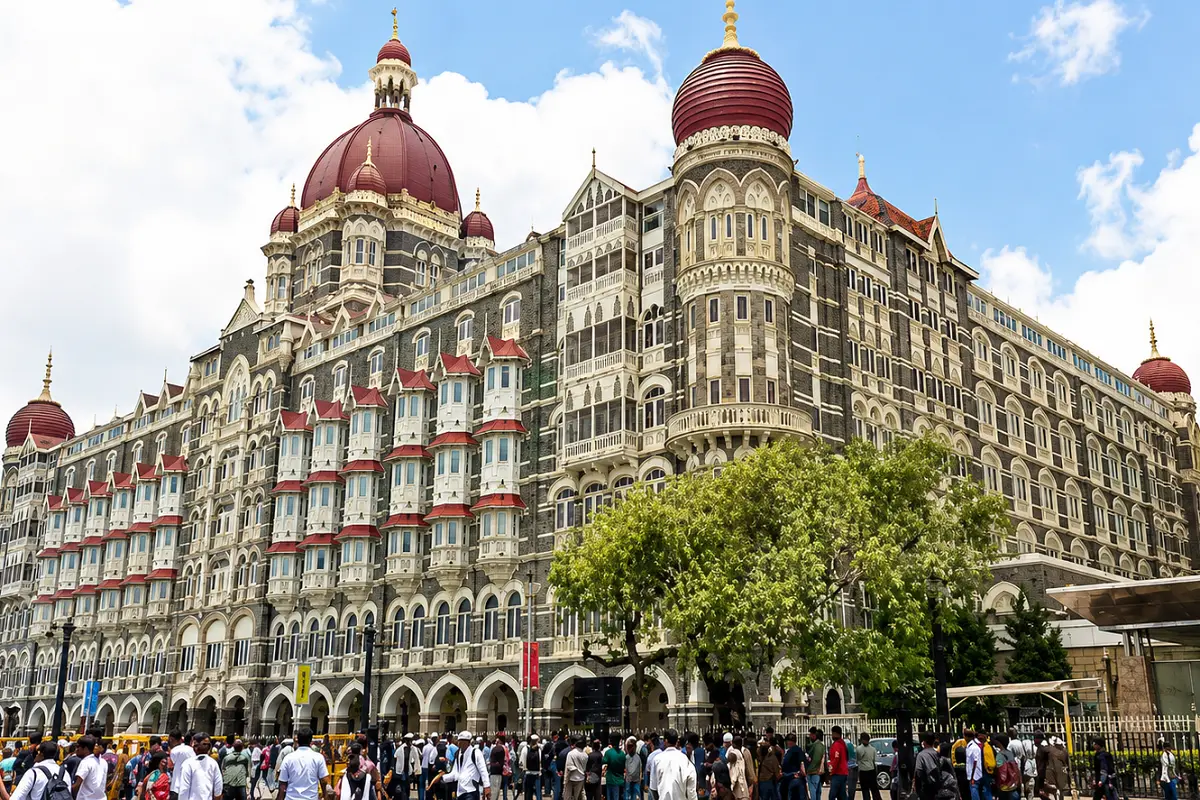
Standing before the red domes of Mumbai's waterfront skyline, a guest steps into a lobby carrying the weight of a building that has hosted world leaders, survived a terrorist attack, and remained one of India's most recognized hospitality addresses for over a century. That was the setting British travel vlogger Harry Jaggard described when discussing his stay at India's Five Star Hotels, specifically the Taj Mahal Palace in Mumbai, during a recent podcast appearance comparing his experience there against a subsequent stay in Karachi.
What Jaggard Actually Said
Jaggard recalled his visit to the Taj Palace before traveling onward to Pakistan, where he checked into the Pearl Continental in Karachi. "I stayed at the Taj Palace in Mumbai, which was where they had their terrorist attack a long time ago. It's famous for multiple reasons but it was an unbelievable property," he said, a comment that acknowledges the hotel's difficult history alongside his assessment of its current standard.
A Contrast Drawn From Direct Comparison
His experience in Karachi, he said, did not match what he had encountered in Mumbai. "I recently went to Pakistan and stayed at the Pearl Continental which is supposed to be their best hotel in Karachi and the hotel there was nowhere near the standard that I've stayed in Indian hotels," Jaggard said. That comparison, delivered against what he described as the country's top rated property, carries particular weight precisely because it wasn't measured against an average hotel but against Karachi's most prominent luxury option.
Benchmarking Against Global Standards
Jaggard extended his assessment further, placing Indian five star hospitality alongside hotel markets he considers already well established internationally. "When you stay in an Indian five star hotel it's actually a five star hotel like Dubai, same as the UK, while the one in Karachi felt more of a four or even a three star hotel," he added. That framing positions his comments less as a simple preference and more as a direct quality comparison measured against categories he uses to judge hospitality elsewhere.
Economic Growth as Context
Beyond the hotels themselves, Jaggard connected his impressions to India's broader economic trajectory, pointing to the country's expanding affluent population and rising middle class as forces likely to sustain demand for high end hospitality services going forward. "India is honestly on the rise if they can just keep a lid on the crazy population growth they've got, like a huge potential," he said, tying his hotel experience to a wider read on the country's consumer economy.
What a Single Traveler's Account Represents
Jaggard's comments reflect one traveler's subjective experience rather than a comprehensive industry survey, and hospitality standards can vary considerably even within a single country's luxury tier depending on property, city and season. Still, his account offers a useful outside perspective on how India's established five star properties are being perceived by international travel content creators whose opinions increasingly shape where audiences choose to stay. For readers tracking how luxury hospitality brands are positioning themselves across emerging Asian markets more broadly, comparisons like this one illustrate how quickly reputation, once earned, travels across borders through platforms far removed from traditional hotel marketing.
What Stays With a Traveler Longest
What Jaggard's account ultimately underscores is less about any single property and more about how a hotel's reputation, once earned through consistency across decades, continues shaping perception long after the stay itself ends, carried forward not through advertising but through travelers recounting exactly what they experienced.
More information is available on the official website at tajhotels.com. Further reading on the hospitality industry is available at hospitalitycareerprofile.com.