JW Marriott Detroit Water Square: Riverfront Opens 2027
Ahead of its February 2027 debut, the JW Marriott Detroit Water Square is redefining the city's riverfront with luxury, scale, and civic ambition.
 RUKAIYA KADIWAL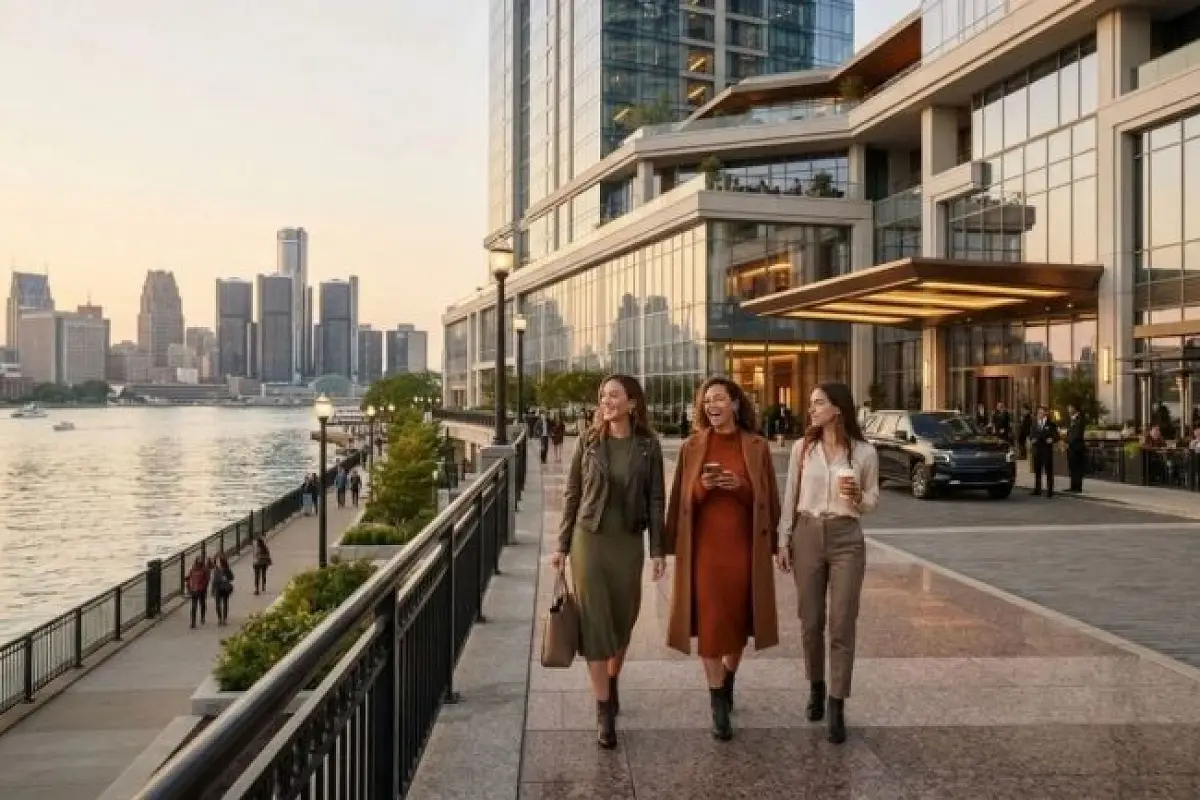
The wind off the Detroit River still carries a chill in early morning, even in late summer. A site supervisor named the project simply calls "the tower" walks the perimeter fencing before the rest of the crew arrives, checking the steel skeleton against a set of plans folded inside his jacket. Behind him, the Renaissance Center glows amber in the first light. Ahead, across the water, the low rooftops of Windsor, Ontario are just visible through the haze. This stretch of riverbank, once dominated by parking lots and disused rail infrastructure, is now a construction site with a very specific ambition: to become the address that convinces the world Detroit's downtown has fully turned a corner.
It is here, on this bend of the river, that the JW Marriott Detroit Water Square is scheduled to open its doors in February 2027. The project has been discussed in Detroit's business circles for months, but standing beside the rising frame, what strikes a visitor first is not the scale of the building, impressive as it is, but the quiet insistence with which the city has staked its next act of reinvention on a single address.
A Hotel Built for a City in Transition
Detroit's downtown has spent the past decade rebuilding itself piece by piece: a refurbished Book Tower here, a reopened Michigan Central Station there, a steady trickle of restaurants and residential conversions filling in blocks that had sat empty since the 1970s. What the city has lacked, hospitality analysts have long noted, is a single hotel that can credibly host the largest conventions, the highest profile executives, and the visiting dignitaries who might otherwise choose Chicago or Toronto instead.
The JW Marriott Detroit Water Square is designed to close that gap. Plans call for more than 600 rooms, including 44 suites and a presidential suite spanning 195 square metres, intended for heads of state and corporate leadership alike. The building's most consequential design choice may be an enclosed, heated skybridge connecting the hotel directly to the Huntington Place convention centre next door, a detail that speaks less to luxury than to logistics. Detroit's winters are long, and any planner who has ever tried to move a thousand conference attendees across an open plaza in January understands why that bridge matters.
Why This Site, Why Now
The choice of riverfront land is not incidental. Detroit's waterfront has undergone its own slow transformation, from industrial shoreline to public greenway, largely through the work of the Detroit Riverfront Conservancy over the past two decades. A hotel of this scale positioned directly on the water signals that developers now view the riverfront not as a backdrop but as a destination in its own right, one capable of anchoring meetings business, weekend tourism, and long term residential interest in the surrounding blocks.
The project also arrives at a moment when major hotel brands are recalibrating their bets on secondary American cities. Convention business, which cratered during the pandemic years, has returned unevenly, favouring cities that can offer both meeting capacity and a waterfront or downtown experience worth extending a trip for. Detroit's planners are wagering that a flagship property with genuine architectural ambition, rather than a standard convention box, is what finally tips undecided event organisers toward the city.
What the Building Will Offer
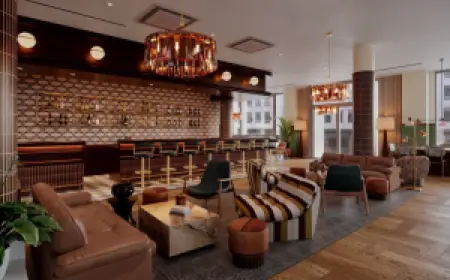
The scale of the amenity package reflects that ambition. More than 4,900 square metres of flexible meeting space is planned, including two ballrooms of 1,580 and 1,200 square metres, both opening onto outdoor terraces overlooking the water, a rarity for convention hotels of this size. A 1,000 square metre spa is planned with nine treatment rooms facing the river and a 15 metre indoor pool. On the dining side, four distinct concepts are planned: a JW Market café, a seafood and steakhouse called Joe Muer Seafood and Chops, a contemporary American restaurant named Verena, and a bar called The Assembly.
Taken together, the offering reads less like a single hotel and more like a small campus, one built to keep guests, whether attending a conference or simply visiting the city, within a few floors of everything they might need. That is by design. Large scale convention hotels increasingly function as self contained ecosystems, a trend hospitality operators have leaned into as guests seek both convenience and a sense of place within the same footprint.
The Weight of Expectation
None of this comes without risk. Large hotel developments of this scale carry significant capital exposure, and Detroit's downtown, for all its recent momentum, remains a market still proving its capacity to sustain premium hospitality demand year round rather than in seasonal bursts tied to major events. Industry observers who have watched similar waterfront flagship projects in other post industrial American cities note that success depends heavily on sustained convention bookings, something that will only become clear once the building is operational and competing for business against established hubs.
There is also the broader question of what a project of this size means for the neighbourhoods around it. Large hotel developments can accelerate investment in surrounding blocks, but they can also raise expectations, and property values, faster than nearby small businesses and residents are able to adjust to. Detroit has navigated versions of this tension before, as its downtown recovery has periodically outpaced improvements in neighbourhoods just beyond the core.
A City Watching Its Own Reflection
For now, the tower remains an unfinished outline against the sky, its glass curtain wall only partially set, its lobby still an open concrete shell. But for residents who walk the riverfront path each evening, past joggers and fishermen and the slow moving cargo ships that still pass under the Ambassador Bridge, the building has already become something to measure the city's progress against. It is one thing to read about Detroit's comeback in a headline. It is another to watch a hotel of this scale take shape a few metres from the water you have walked past your entire life.
When the JW Marriott Detroit Water Square opens in February 2027, it will be judged, inevitably, on occupancy rates and convention bookings and the balance sheets that accompany any hospitality investment of this size. But for the city around it, its meaning will likely be measured differently: as one more piece of evidence, set directly on the water, that Detroit's front door is finally being rebuilt.
More information on Marriott properties and upcoming openings is available on the official Marriott website. Further reading on hotel developments and openings across the hospitality industry is available at hospitalitycareerprofile.com.