Sikkim Tourism Embraces Digital Reform to Shape Its Future
Sikkim tourism is shifting fast, with digital hotel registration, sustainable travel policy, and Himalayan hospitality drawing a new generation of conscious travelers.
 RUKAIYA KADIWAL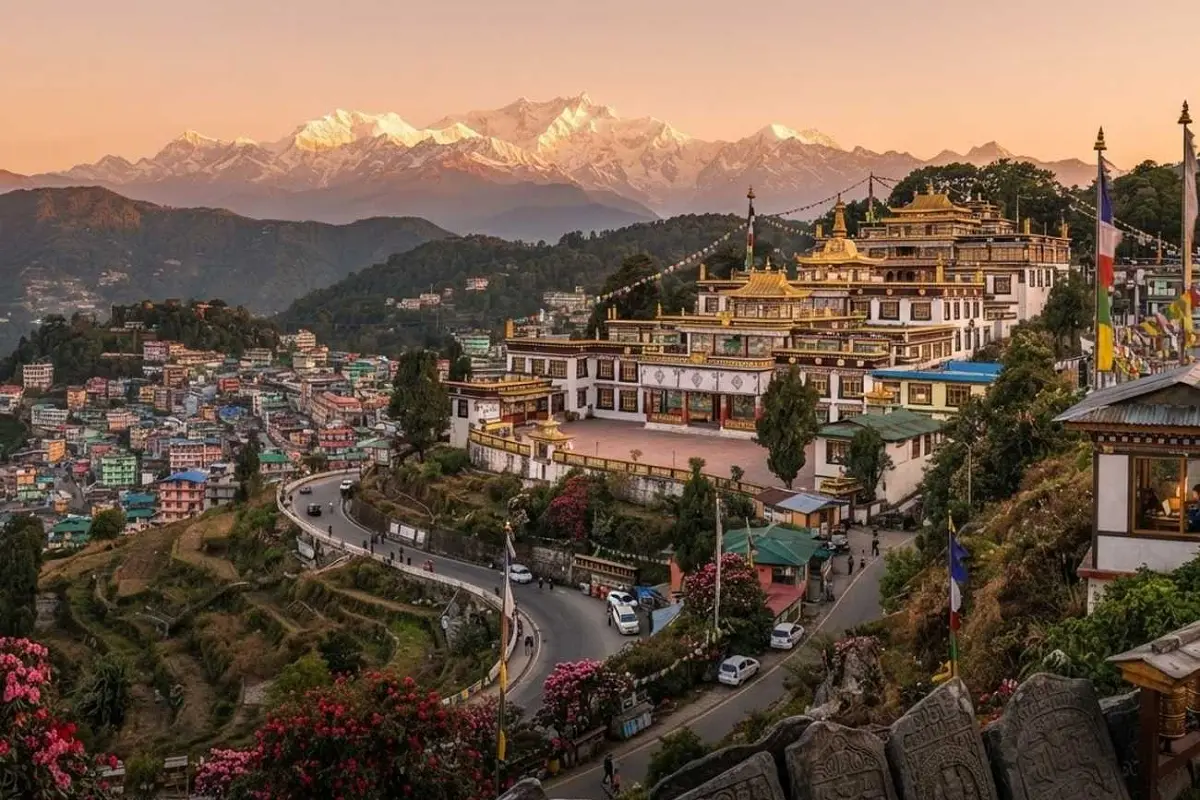
The road into Gangtok rises slowly, switchback after switchback, until the city appears almost without warning, spilling across the ridgeline in tiers of colored rooftops and prayer flags, with the Kanchenjunga range filling the horizon behind it like a wall of frozen light. At this altitude, the air carries a different quality, cooler and thinner, scented faintly with pine and something else, incense, perhaps, drifting down from a monastery courtyard just above the road. Travelers who arrive here for the first time often stand still for longer than they expect to, looking at mountains that do not seem entirely real.
Sikkim Tourism and the Shift Toward Transparency
Sikkim tourism has entered a new chapter, one defined less by the landscapes that draw travelers to this small Himalayan state and more by the regulatory infrastructure quietly being built beneath them. A new digital system for hotel registration is now in place, requiring accommodation providers across the state to operate as verified, registered entities within an e-governance framework designed to make Sikkim's hospitality sector more transparent, more accountable, and more attractive to the category of traveler the state is increasingly trying to reach.
For visitors, the practical implication is simple but important. Travelers booking stays at smaller boutique guesthouses or homestays are now advised to confirm their host's official registration status before arrival, a step that did not previously have a formal mechanism behind it. The shift reflects how seriously Sikkim's administration is treating the relationship between regulatory credibility and sustainable tourism growth.
Why This Moment Matters for Himalayan Hospitality
Sikkim has long occupied a distinctive position within India's travel landscape, a state small enough to feel intimate, ecologically protected enough to have avoided the overdevelopment that has compromised other Himalayan destinations, and culturally layered enough to reward travelers willing to move slowly through it. Its three national parks, its Buddhist monasteries, its network of trekking routes through sub-alpine forest, these have drawn visitors for decades. What has lagged behind is the governance infrastructure to manage that interest in a way that protects both the environment and the traveler.
The new digital registration system represents a deliberate attempt to close that gap. By embedding e-governance into the tourism sector, Sikkim is signaling that it intends to attract not just more visitors, but a different kind, those who place value on knowing that the money they spend supports legal, accountable operations rather than informal arrangements that leave both host and guest exposed.
The Rhythms of a Responsible Visit
Understanding Sikkim's hospitality well means understanding its seasonal character. The shoulder seasons, March through May and October through December, offer travelers both better conditions and a more authentic encounter with the state's quieter rhythms. The peak months bring crowds that, while a sign of Sikkim's appeal, can work against the very quality of experience that made the destination worth visiting in the first place. Arriving outside those windows allows a different kind of travel, slower, more attentive, and more connected to the communities hosting it.
Cultural awareness matters as much as timing. In monasteries and rural villages across Sikkim, modesty of dress and behavior are not suggestions but genuine expectations. Prayer halls are entered clockwise. Loud voices in sacred spaces belong somewhere else. These are not rules imposed on visitors from outside but the natural expression of how a community understands itself, and observing them is the most basic form of respect a traveler can offer.
Eating Beyond the Hotel Menu
Gangtok's local eateries hold the most direct entry into Sikkim's food culture. Thukpa, a noodle soup built from broth and vegetables or meat, arrives in deep bowls that carry warmth in a literal sense on evenings when the temperature drops. Phagshapa, pork slow-cooked with dried chilies and white radish, is a dish whose flavors resist easy analogy, savory, sharp, and deeply local in a way that hotel menus rarely manage to replicate. Eating at these places is not merely a culinary choice but an economic one, money spent in local eateries stays within the community in a more direct way than spending the same amount on a hotel restaurant.
This relationship between dining and community economy is one that sustainable tourism advocates have long argued belongs at the center of responsible travel, not as an ethical obligation imposed from outside, but as a simple truth about where tourism's economic benefits actually land.
Navigating Permits and Protected Areas
Not all of Sikkim is open on the same terms. Areas such as Nathu La Pass, the high-altitude mountain pass connecting Sikkim with Tibet, require separate permits distinct from standard accommodation registration, permits that must be arranged through a registered hotel. This layering of documentation reflects the sensitivity of border regions in ways that visitors sometimes underestimate until they arrive at a checkpoint without the right paperwork. Arranging permits through registered accommodation providers is not only the administratively correct approach but the most reliable way to ensure access actually materializes.
The permit system, like the new digital registration framework, is part of a broader picture of Sikkim as a destination that takes its governance seriously, both for environmental reasons and for the traveler experience that governance enables.
The Longer View on Sikkim's Tourism Future
The trajectory Sikkim's tourism sector is following points toward something the state's administrators describe explicitly: technology-driven growth paired with ethical investment and sustainable hospitality brands. By building a transparent business climate through digital infrastructure, Sikkim is positioning itself less as a competitor to India's mass-market tourism destinations and more as an alternative model, one where the regulatory environment is legible enough to attract operators who build carefully rather than quickly.
That positioning has implications beyond Sikkim's own borders. As other Himalayan regions watch the experiment, the integration of e-governance into a tourism economy that depends so heavily on landscape and cultural integrity offers a benchmark, imperfect and still developing, but real, for what responsible destination management might look like at altitude.
A Mountain State Still Deciding What It Wants to Be
At dusk in Gangtok, when the monastery lights come on and the mountains behind the city shift from white to orange to gray, the question of what kind of tourism Sikkim wants to invite feels less like a policy matter and more like a fundamental choice about character. A digital registration system is a small thing against a backdrop that large, and yet it is exactly in those small, unglamorous administrative decisions that a destination's future is actually made. The mountains will remain indifferent to how the hotels beneath them are registered. It is the people, guests, hosts, and communities, who will feel the difference.
Related reading: Haifa waterfront redevelopment and new arena hotels